Korean Fried Chicken from the Air Fryer (Yangnyeom Chicken)
Shatteringly crisp and glistening with a sweet and spicy gochujang glaze. The authentic Korean method, but completely avoiding the deep fryer.
Jump to Recipe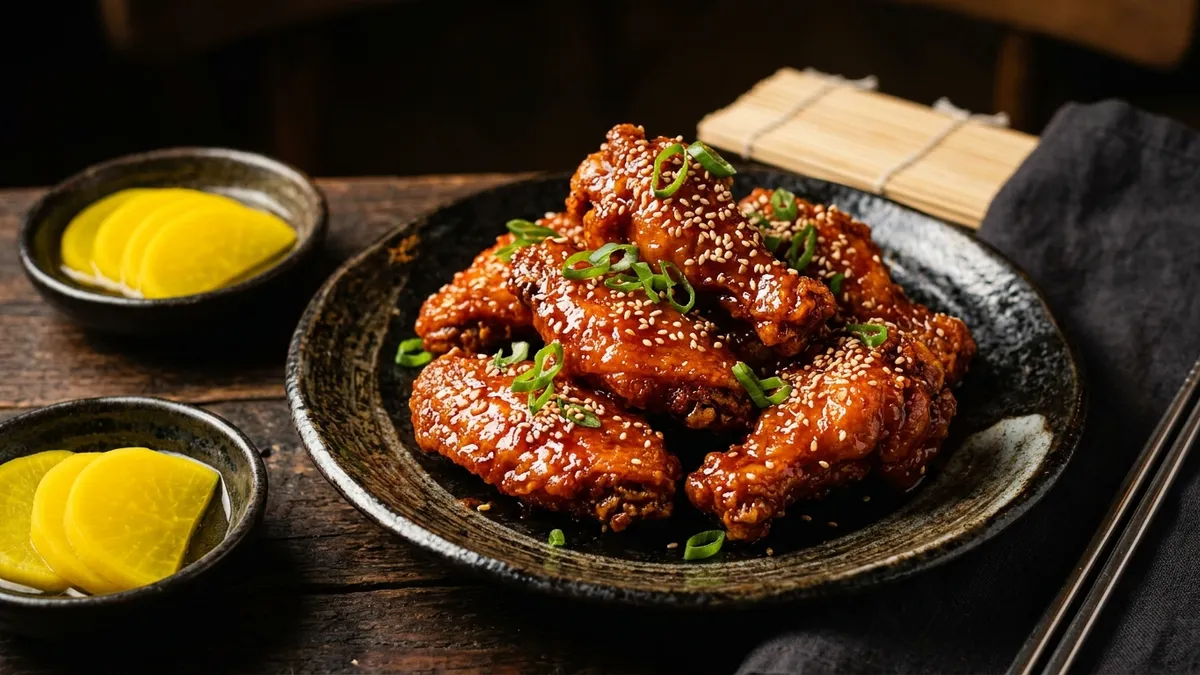
🧂Ingredientsfor 2-3 persons
- Chicken thigh fillet (boneless)500g
- Potato starch or cornstarch3 tbsp
- Baking powder½ tsp
- Gochujang↳ Substitute: See our gochujang substitute guide2 tbsp
- Honey2 tbsp
- Soy sauce1.5 tbsp
- Tomato ketchup2 tbsp
- Rice vinegar1 tbsp
- Garlic (minced)3-4 cloves
- Fresh ginger (grated)1 tsp
- Toasted sesame oil1 tbsp
- Brown sugar1 tbsp
Here is the uncomfortable truth about most recipes for supposedly ‘crispy’ air fryer chicken: they aren’t crispy at all. At best, they are… dry, with a faint, sad crunch around the edges. It’s like chewing on a piece of old cardboard or stale breadcrumbs. But Korean fried chicken, or yangnyeom chicken, is an entirely different beast. It is the undisputed king of fried chicken globally.
We are talking about a crust that sounds like breaking glass when you bite into it, completely enveloped in a glistening, sticky sauce that is simultaneously sweet, fiercely spicy, and irresistibly savory. Normally, you achieve this masterpiece by double-frying the chicken in a terrifying, bubbling pot of gallons of boiling oil. But guess what? We are going to rock this masterpiece straight out of the air fryer. And no, we are absolutely not compromising on that mythical, ear-shattering crunch.
This isn’t some fake, limp diet chicken. This is the real deal, ruthlessly delicious and perfectly adapted for that blasting hot air oven sitting on your counter. And the absolute best part? It’s going to take less than thirty minutes of your life to put it on the table.
Why Korean Chicken Hits Different (And Wins Hard)
If you have ever tried making American Southern-style fried chicken in an air fryer, you know the base usually involves flour, buttermilk, and a ton of spices. It’s tasty, sure, but in an air fryer, you often end up with a powdery, heavy, and sometimes oddly pale crust. Wheat flour demands buckets of fat to achieve that airy, flaky texture you expect from a fast-food bucket.
Korean fried chicken laughs out loud at flour. Instead, we use the raw power of chemistry: potato starch (or cornstarch). Why? Wheat flour contains gluten. The moment gluten hits moisture, it forms a sturdy network that can become genuinely tough, especially if it’s not plunged into a sea of hot oil. Starch, on the other hand, contains zero gluten. The result on your chicken is an ultra-thin, extraordinarily crispy coating that maintains its structural integrity for hours. Even after you have mercilessly drowned it in a thick, wet sauce, the shell stays hard.
And then comes the secret weapon. In this recipe, we are using a variation of the famous “Kenji Method” (massive shoutout to food nerd and chef J. Kenji López-Alt): we mix the potato starch with exactly half a teaspoon of baking powder. In the intense heat of the air fryer, that baking powder causes a chemical reaction that blows microscopic bubbles into the chicken’s coating. Micro-blisters, in technical terms. Those millions of tiny bubbles instantly turn rock hard in the heat, creating a texture with so much surface area that the crunch simply becomes epic.
The Non-Negotiable Ingredients For Yangnyeom Chicken
Let’s take a very close look at what you actually need to make this dish work. This is not the time for half-baked compromises or lazy supermarket hacks.
The Foundation
- Chicken thigh fillet (Boneless): Do not use chicken breast here. Just don’t do it. Drop the dry-chicken-breast diet for this recipe. Chicken breast has barely any fat marbling and will irreversibly dry out into tasteless felt in the unforgiving whirlwind of the air fryer. Chicken thighs contain more intramuscular fat. They remain incredibly juicy, forgiving, and wildly flavorful, even if you get distracted and bake them a minute or two too long.
- Potato starch or Cornstarch + Baking powder: These are your absolute weapons for the perfect glass-like crunch. Potato starch is the undisputed king here, providing slightly more bite and structure, but regular cornstarch from your pantry is a perfectly fine and accessible alternative.
The Magical Yangnyeom Sauce
This is the liquid gold that defines this dish. The secret to the ultimate yangnyeom lies entirely in the ruthless balance of sweet, salty, sour, and spicy.
- Gochujang: The legendary Korean fermented chili paste. It delivers a deep, umami-rich heat that you simply cannot find anywhere else. You can easily find fantastic brands like Sempio at AH these days, or grab a red tub of CJ Haechandle at your local Asian supermarket. Caught completely without gochujang while reading this? Don’t panic, just check our gochujang substitute guide for the best possible rescue operations.
- Honey and Brown Sugar: Honey brings a floral sweetness, while the brown sugar helps to beautifully thicken the sauce into a sticky, glossy glaze that clings to the chicken like lacquer.
- Tomato Ketchup: Yes, ketchup. It is the secret, essential ingredient in authentic Korean sauce recipes. It provides body, a slight fruitiness, and that desperately needed acidic punch that cuts right through the heavy flavors.
- Soy Sauce, Rice Vinegar, Garlic, Ginger & Sesame Oil: The aromatic powerhouses that give the sauce its unmistakable Asian soul and irresistible aroma. Do not skimp on the fresh garlic here!
How To Make It: Step by Step to Perfection
Forget everything you’ve learned so far about breading chicken. No finger-thick layers of flour and egg, no hopelessly sticky hands, no chaotic mess on the kitchen counter. This is the efficient, ruthlessly fast method.
Step 1: Getting the Chicken Tender and Dry
Cut the chicken thighs into equal, bite-sized pieces. Make sure they are more or less the same size — not clumsily large, not miserably small — so they all cook perfectly at the exact same moment. Then, pat them aggressively dry with plenty of paper towels. Moisture on the outside is the number one enemy of crispiness. Toss the chicken pieces into a large, dry bowl and aggressively sprinkle a generous pinch of salt and freshly ground black pepper over them. Massage it briefly into the meat.
Step 2: Applying the Dry Coating
Now add the potato starch (or cornstarch) along with the half teaspoon of baking powder directly into the bowl with the seasoned chicken. Toss and shake everything aggressively and vigorously. Keep tossing until every single piece of chicken is coated in a thin, even, chalk-like layer of white powder. You genuinely do not need any beaten egg, milk, or water! The minimal, natural moisture left in the meat is exactly enough to make the dry powder stick without forming clumps.
Step 3: Blasting in the Air Fryer
Preheat your air fryer to a roaring 200°C. Let it run empty for at least 3 minutes to get up to temp. Lightly spray the basket with some neutral oil (this is optional, but it helps immensely against sticking to the bottom). Place the powdered chicken pieces in a single, tight layer in the basket. It is crucial that they hardly touch each other; they need space for the blistering hot air to ruthlessly circulate around the meat. Bake the chicken thighs at 200°C for 13 to 16 minutes in total. (If you are making this recipe with chicken wings instead of thighs, aim for 20 to 22 minutes). The ultimate rule here: Halfway through the cooking time, pull the drawer open and vigorously shake the basket, or flip each piece of meat with tongs. This guarantees a perfectly golden brown crust all the way around.
Step 4: Making the Liquid Magic (The Sauce)
While your air fryer does the heavy, noisy work, you can calmly make the sauce. Put a small saucepan on medium-low heat. Add the gochujang, honey, soy sauce, ketchup, rice vinegar, the generous load of minced garlic, grated fresh ginger, the dark toasted sesame oil, the brown sugar, and 1 to 2 tablespoons of water. Stir this continuously and well with a whisk. Let it simmer gently until the sugar is completely dissolved and the liquid has slightly thickened into a dark red, syrupy, seductively glossy substance (this takes about 3 to 4 minutes). Turn off the heat immediately as soon as it thickens; you definitely do not want to burn any sugar.
Step 5: The Coating (There Is Only One Right Way)
The chicken is ready in the air fryer. You are now looking at pieces of meat that are golden brown and possess an unreal, almost intimidating crunch. Immediately remove the chicken from the air fryer and throw the dry, piping hot pieces into a large, clean bowl. Pour the warm, sticky sauce directly over them and toss rapidly, resolutely, and aggressively. Make sure the chicken pieces wipe up the sauce with every movement, so every single one shines brightly all around.
Important note (Rule number one of Korean chicken): The sauce ALWAYS goes on after baking, never ever before. If you smear raw chicken with this sugary sauce and blast it in a convection oven at 200°C, the sugar will burn into a bitter, unrecognizable, black and smoking disaster within four minutes.
Common Mistakes That Will Destroy You
You can completely ruin this dish in a few stupid ways. Consider yourself warned:
- Baking the sauce in the air fryer. I cannot stress this enough: the sauce is a glaze for after cooking. Sugar + 200°C = your local fire alarm going off.
- Using chicken breast and expecting it to be tender. Again, buy thighs. Your wallet and your taste buds will thank you eternally. Chicken breast turns into drywall.
- Using regular flour instead of starch. You will get soggy, clammy, and depressing chicken nuggets. Stick to pure starch.
- Cramming the air fryer full. If the air can’t circulate around the meat, you steam the chicken in its own juices instead of roasting and drying it. Cook in two batches if you have to; have some patience.
Serving Like an Authentic Pro
Your glossy, bizarrely crispy creation is sitting in a little mountain on a nice plate. Finish it aesthetically and flavor-wise by generously sprinkling toasted white sesame seeds and thinly sliced spring onion rings over it. Serve this immediately, right now while it’s still piping hot.
In South Korea, this dish is almost exclusively eaten in a setup called Chimaek. ‘Chi’ stands for chicken, and ‘maek’ is derived from maekju, which means beer. Crispy, sweet-spicy chicken and liters of ice-cold, light pilsner beer is a god-tier combination. You absolutely must serve danmuji (pickled, bright yellow Korean radish) on the side. The sweet-and-sour, super crunchy radish cuts through the heavy fat and intense heat of the chicken like a knife, resetting your palate for the next bite. Can’t find the radish? A simple, crisp cucumber salad tossed in some vinegar works perfectly as a stand-in.
The Great Coating Comparison: Starch vs. Flour vs. Panko
To definitively reassure the technical nerds and culinary skeptics among us, let’s look hard at why we make specific choices for this coating in an air fryer environment:
| Coating Type | Result in the Air Fryer | Crunch Factor | Moisture Retention (post-sauce) |
|---|---|---|---|
| Potato Starch + Baking Powder | Super thin, rock-hard, glass-like crust full of micro-blisters. | ⭐⭐⭐⭐⭐ | Extremely good. Remains stunningly crispy under a thick layer of sauce. |
| Wheat Flour | Thicker, often somewhat undercooked/mealy and unevenly brown, as it misses gallons of oil. | ⭐⭐ | Mediocre to poor. Quickly becomes soggy, clammy, and heavy when the sauce hits the crust. |
| Panko (Japanese Breadcrumbs) | Very crispy, but too loose, dry, and coarse in texture. | ⭐⭐⭐⭐ | Poor. Absorbs the sauce instantly like a sponge. Nice crunch at first, but loses its shape within a minute and turns mushy. |
Conclusion? Potato starch (or cornstarch if need be) combined with a tiny bit of baking powder is simply the undisputed, ruthless champion for this specific air fryer dish.
Frequently Asked Questions (FAQ)
Can I make this recipe with chicken wings too? Absolutely, it’s practically built for them. In that case, use 20 to 22 minutes in the air fryer, still at that hammering 200°C. Wings contain bones and significantly more thick skin, so they need just a little more time in the hot air not only to cook through to the bone but also to render the fat out of that skin for maximum, skyrocketing crunch.
Is gochujang really indispensable, or can I just use sambal? Gochujang provides an authentic, deep, fermented chili flavor with an earthy sweetness. It truly is unique. Sambal is often just sharp, salty, and sour, completely lacking that rich body. If you really can’t find it anywhere, you can mix sriracha or sambal oelek with a bit of miso paste as an emergency alternative for a decent result. But seriously, save yourself the hassle and check out our gochujang substitute guide for the details and best options.
My chicken didn’t get crispy enough. What in god’s name went wrong? Three main culprits: 1) You overcrowded the air fryer basket, blocking the hot air. 2) You didn’t pat the chicken dry enough with paper towels before adding the starch, creating a mushy, steaming layer. 3) You forgot to seriously preheat the air fryer. Heat and space are your only friends here.
Can I make this Korean chicken ahead of time and reheat it later? No. At least, absolutely not if you have any respect for that perfect, glass-like texture. As soon as the warm sauce touches the chicken, the unforgiving clock starts ticking. Still want to prep for guests? Bake the powdered chicken in the air fryer, let the pieces cool completely (without sauce!), and store them covered in the fridge. The next day, blast the naked chicken in the air fryer at 200°C for about 5 to 6 minutes to resurrect the crunch, and only then resolutely toss it through the freshly made, warm sauce.
My sauce seems a bit too spicy for the kids, can I easily make this milder? For sure. Gochujang itself comes in various spice levels (look closely at the scale on the packaging, often from 1 to 5). If you want it significantly milder, simply halve the amount of gochujang in this recipe, and compensate for the body and flavor with an extra generous tablespoon of tomato ketchup and an extra teaspoon of honey. It remains fantastic, just without the sweat on your forehead.
There is a very good reason why this crispy, glossy style of chicken is taking over the entire culinary world. With this robust recipe, some simple chemistry, and your trusty air fryer, you never again have an excuse to settle for mediocre, limp, and overpriced takeout. Get in that kitchen, fix this dish, and become a legend. You are absolutely not going to regret it.