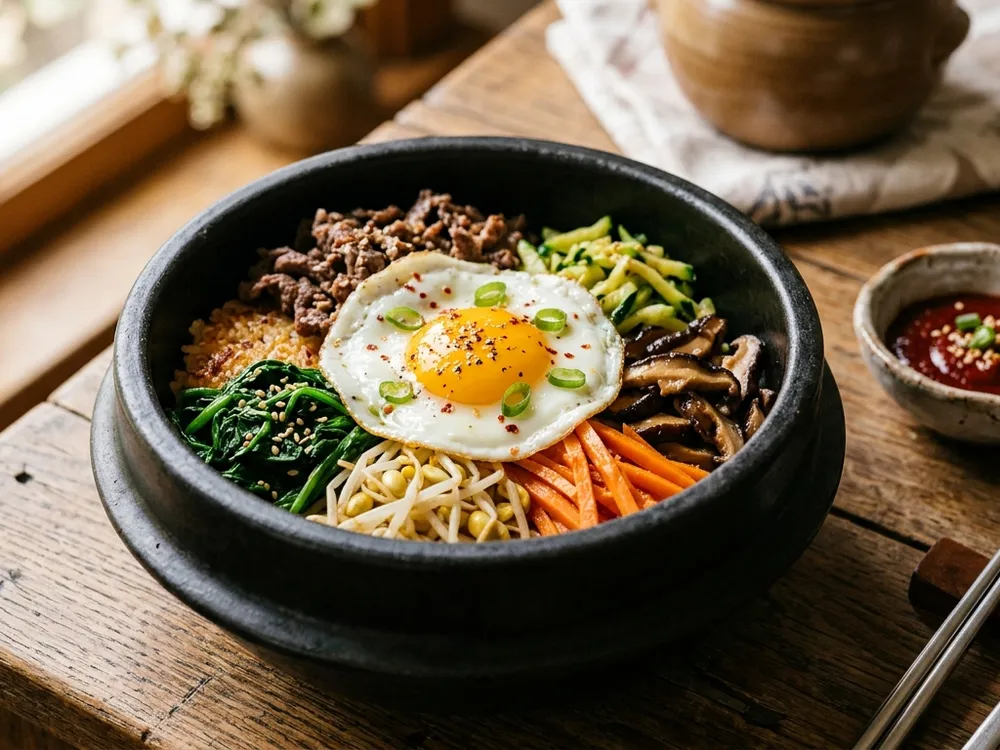
Open a traditional recipe for Korean bibimbap (비빔밥, literally “mixed rice”) on a Tuesday evening and your first instinct might be to close the tab before the dishwashing even starts. Blanch the spinach in pot one, boil the bean sprouts in pot two, sauté the carrots and zucchini separately in pan three, sear the mushrooms and beef in pan four, and fry the eggs in pan five. By the time dinner hits the table, every burner on the stove is covered in pans and colanders.
There is a much smarter way to cook authentic bibimbap on a weeknight without sacrificing a single layer of texture. The soul of great bibimbap does come from cooking and seasoning each vegetable separately—known in Korea as namul (나물)—so that instead of eating a monotone stir-fry where everything tastes identical, every bite contrasts crisp bean sprouts, sweet carrots, earthy soy-glazed shiitake, and nutty garlic spinach. The secret is that you only need one wide frying pan if you cook the toppings in a strict sequence from cleanest and lightest to darkest and caramelized.
In this recipe, we walk you through that smart 1-pan sequence (zero pan-washing between vegetables), compare the rice bags sold in Dutch supermarkets so your bowl never turns out dry, and show you how to recreate sizzling stone-bowl dolsot bibimbap in a regular cast-iron skillet for a crackling golden rice crust (nurungji).
The 3 Pillars of Great Bibimbap in a Dutch Kitchen
1. Why You Cook Each Vegetable Separately (Namul Principle)
Toss spinach, bean sprouts, carrots, and mushrooms into a wok all at once and the spinach immediately dumps its water into the pan—steaming the mushrooms grey and turning the bean sprouts limp. By cycling each vegetable through the same hot skillet for 90 to 120 seconds in order of color and glaze, you finish all the vegetable prep in under 10 minutes using a single pan while keeping every texture distinct.
2. Choosing the Right Rice in the Netherlands (Sushi Rice vs. Pandan vs. Basmati)
Bibimbap lives or dies by the rice underneath. In Korea, everyday steamed rice (bap) is cooked exclusively from short- or medium-grain Japonica rice (the same botanical family as Japanese sushi rice). Its plump, round kernels are high in amylopectin starch, giving the cooked rice a glossy, gently clingy texture that hugs the spicy gochujang sauce and runny egg yolk—and crisps into a unified golden sheet when pressed into a hot oiled pan.
| Rice Type in Dutch Supermarkets | Works for Bibimbap? | How It Behaves in the Bowl & Cast-Iron Skillet |
|---|---|---|
| Sushi Rice / Korean Short-Grain Rice (Japonica) (Albert Heijn, Jumbo, Amazing Oriental) | Yes — Best Choice (10/10) | Plump, glossy kernels that cling together naturally and toast in sesame oil into a cohesive, crackling golden rice crust (nurungji). |
| Pandan Rice / Jasmine Rice (Standard fragrant long-grain) | Good Backup (7.5/10) | Cook with 10% less water than the packet states. Slightly looser grain, but absorbs gochujang sauce well. |
| Basmati Rice / Parboiled / Quick-Cook Rice | No — Avoid | High in amylose; stays dry and separate, scatters under chopsticks, and refuses to form a crispy bottom crust. |
3. The Cast-Iron Skillet Dolsot Trick: Crispy Rice Crust (Nurungji)
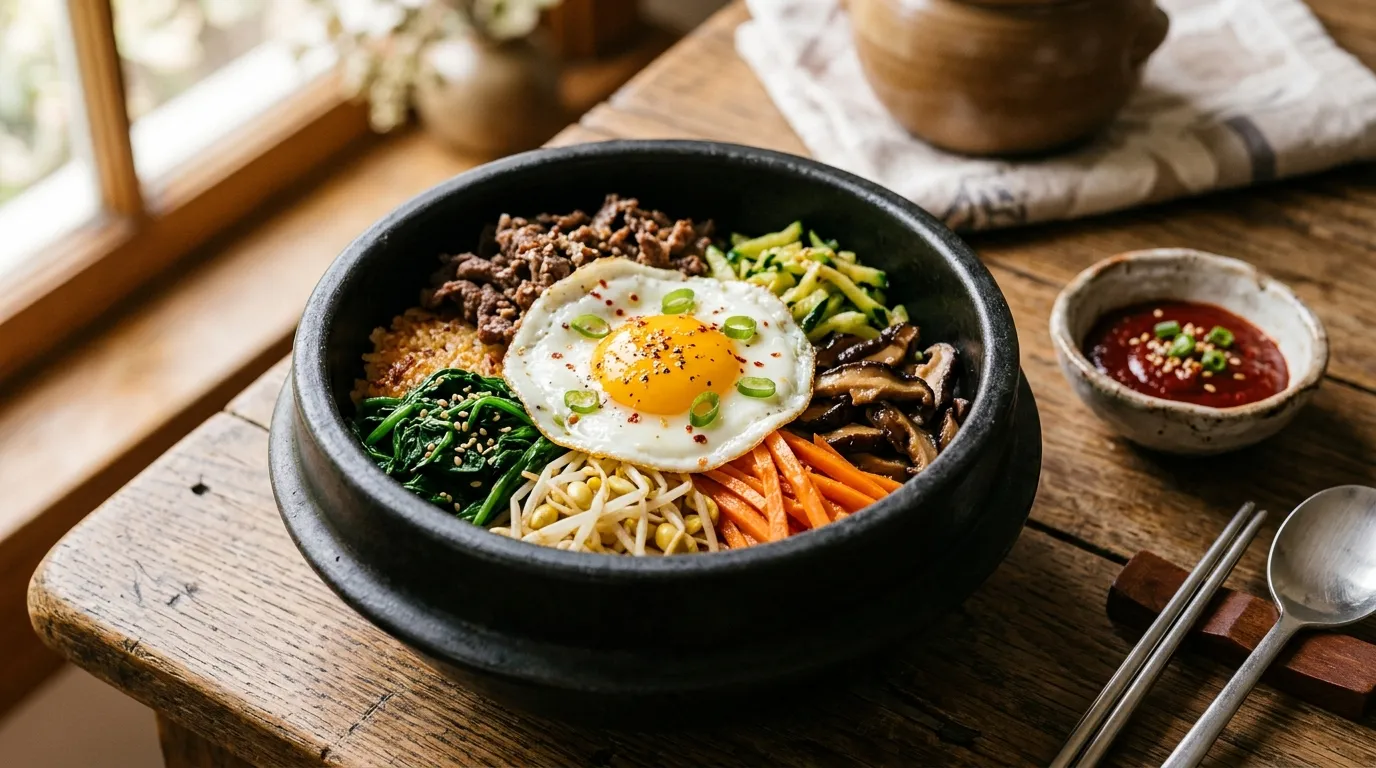
In Korean restaurants, the most popular order is dolsot bibimbap (돌솥비빔밥): the rice and toppings arrive in a scorching-hot soapstone bowl brushed inside with toasted sesame oil. As the bowl sits on the table, the bottom layer of rice toasts into a nutty, audible golden crust called nurungji (누룽지).
You do not need a specialty Korean stone bowl to get that crust at home. A heavy cast-iron skillet, carbon-steel pan, or wide shallow Dutch oven (lage gietijzeren braadpan) retains heat just as effectively:
- Set the cast-iron skillet over medium-low heat and coat the bottom generously with 1.5 tablespoons toasted sesame oil.
- Press the hot cooked sushi rice into an even layer across the base.
- Arrange the cooked namul vegetables, seared beef, sauce, and fried eggs in neat sections on top while letting the skillet sit over medium-low heat for 5 to 7 minutes until you hear a steady, gentle crackle and smell toasted sesame and puffed rice rising from the bottom.
The Bibimbap Sauce: Classic Gochujang or Mild White Miso
Dolloping raw gochujang straight from the red tub onto your rice is a rookie mistake: undiluted gochujang is stiff, pasty, and lacks the bright acidity needed to cut through rich beef and egg yolk. Authentic Korean bibimbap sauce (gochujang-yangnyeomjang) loosens the fermented chili paste with toasted sesame oil, rice vinegar, mirin (or honey), warm water, grated garlic, and toasted sesame seeds.
- The Smaakkade flavor-balance upgrade: Whisk 1 teaspoon white miso paste (shiro miso) into the gochujang sauce. The sweet-savory koji fermentation of white miso rounds off the sharp chili edges immediately.
- Cooking for kids or spice-sensitive eaters? Replace half (or two-thirds) of the gochujang in the sauce with white miso—or a blend of white tahini and soy sauce. You keep the exact same glossy, fermented body and savory depth with only a gentle warmth.
Where to Buy Ingredients in the Netherlands
| Ingredient | Where to Buy in NL | What to Look For on the Label |
|---|---|---|
| Gochujang (red tub) | Albert Heijn, Jumbo (Asian aisle: Saitaku, Bibigo, Go-Tan) or Asian supermarkets (Chung Jung One, Sempio, Haechandle) | Buy the thick fermented paste in a rectangular red tub, not a watery “Korean BBQ” squeeze bottle. |
| Toasted sesame oil | Every Dutch supermarket and toko (Lee Kum Kee, Kadoya, Go-Tan) | Must be dark amber oil pressed from toasted sesame seeds; pale cold-pressed organic sesame oil has zero roasted aroma. |
| White miso (Shiro Miso) | AH/Jumbo (Saitaku, ItSU), Ekoplaza (Terrasana), or the chilled aisle at Amazing Oriental (Hikari) | Choose pale beige shiro (white) miso for sweet-savory balance. |
| Sushi rice | Every supermarket (Saitaku, Lassie, private label) or 5 kg bags at the toko (Yumenishiki, Shinode) | Rinse 3 to 4 times in cold water until the water runs nearly clear before cooking. |
Step-by-Step Instructions (The Smart 1-Pan Sequence)
Step 1: Rinse and cook the sushi rice
Place the 320 g sushi rice in a bowl of cold water, swish the grains briskly with your fingers, and pour off the milky starch water. Repeat 3 times until the water is mostly clear. Combine the drained rice with 400 ml cold water and a pinch of salt in a heavy-bottomed pot with a tight-fitting lid. Bring to a boil, immediately turn the heat down to the lowest setting, and simmer covered for 12 minutes. Turn off the heat and let steam undisturbed (do not lift the lid) for 10 minutes.
Step 2: Marinate the beef and prep the vegetables
Slice the 300 g ribeye or entrecote (tip: pop the steak into the freezer for 15 minutes first so it slices paper-thin) across the grain into thin strips. Toss in a bowl with 1.5 tbsp soy sauce, 1 tbsp mirin, 1 tsp sugar, 1 tsp toasted sesame oil, 1 finely grated garlic clove, and a grind of black pepper. Let marinate at room temperature for 10 to 15 minutes while you julienne the carrot into thin matchsticks and slice the shiitake mushrooms. (Using minced beef? Mix the marinade directly into the mince. Making a plant-based bowl? Bake a batch of our Crispy Air Fryer Tofu while prepping the vegetables).
Step 3: Whisk the Gochujang Bibimbap Sauce
In a small bowl, whisk together 3 tbsp gochujang, 1 tsp white miso paste, 1.5 tbsp toasted sesame oil, 1.5 tbsp rice vinegar, 1 tbsp mirin (or honey), 1.5 tbsp warm water, ½ tbsp sugar, 1 finely grated garlic clove, and 1 tbsp toasted sesame seeds until smooth and glossy. Taste: it should hit spicy, savory, tangy, and lightly sweet notes all at once.
Step 4: Lightly salt the cucumber (cool crunch)
Halve the ½ cucumber lengthwise, scrape out the watery seed core with a teaspoon, and slice into thin half-moons. Toss in a small bowl with ¼ tsp fine salt and a few drops of sesame oil. Let sit until assembly, then gently squeeze out any excess water.
Step 5: Pan Round 1 — Steam the spinach and bean sprouts (3 minutes, pan stays clean)
Heat a wide frying pan over medium-high heat with 2 tablespoons water and a drop of oil. Add the 200 g baby spinach and toss for 60 to 90 seconds just until wilted and bright emerald green. Transfer to a colander, rinse briefly under cold water, squeeze dry with your hands, and toss in a small bowl with ½ tsp toasted sesame oil, ½ grated garlic clove, and a pinch of salt. In the exact same hot pan, add the 150 g bean sprouts (taugé) with 1 tablespoon water and a pinch of salt, cover with a lid, and steam for 2 minutes until tender-crisp. Transfer to a bowl and toss with a few drops of sesame oil.
Step 6: Pan Round 2 — Sauté the julienned carrots (2 minutes)
Wipe the pan dry with a paper towel, add 1 tsp neutral oil, and sauté the julienned carrots with a pinch of salt over medium-high heat for 2 minutes until pliable but still crisp-tender. Transfer to a large platter next to the spinach and bean sprouts.
Step 7: Pan Round 3 — Glaze the shiitake mushrooms in soy & mirin (3 minutes)
Add 1 tsp neutral oil to the same hot pan and sear the 150 g sliced shiitake or chestnut mushrooms for 2 minutes without crowding or over-stirring so they brown nicely. In the final minute, splash in 1.5 tsp soy sauce and ½ tsp mirin, tossing until the liquid reduces into a shiny glaze. Transfer to the platter.
Step 8: Pan Round 4 — Sear the marinated bulgogi beef (3 minutes)
Crank the heat under the same pan to high. Spread the marinated beef strips (or minced beef) in a single layer across the hot surface. Let sear undisturbed for 1.5 minutes so the marinade sugars caramelize, then stir-fry for another 1 to 1.5 minutes until cooked through and deeply browned (verify a food-safe internal temperature of at least 70–75 °C for minced beef or thicker strips). Transfer the beef to a warm plate.
Step 9: Fry the 4 sunny-side-up eggs with lacy crispy edges
Wipe the pan clean with a paper towel, heat 1 tbsp neutral oil over medium-high heat, and crack in the 4 eggs. Fry for 2 to 3 minutes until the whites are set with golden, lacy blistered edges while the yolks remain runny. (Netherlands Voedingscentrum food-safety note: if serving pregnant guests, young children, elderly diners, or anyone immunocompromised, flip the eggs and cook the yolks completely through above 70 °C).
Step 10: Assemble & crisp the rice crust (Dolsot skillet method)
For standard individual bowls, divide the hot rice between four deep bowls. For the sizzling crispy rice crust (nurungji):
- Set a large cast-iron skillet or shallow Dutch oven over medium-low heat and brush the bottom and lower sides generously with 1.5 tbsp toasted sesame oil.
- Press the hot cooked sushi rice into an even, compact layer across the skillet floor.
- Arrange the five vegetables (spinach, bean sprouts, carrots, shiitake, and cucumber) and the seared beef like colorful spokes of a wheel over the rice.
- Crown the center with the fried eggs, spoon a generous dollop of gochujang bibimbap sauce alongside, and scatter with toasted sesame seeds and spring onion.
- Let the skillet cook undisturbed over medium-low heat for 4 to 6 minutes until you hear a lively, steady crackle from the bottom and smell toasted sesame and crispy golden rice. Bring the sizzling skillet straight to the table and mix everything thoroughly with two spoons right before eating!
Frequently Asked Questions About Making Bibimbap (FAQ)
What does the word bibimbap actually mean?
In Korean, bibim (비빔) means “mixing various ingredients” and bap (밥) means “cooked rice”—so it translates literally to “mixed rice.” The tradition is to bring the neatly arranged bowl or skillet to the table first, then pierce the egg yolk and toss the rice, vegetables, meat, and spicy gochujang sauce together thoroughly before taking your first bite.
How can I make bibimbap mild for kids?
Always serve the gochujang sauce on the side so everyone can control their own heat level. For a mild, kid-friendly sauce, replace half or three-quarters of the gochujang with white miso paste (shiro miso), or whisk up a non-spicy sesame-soy drizzle from 2 tablespoons soy sauce, 1 tablespoon toasted sesame oil, 1 teaspoon honey, and toasted sesame seeds.
Is bibimbap good for weeknight meal prep?
It is one of the best meal-prep dishes you can make. The four cooked namul vegetables, seared beef, and gochujang sauce keep well in airtight containers in the fridge for up to 3 days (the sauce keeps for 2 weeks). On the night you eat, all you need to do is steam fresh rice and fry an egg—the chilled or room-temperature vegetables warm right up as soon as you toss them into the piping-hot rice.
What else can I make with a tub of gochujang?
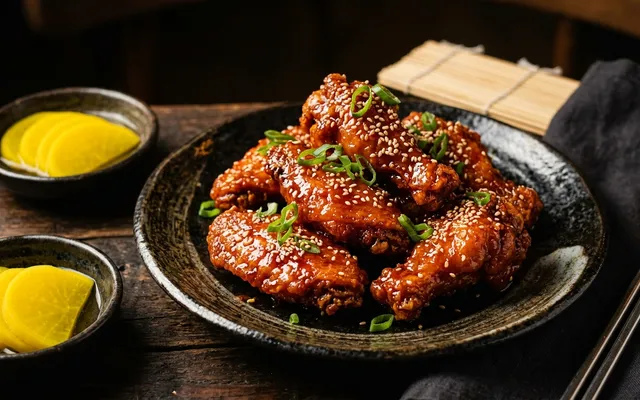
Once you have a red tub of gochujang in the refrigerator, it keeps for months. Put it to work in our Korean Fried Chicken from the Air Fryer (Yangnyeom) or brush a spicy gochujang glaze over Crispy Air Fryer Tofu.
Watch the step-by-step video
External video demonstration supporting the cooking technique. Smaakkade selects relevant culinary demonstrations to complement our source research; follow the written quantities and steps above for this recipe.
Research-led international recipe adapted for kitchens in the Netherlands
Smaakkade is a research-led food publication. For this dish, we cross-referenced trustworthy culinary sources and step-by-step demonstrations, then adapted the method for kitchens in the Netherlands: with metric weights, clear heat cues, and practical guidance on Dutch supermarket substitutes versus specialty toko ingredients.
Bron / Source: https://smaakkade.nl/en/recipes/korean-bibimbap