
Tahini (Sesame Paste)
Tahina / Tahin · Middle Eastern stone-ground sesame paste (طحينة)
Out of tahini for hummus, baba ganoush, or falafel sauce? Use our 5 ranked tahini substitutes with exact ratios, plus white vs. dark tahin in the Netherlands.

At a Glance: Where to Buy or Substitute
Netherlands Pantry GuideAvailability in the Netherlands
Pourable white Levantine tahini (Al Yaman, Al Nakhil, Sebahat, and Souq) at every Turkish and Arabic supermarket plus the Middle Eastern aisle of Albert Heijn and Jumbo; thicker, darker unhulled tahin (Terrasana, Horizon) at Ekoplaza, Odin, and organic health food stores.
Best Direct Substitute
100% cashew butter or white almond butter (1:1 for hummus) OR sunflower seed butter (1:1 nut- and sesame-free) OR full-fat Greek yogurt + extra-virgin olive oil (for falafel sauce and baba ganoush)
You have just drained a tin of chickpeas for homemade hummus or pulled a basket of crisp Authentic Air Fryer Falafel out of the basket, only to open the cupboard and find your jar of tahini (tahin or sesame paste) either empty or separated into a pool of oil above a brick of petrified sediment at the bottom. Can you toss a spoonful of regular Dutch peanut butter or a splash of toasted sesame oil into the food processor instead?
Think twice before doing either. Standard Dutch pindakaas is made from dark-roasted peanuts whose assertive flavor will immediately turn delicate hummus or smoky roasted eggplant (baba ganoush) into Indonesian satay sauce. And Asian toasted sesame oil is a pure liquid flavoring oil with none of the finely milled seed proteins and fibers that give tahini its thick, emulsifying body.
In this guide, we cover what tahini actually does inside a recipe, why shopping in the Netherlands requires knowing the huge difference between white Levantine tahini at Turkish or Arabic grocers and dark organic tahin in the health-food aisle, why tahini seizes into a stiff clump the moment it touches lemon juice (and how ice water fixes it), and the five best substitutes ranked by dish—including safe options for sesame and tree-nut allergies.
What Is Tahini (Tahin) and What Does It Do in Cooking?
Tahini—pronounced tahina in Arabic (طحينة, derived from the root verb tahana, “to grind”) and frequently labeled tahin on Dutch and Turkish jars—is a paste made from 100% hulled, lightly toasted, and stone- or steel-milled sesame seeds (Sesamum indicum). True tahini contains no added vegetable oil, sugar, or stabilizers.
Across the kitchens of the Levant (Lebanon, Syria, Palestine, Jordan, and Israel), Turkey, Greece, and North Africa, tahini performs three culinary jobs at once:
- Dairy-free richness and mouthfeel: Sesame seeds consist of roughly 50 to 55% natural sesame oil suspended in finely ground plant protein and structural fiber. When whisked with water and acid, tahini forms a glossy, velvety cream that gives dips, sauces, and even a bowl of Roasted Tomato Basil Soup the luxurious body of heavy cream or mayonnaise while remaining 100% plant-based.
- Earthy, nutty bitterness as a counterweight: Good tahini has a gentle roasted-sesame aroma with a subtle, pleasant bitterness at the back of the palate. That bitterness tempers the sharp acidity of fresh lemon juice and the bite of raw garlic, giving dishes like hummus bi tahina their rounded depth.
- A powerful natural emulsifier: The proteins and phospholipids in milled sesame seeds act as natural surfactants, allowing you to bind generous amounts of water and lemon juice into a thick dressing that never splits or turns watery.
The Dutch Supermarket Trap: White Levantine Tahini vs. Dark Organic Tahin
Many home cooks in the Netherlands try making hummus or tahini dressing from scratch once, find the result chalky, astringent, and overwhelmingly bitter, and assume their recipe failed. Nine times out of ten, the culprit is the jar they bought. Dutch shelves stock two completely different styles of sesame paste under almost identical names:
| Feature | White Levantine Tahini (Tahina) | Dark / Whole-Seed Tahin (Organic Aisle) |
|---|---|---|
| Raw Material | 100% hulled white sesame seeds (bitter outer bran removed), very lightly warmed | Unhulled or semi-hulled sesame seeds (including the fibrous outer seed coat), roasted darker |
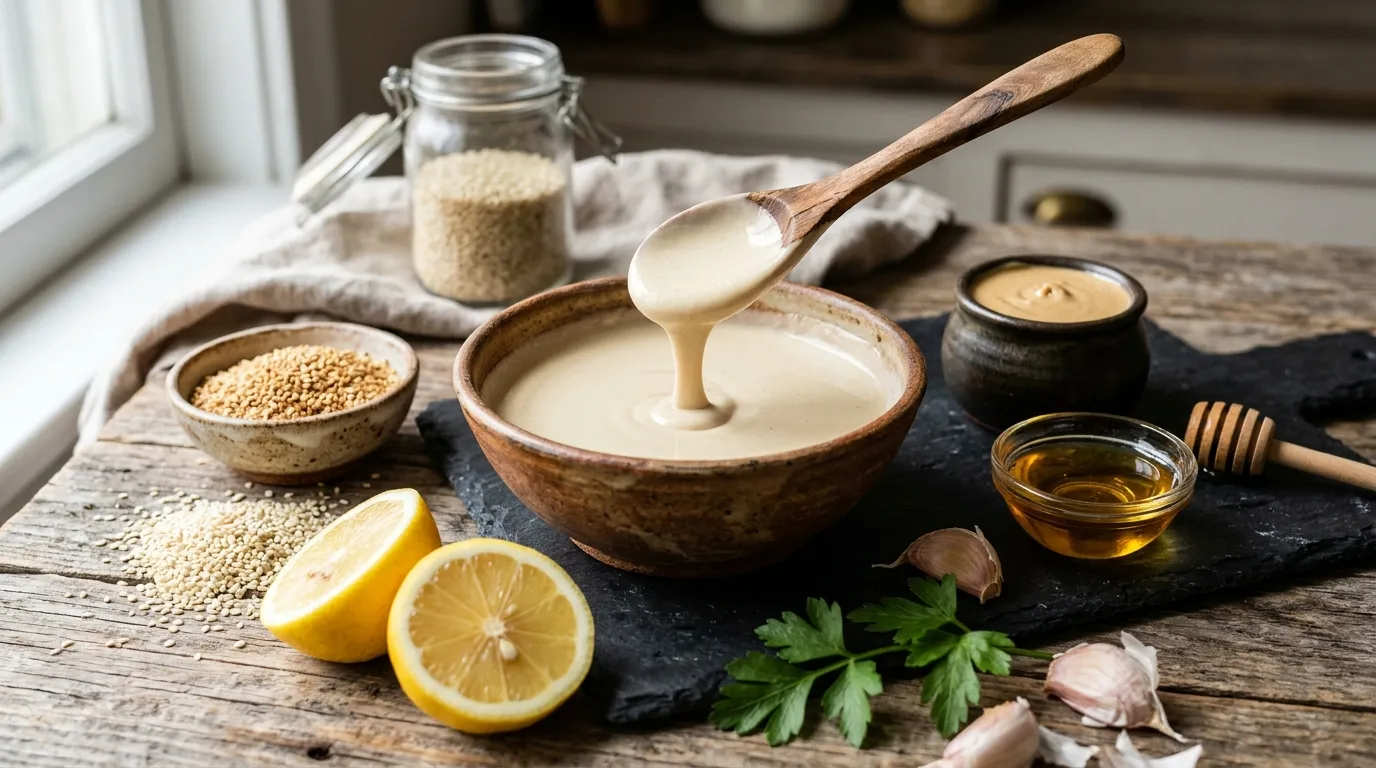
| Color & Texture | Pale ivory to light beige; thin, silky, and pourable like pancake batter | Tan to caramel-brown; thick, gritty, and spreadable like stiff peanut butter |
| Flavor Profile | Mild, creamy, delicately nutty with minimal bitterness | Assertively earthy, dark-roasted, and distinctly bitter (from oxalates and phenolic compounds in the hull) |
| Where to Buy in NL | Turkish/Arabic supermarkets (Al Yaman, Al Nakhil, Sebahat, Alwadi) and the Middle Eastern aisle at AH/Jumbo (Souq, Fait Tout) | Organic supermarkets (Ekoplaza, Odin) and the health/reform aisle of regular supermarkets (Terrasana, Horizon) |
| Best Culinary Use | Hummus, baba ganoush, tarator (falafel sauce), halva, and lemon-tahini dressings | Spread on bread with honey or date syrup, or whisked into bold Asian noodle sauces |
Smaakkade Kitchen Tip: For Middle Eastern recipes where tahini is a star ingredient—such as authentic Levantine hummus (which can contain 30 to 40% tahini by weight!) or a drizzle for Authentic Air Fryer Falafel—always buy pourable white hulled Levantine tahini. If you only have a jar of dark organic tahin from Ekoplaza in the cupboard, use half the amount called for and replace the other half with mild cashew butter or Greek yogurt so the bitterness does not overpower the dish.
The Science of Tahini: Why It Seizes First (and How Ice Water Saves It)
Anyone who has ever stirred a squeeze of lemon juice into smooth, runny tahini knows the moment of panic: within five seconds, your silky liquid paste clenches into a stiff, grainy lump that clings to the whisk like wet cement. It looks as though the sauce is ruined.
What is happening in your bowl is a classic physical process called phase inversion:
- Stage 1 — A water-in-oil suspension: Straight from the jar, pure tahini consists of microscopic solid particles (sesame protein and fiber) floating freely in a continuous sea of sesame oil. There is virtually zero water present.
- Stage 2 — Seizing upon the first drops of liquid: As soon as you add a small splash of lemon juice or water, the bone-dry, hydrophilic (water-loving) sesame proteins absorb those droplets like a sponge. The swollen protein particles turn sticky and clump together inside the oil—the exact same mechanism that causes melted chocolate to seize when hit by a drop of steam.
- Stage 3 — Inversion into an oil-in-water emulsion: The cure is not adding oil, but whisking vigorously while adding ice-cold water one tablespoon at a time. Once enough water enters the bowl, the phases flip: water becomes the continuous liquid phase, and the sesame proteins coat the microscopic oil droplets. Within sixty seconds, the stiff lump relaxes into a snow-white, glossy, ribbon-smooth sauce (tarator) that is twice as pale and fluffy as the tahini you started with.
The 5 Best Tahini Substitutes (Ranked by Dish Type)
Choosing the right substitute depends on whether you are making a delicate Middle Eastern dip (hummus, baba ganoush), a tangy drizzle for falafel or roasted vegetables, or a savory Asian sesame noodle sauce.
Quick-Reference Conversion Table
| Substitute | Ratio (per 1 tbsp tahini) | Best Culinary Application | Allergen Status |
|---|---|---|---|
| 1. 100% Cashew Butter or White Almond Butter | 1 tbsp nut butter + 2 drops sesame oil (optional) | Hummus, baba ganoush, creamy lemon dressings | Sesame-free & peanut-free (contains tree nuts) |
| 2. Sunflower Seed Butter (Zonnebloempitpasta) | 1 tbsp sunflower seed butter | Hummus, dips, and dressings for allergy-safe cooking | 100% Sesame-, peanut- & tree-nut-free |
| 3. Homemade 5-Minute Sesame Paste | 1 tbsp freshly blended paste (hulled sesame seeds + neutral oil) | All Middle Eastern and Asian recipes | Contains sesame (peanut- & tree-nut-free) |
| 4. 100% Peanut Butter + Toasted Sesame Oil | ¾ tbsp 100% peanut butter + ¼ tbsp toasted sesame oil | Dan-dan noodles, Asian stir-fry sauces, spicy slaws | Contains peanuts & sesame |
| 5. Full-Fat Greek Yogurt (10% fat) + Olive Oil | 1 tbsp Greek yogurt + 1 tsp extra-virgin olive oil | Falafel sauce (tarator), baba ganoush, roasted vegetable drizzle | Sesame-, peanut- & nut-free (contains dairy) |
1. Best 1-to-1 for Hummus & Dips: 100% Cashew Butter or White Almond Butter
When blending classic hummus or a lemon-garlic dressing where chickpeas, garlic, lemon, and cumin should remain front and center, 100% unsalted cashew butter (cashewpasta) or white almond butter (witte amandelpasta, made from blanched skinless almonds) is the gold-standard replacement.
- Why it works: Cashews and blanched almonds share nearly the exact fat content (45 to 50%) and pale ivory, velvety texture of white Levantine tahini. Because their flavor is mild and sweet-nutty rather than heavily roasted, they build creamy body without hijacking the Middle Eastern flavor profile.
- Exact ratio: Replace 1 tablespoon tahini with 1 tablespoon 100% cashew butter or white almond butter.
- Flavor upgrade (if not allergic to sesame): If you happen to have a bottle of Asian toasted sesame oil in the pantry, add 2 to 3 drops (no more than ¼ teaspoon per 2 tablespoons of nut butter). That tiny trace supplies the toasted sesame aroma while the cashew or almond butter handles the emulsion.
2. Best Allergy-Safe Option (Sesame- & Nut-Free): Sunflower Seed Butter
If you are cooking for someone with a sesame allergy—or catering to guests who must avoid sesame, peanuts, and tree nuts simultaneously—reach for 100% unsalted sunflower seed butter (sold as zonnebloempitpasta at Ekoplaza, Odin, Holland & Barrett, and larger Albert Heijn stores).
- Why it works: Like sesame, sunflower kernels are botanical seeds rather than nuts. Finely milled roasted sunflower seeds possess the same earthy, faintly bitter undertone and emulsifying power as real tahini, making sunflower-butter hummus almost indistinguishable from traditional hummus.
- Exact ratio: Replace 1 tablespoon tahini with 1 tablespoon unsalted sunflower seed butter, plus an extra pinch of salt and a squeeze of lemon juice.
- Baking caveat: Stick to cold dips, soups, and sauces. In baked goods leavened with baking soda, the naturally occurring chlorogenic acid in sunflower seeds reacts with alkaline baking soda, turning cookies or cakes harmlessly emerald green as they cool.
3. Homemade 5-Minute Tahini (From a Jar of Sesame Seeds)
Out of tahini, but have a bag or jar of white hulled sesame seeds (gepelde sesamzaadjes) in your spice drawer? You can blend fresh tahini in five minutes flat.
- Formula for ~150 ml fresh tahini:
- Set a dry, heavy skillet over medium-low heat and toast 150 g white hulled sesame seeds for 3 to 4 minutes, shaking the pan constantly. Take them off the heat as soon as they smell fragrant and turn a shade ivory-gold—do not let them brown, or the paste will turn bitter.
- Pour the seeds onto a cool plate for 5 minutes (blending hot seeds causes the oil to separate prematurely).
- Transfer the cooled seeds to a food processor or compact spice/chopper attachment and pulse for 1 to 2 minutes until a crumbly meal climbs the sides of the bowl.
- Scrape down the sides, drizzle in 2 to 3 tablespoons neutral oil (sunflower oil, grapeseed oil, or a very mild olive oil) plus a pinch of fine sea salt, and blend on high for 2 to 3 minutes until silky and pourable.
4. Best for Asian Noodles & Stir-Fries: 100% Peanut Butter + Toasted Sesame Oil
Are you making Sichuan dan-dan noodles, cold sesame noodles, or a savory stir-fry glaze alongside ketjap manis where the recipe calls for Chinese sesame paste (zhima jiang) or tahini?
- Why it works here: Chinese sesame paste is milled from deeply roasted, unhulled sesame seeds, and many authentic Sichuan noodle sauces intentionally blend sesame paste with peanut butter anyway.
- Exact ratio: Replace 1 tablespoon tahini with ¾ tablespoon 100% smooth natural peanut butter (no added sugar or palm oil) + ¼ tablespoon toasted Asian sesame oil. Whisk with a splash of hot noodle-cooking water, soy sauce, and optionally a teaspoon of white miso (as in our mild sauce variation for Korean Bibimbap) until glossy.
- Where NOT to use it: Skip this swap in Lebanese hummus or falafel sauce unless you specifically want a peanut-satay flavor profile.
5. Best for Falafel Sauce (Tarator) & Baba Ganoush: Full-Fat Greek Yogurt + Olive Oil
Need a quick sauce to spoon over hot Authentic Air Fryer Falafel, roasted cauliflower, or charred eggplant (baba ganoush) and have zero nut or seed butters in the house?
- Why it works: Across Turkey and the Levant, charred eggplant and falafel are served just as frequently with a thick, garlicky yogurt sauce (labneh or full-fat 10% Greek yogurt) enriched with extra-virgin olive oil and lemon juice. The lactic tang and milk fat provide the exact same cooling, creamy contrast against crisp chickpeas, cumin, and coriander.
- Exact ratio: Replace 1 tablespoon tahini with 1 generous tablespoon full-fat Greek yogurt (10% fat) + 1 teaspoon extra-virgin olive oil. Whisk with a finely grated clove of garlic, lemon juice, salt, and chopped flat-leaf parsley. (For a dairy-free sweet-sour drizzle alongside roasted meats or vegetables, you can also balance dressings with a touch of tamarind paste or pomegranate molasses).
Allergy Warning: Sesame Allergies and Tree-Nut Cross-Reactivity
If you are substituting tahini because of a sesame allergy, pay close attention to labels and medical cross-reactivity:
- Sesame is one of the 14 mandatory EU allergens: Sesame allergies can trigger severe anaphylactic reactions. If cooking for someone with a sesame allergy, never add toasted sesame oil to a substitute; unlike highly refined industrial oils, cold-pressed and toasted sesame oils retain allergenic sesame proteins.
- Cross-reactivity between sesame, peanuts, and tree nuts: Clinical allergy studies show a high rate of co-existing allergies between sesame seeds, peanuts, and tree nuts (especially cashews, walnuts, and hazelnuts). Unless you know for certain that your guest tolerates cashew or almond butter, always choose Option 2 (sunflower seed butter), Option 5 (Greek yogurt + olive oil), or simply make tahini-free hummus by adding 2 extra tablespoons of fruity extra-virgin olive oil plus 2 tablespoons of ice-cold chickpea liquid (aquafaba) per tin of chickpeas.
Buying and Storing Tahini in the Netherlands (The Upside-Down Trick)
- Where to buy the best jar: For silky, pourable, non-bitter tahini, skip the health-food aisle and visit a local Turkish or Arabic supermarket (check our Dutch Toko & World Grocer Finder to locate one near you). Look for 100% hulled white tahini from brands like Al Yaman, Al Nakhil, Sebahat, or Alwadi Al Akhdar. At regular Albert Heijn or Jumbo stores, grab a jar of Souq white tahini from the Middle Eastern section.
- Keep it out of the fridge: Because pure tahini contains almost zero free water, bacteria and mold cannot easily grow in it. An opened jar keeps for 6 to 12 months in a cool, dark cupboard. Refrigerating tahini chills the sesame oil, turning a pourable paste into a stiff, unworkable block.
- The upside-down storage trick: Without artificial emulsifiers, heavy sesame fibers naturally settle to the bottom of the jar over a few weeks while oil rises to the top. When you first open a jar, stir it thoroughly from the very bottom using a sturdy dinner knife or chopstick. Then screw the lid on tightly and flip the jar upside down every few weeks in your pantry so the solids never compact into a dry puck at the bottom.
Frequently Asked Questions About Substituting Tahini (FAQ)
What is the difference between tahin and tahini?
There is zero difference in the ingredient itself: both tahin and tahini (as well as tahina) mean 100% milled sesame paste. On Dutch shelves, the spelling tahin (from Turkish) is commonly printed on organic jars made from darker, unhulled sesame seeds as well as Turkish imports, while tahini (via Greek and English) and tahina (from Arabic) typically appear on jars of pale, hulled Levantine sesame paste.
Can you make hummus without tahini?
Yes, easily. If you are out of tahini and have no nut or sunflower seed butter on hand, replace the 2 to 3 tablespoons of tahini per 400 g tin of chickpeas with 2 tablespoons good extra-virgin olive oil + 2 tablespoons ice-cold reserved chickpea liquid (aquafaba) or ice water, plus an extra ¼ teaspoon of ground cumin. Blending the aquafaba at high speed whips air into the chickpeas so the hummus still turns out light and creamy.
Can I substitute sesame oil for tahini?
Not 1-to-1. Toasted sesame oil is a 100% liquid oil with an intensely concentrated, smoky roasted flavor and none of the solid seed proteins or fibers that thicken a sauce. Replacing 2 tablespoons of tahini with 2 tablespoons of sesame oil will break your emulsion and overwhelm the dish with burnt-sesame flavor. Only use toasted sesame oil in tiny amounts (¼ teaspoon) to add sesame aroma to a neutral base like cashew or almond butter.
How do I fix the rock-hard layer at the bottom of an old jar of tahini?
Scoop the hardened sesame paste from the bottom of the jar into a tall immersion-blender cup or small food processor, pour in the separated oil from the top of the jar (or add 1 to 2 tablespoons of mild sunflower oil), and blitz for 30 seconds. The paste will immediately re-emulsify into a smooth, pourable liquid.
Recipes Using Tahini (Sesame Paste)
Quick 25-Minute Miso Ramen From Scratch (Sapporo Style)
Make creamy restaurant-style Japanese miso ramen in 25 minutes: built with a velvet miso-tahini tare, 6.5-minute jammy ramen eggs, and Dutch supermarket staples.
Shakshuka with Harissa, Poached Eggs & Feta (From Scratch)
Make thick, authentic harissa shakshuka without watery sauce or overcooked eggs: using whole peeled plum tomatoes, oil-bloomed harissa, feta, and runny yolks.
Crispy Air Fryer Halloumi (With Honey-Harissa Glaze & Za'atar)
Golden, glass-crisp air fryer halloumi in 12 minutes without rubbery squeak: featuring our 5-minute warm-water soak, cornstarch crust, and honey-harissa glaze.
Real Air Fryer Falafel
Golden brown and crispy on the outside, bright green and airy on the inside. Made from raw chickpeas exactly as it should be — never from a can.
Korean Bibimbap (Smart 1-Pan Method & Crispy Skillet Rice Crust)
Make authentic Korean bibimbap at home without 5 pans of dishes: featuring our 1-pan namul sequence, cast-iron crispy rice crust (nurungji), and gochujang sauce.
Video Guide & Culinary Context
More Ingredient Guides
Harissa (North African Chili Paste)
Out of harissa or rose harissa? Use our 30-second swap with sambal, tomato paste, and cumin, plus the difference between tube and jar harissa in the Netherlands.

Fish Sauce
The complete guide: what fish sauce is, why it smells like that but tastes divine, and how to substitute it if you're cooking vegetarian or vegan.
Galangal
The complete expat guide: why galangal is not just 'Thai ginger', where to find it in the Netherlands, and how to smartly substitute it.