
Most home cooks who try making shakshuka for the first time run straight into one of two disappointments: either the tomato sauce stays a thin, watery pool in which the egg whites float around while the yolks cook into chalky yellow golf balls, or the egg whites on top stay raw and translucent while the tomato sauce scorches onto the bottom of the pan.
Both problems come down to simple kitchen chemistry. In the Netherlands, almost every standard tin of diced tomatoes (tomatenblokjes) is treated with the firming agent calcium chloride (E509) so the cubes hold their shape during factory canning. Because of that calcium salt, diced tomatoes refuse to melt down into a jammy North African matbucha base—leaving you with firm cubes swimming in thin tomato water. And when you crack cold fridge eggs into a watery sauce, the whites take so long to set that the yolks overcook before dinner hits the table.
By choosing canned whole peeled plum tomatoes, blooming North African harissa paste, cumin, and smoked paprika in warm olive oil for 90 seconds, and cooking room-temperature eggs using our two-stage poaching method (steaming under a lid + 60 seconds of residual carryover heat), you can bring a thick, fragrant skillet of shakshuka to the table in 30 minutes with tender set whites, liquid gold yolks, and creamy Greek feta.
The 3 Secrets to Thick, Glossy Shakshuka
1. Why Canned Whole Plum Tomatoes Beat Diced Tomatoes (E509)
Flip over a budget tin of tomatenblokjes at Albert Heijn or Jumbo and check the ingredient list: right after tomatoes and tomato juice, you will see firming agent: calcium chloride (E509). Calcium ions cross-link the natural pectin inside tomato cell walls so the cubes stay intact even after 20 minutes of boiling. That is helpful in a minestrone, but a disaster for shakshuka.
Always buy canned whole peeled plum tomatoes (San Marzano, Mutti Pelati, or private-label hele gepelde tomaten) or finely crushed Mutti Polpa (which contains zero E509). Crush the whole tomatoes by hand or with a potato masher right in the pan, then simmer the sauce uncovered for 10 to 12 minutes until drawing a wooden spoon across the floor of the skillet leaves a clear path for two seconds. Only then is the sauce thick enough to cradle your eggs in deep wells.
2. Building the Matbucha Base: Sweet Pointed Peppers & Oil-Bloomed Harissa
Across Tunisia, Morocco, and the Levant, great shakshuka starts by cooking sweet peppers, onions, garlic, and tomatoes down into a rich relish closely related to matbucha. Two small ingredient choices elevate the sauce in a Dutch kitchen:
- Sweet red pointed peppers (zoete puntpaprika) instead of green bell peppers: Green bell peppers have thick skins and a grassy bitterness. Sweet red pointed peppers (sold in two-packs in every Dutch produce aisle) have thinner skins and higher natural sugars, melting down in 8 minutes to balance the acidity of canned tomatoes without needing spoonfuls of white sugar.
- Blooming harissa and spices in oil for 90 seconds: Stir the harissa paste, concentrated tomato paste, cumin, coriander, and smoked paprika into the softened onions and peppers before pouring in the wet tomatoes. Frying them in hot olive oil for 90 seconds caramelizes the tomato paste and dissolves fat-soluble spice aromatics throughout the oil.
3. Two-Stage Egg Poaching: Set Whites & Runny Yolks Every Time
Poaching eggs on top of a thick sauce is a physics balancing act: egg whites (albumen) need 62 to 68 °C to turn opaque and firm, whereas egg yolks thicken and set above 65 to 68 °C. Because the eggs sit on top of a dense sauce, the bottom of the egg heats faster than the top. Here is how to solve that completely:
- Take your eggs out of the fridge 15 minutes early and crack each egg into a small ramekin or teacup first.
- Use the back of a large spoon to press 5 to 6 deep wells into the thickened sauce and slide an egg into each well.
- The basting trick: Use a teaspoon to spoon a tiny bit of hot tomato sauce over the thick ring of clear egg white immediately surrounding the yolk (leaving the yellow yolk dome uncovered).
- Lid on + pull 1 minute early: Cover the pan with a tight lid so trapped steam cooks the tops of the whites from above. Simmer over low heat for 5 to 6 minutes until the whites are 90% opaque and still jiggle slightly, then turn off the burner and let residual pan heat finish the last millimeter of white in 60 seconds. (Netherlands Voedingscentrum food-safety note: if cooking for pregnant guests, young children, elderly diners, or immunocompromised individuals, keep the lid on for 8 to 10 minutes until the yolks are cooked solid above
70 °C).
Choosing the Best Pan for Shakshuka
| Pan Type | Works for Shakshuka? | Why It Works (or Doesn’t) |
|---|---|---|
| Wide Stainless-Steel Skillet or Sauté Pan (Ø 26–28 cm) with Lid | Excellent (10/10) | Non-reactive with acidic tomatoes, wide surface area for fast evaporation, and plenty of room for 6 eggs. |
| Enameled Cast-Iron Skillet or Shallow Braiser (Le Creuset / Staub) | Excellent (10/10) | Retains heat beautifully at the table; turn off the burner 1 to 1.5 minutes earlier since cast iron carries more residual heat. |
| Raw (Un-enameled) Cast-Iron or Carbon-Steel Skillet | Avoid for long simmering | Simmering acidic tomatoes for 15 minutes strips un-enameled seasoning and can impart a metallic tang to the sauce. |
Step-by-Step Instructions
Step 1: Sweat the onion and sweet pointed peppers (8 minutes)
Heat the 3 tbsp extra-virgin olive oil in a wide 26–28 cm skillet or sauté pan over medium-low heat. Add the diced onion, sliced sweet red pointed peppers, and ½ tsp fine sea salt. Cook, stirring occasionally, for 7 to 8 minutes until the peppers are slumped and glossy and the onion is translucent with golden edges.
Step 2: Bloom the garlic, harissa, and spices in the oil (90 seconds)
Add the sliced 4 garlic cloves, 1.5 tbsp harissa paste, 1 tbsp concentrated tomato paste, 1.5 tsp ground cumin, 1 tsp smoked paprika, and 1 tsp ground coriander. Stir constantly over medium-low heat for 60 to 90 seconds until the oil turns deep brick-red and smells richly of toasted cumin and roasted pepper. (Using fiery Tunisian tube harissa like Le Phare du Cap Bon? Use only 1 to 1.5 teaspoons!)
Step 3: Crush the whole plum tomatoes and simmer uncovered (12 minutes)
Pour the 2 tins (800 g) whole peeled plum tomatoes and their juices into the pan (crush the whole tomatoes by hand low over the pan, or mash them right in the skillet with a potato masher). Swish each empty tin with 2 tablespoons water and add to the pan. Bring to a lively bubble, lower the heat to medium-low, and simmer uncovered for 10 to 12 minutes, stirring occasionally across the bottom, until excess water has evaporated and the sauce is thick, jammy, and holds its shape. Season to taste with sea salt, freshly cracked black pepper, and a pinch of sugar if your tomatoes taste sharp.
Step 4: Whisk the quick tahini-yogurt drizzle (optional)
While the sauce reduces, whisk 1.5 tbsp white tahini (or full-fat Greek yogurt) in a small bowl with 1 tbsp ice-cold water, a squeeze of lemon juice, and a pinch of salt until smooth and pourable.
Step 5: Make deep wells and slide in the eggs
Turn the burner under the thickened sauce down to low. Use the back of a soup spoon to press 5 or 6 deep wells spaced evenly around the skillet. Crack each room-temperature egg into a small cup first and slide it gently into a well. Spoon a tiny bit of hot tomato sauce over the thick collar of clear egg white right around each yolk so the whites cook at the same pace.
Step 6: Scatter the feta and poach under a lid (5–6 minutes)
Season each egg with a tiny pinch of salt and black pepper, then scatter the 100 g coarsely crumbled Greek feta across the tomato sauce between the eggs (steaming softens the feta into creamy pockets). Cover the skillet with a tight-fitting lid and simmer gently over low heat for 5 to 6 minutes.
Step 7: Let residual heat finish the whites (60 seconds)
At the 5-minute mark, lift the lid and gently nudge the pan: as soon as the egg whites are opaque white with just a slight wobble around the center while the yolks still feel soft, turn off the heat. Leave the pan covered off the burner for 1 minute so carryover heat finishes setting the whites without overcooking the runny yolks.
Step 8: Garnish with tahini and fresh herbs & serve from the skillet
Drizzle the tahini-yogurt sauce across the skillet, scatter generously with chopped fresh flat-leaf parsley and cilantro, and finish with a thread of extra-virgin olive oil. Set the hot skillet on a trivet in the middle of the table with warm Turkish flatbread (Turks brood), pita, or crusty sourdough for mopping up the runny yolks and spiced harissa sauce.
Frequently Asked Questions About Harissa Shakshuka (FAQ)
Why does my shakshuka sauce always turn out watery?
Nine times out of ten, watery shakshuka happens either because canned diced tomatoes were used (which contain E509 calcium chloride that stops them from breaking down) or because the eggs were cracked in too early and covered with a lid. Once the lid goes on, zero water can evaporate. Always use whole peeled plum tomatoes and simmer the sauce uncovered for 10 to 12 minutes until thick before adding the eggs.
Can you make the shakshuka sauce ahead of time for meal prep?
Yes—in fact, the spiced tomato-pepper-harissa base (matbucha) tastes even deeper the next day! You can cook the sauce through Step 3, cool it, and store it in an airtight container in the fridge for up to 4 days (or freeze it for 3 months). When ready to eat, reheat the sauce in a skillet until bubbling gently, make the wells, and poach fresh eggs in 6 minutes.
How can I make this shakshuka 100% plant-based (vegan)?
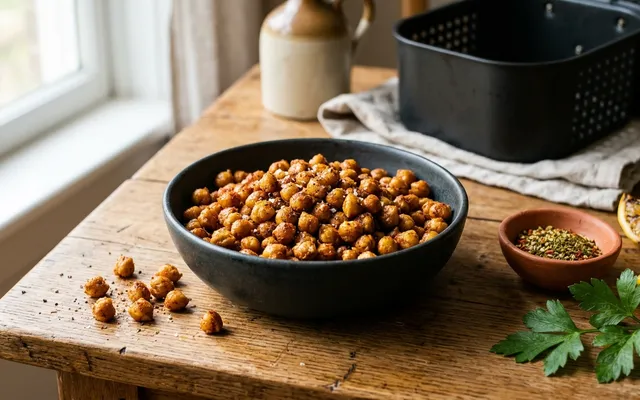
The entire spiced tomato and harissa base is naturally vegan. For a hearty plant-based shakshuka, replace the eggs and feta with cubes of our Crispy Air Fryer Tofu or a drained tin of chickpeas simmered in the sauce for 5 minutes, then finish with a generous swirl of lemon-garlic white tahini and fresh herbs.
What goes well alongside shakshuka for a bigger dinner or brunch spread?
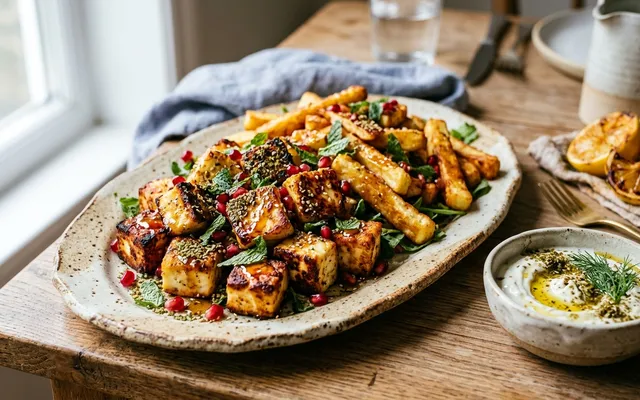
Turn this skillet into a Middle Eastern feast by serving it alongside a platter of our Crispy Air Fryer Halloumi or freshly baked Authentic Air Fryer Falafel, warm pita bread, marinated olives, and a crisp cucumber, tomato, and mint salad.
Watch the step-by-step video
External video demonstration supporting the cooking technique. Smaakkade selects relevant culinary demonstrations to complement our source research; follow the written quantities and steps above for this recipe.

Research-led international recipe adapted for kitchens in the Netherlands
Smaakkade is a research-led food publication. For this dish, we cross-referenced trustworthy culinary sources and step-by-step demonstrations, then adapted the method for kitchens in the Netherlands: with metric weights, clear heat cues, and practical guidance on Dutch supermarket substitutes versus specialty toko ingredients.
Bron / Source: https://smaakkade.nl/en/recipes/shakshuka-with-harissa