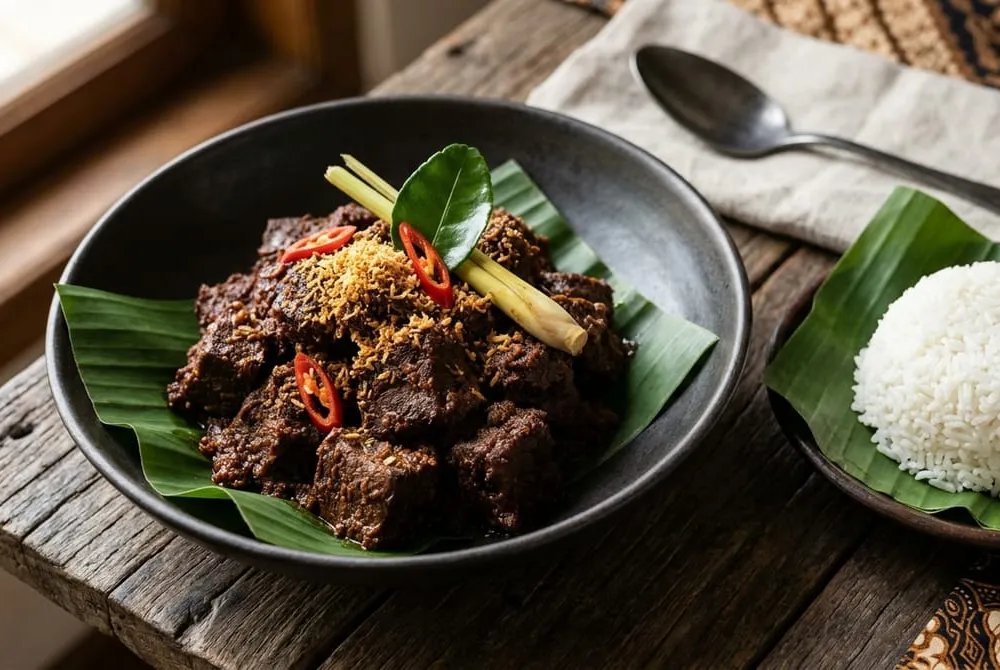
When beef rendang is made from a supermarket spice packet, the result is usually a quick beef stew swimming in a thickened brown gravy. Traditional rendang daging from the Minangkabau region of West Sumatra is built on a completely different culinary principle. In Indonesia, merendang refers to a slow cooking method rather than a sauce: simmering meat in spiced coconut milk until the water evaporates, the coconut emulsion splits into natural coconut oil, and the beef slowly confits and fries in that aromatic oil and toasted spice paste.
Making authentic beef rendang from scratch in a Dutch kitchen does not require hard-to-find equipment. With the right Dutch supermarket cut of beef, two cans of high-fat coconut milk, a heavy Dutch oven or wide wadjan, and a freshly blended bumbu, patience on the stove does almost all the work.
Choosing the Right Cut of Beef in the Netherlands
Dutch supermarkets butcher beef differently from UK or US grocers. Because rendang cooks for over three hours and finishes by frying in rendered coconut fat, the meat needs generous connective tissue (collagen) and marbling:
- Sukadelappen (best choice): Found in every Dutch supermarket and butcher, sukadelappen (flat iron / chuck blade) have a prominent seam of connective tissue running through the center. Do not trim this seam away. After 2.5 to 3.5 hours of gentle simmering above 70 °C, that tough collagen melts into rich gelatin, keeping the beef succulent even after the liquid in the pan has evaporated.
- Riblappen (excellent alternative): Cut from the chuck roll, riblappen have good intramuscular fat without the central sinew. They tenderize slightly faster and stay rich and flavorful.
- Magere runderlappen (avoid): These lean braising steaks (usually cut from the round or silverside) lack fat and collagen. During the final dry-frying stage of rendang, lean muscle fibers tighten and turn dry and chalky.
Cutting tip: Cut the raw beef into generous 4 to 5 cm chunks. Beef shrinks by roughly a third during long braising; if you cut the cubes too small at the start, they will shred into stringy fibers when you stir the thick paste at the end.
The Three Stages of Rendang: From Gulai to Kalio to Rendang
Understanding the three classic West Sumatran stages tells you exactly how your pot is progressing and when to adjust the heat:
- Stage 1 — Gulai (0 to 90 minutes): The beef simmers in a thin, fragrant, golden-yellow coconut broth. During this stage, the meat gently poaches over low heat while the collagen begins breaking down.
- Stage 2 — Kalio (90 to 150 minutes): Most of the water has evaporated. The liquid thickens into a glossy, caramel-brown gravy, and clear droplets of coconut oil begin rising to the surface (pecah minyak — the splitting of the emulsion). Many Dutch-Indonesian home cooks stop at this stage because spoonfuls of rich kalio gravy are delicious over steamed rice.
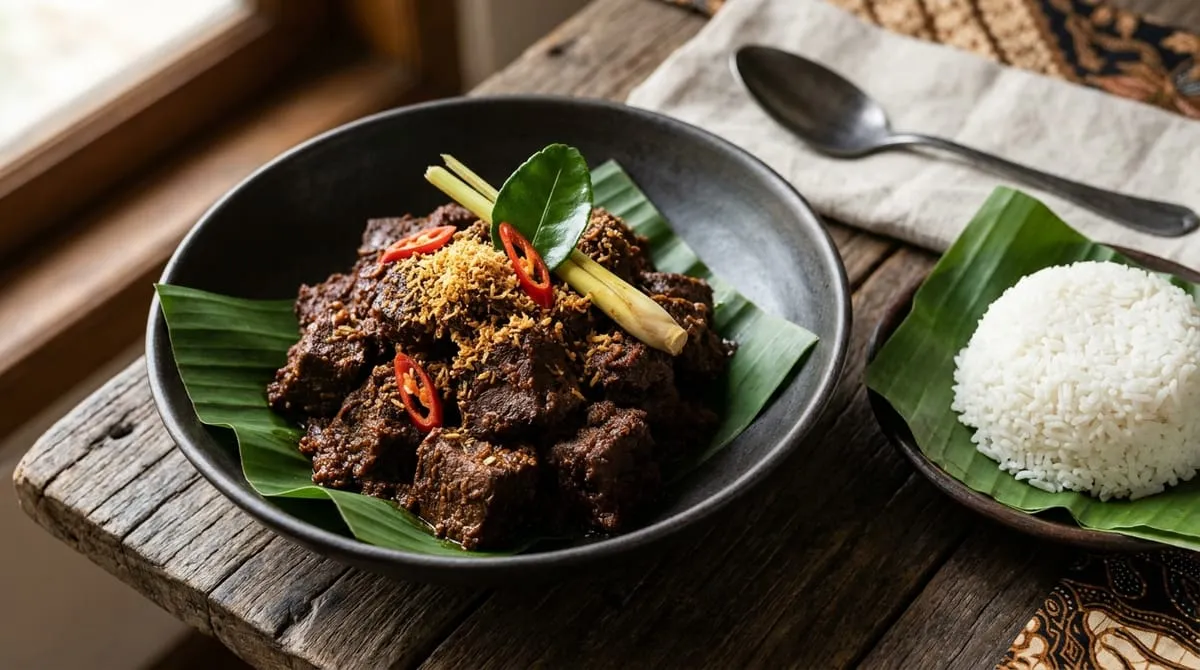
- Stage 3 — Rendang (150 to 210 minutes): The emulsion breaks completely. The coconut solids and bumbu sink into the rendered coconut oil and begin frying gently against the bottom of the pot. By scraping the bottom regularly with a wooden spatula, those browned coconut and spice solids caramelize into a dark mahogany crust that clings tightly to every piece of beef.
The Dutch Kitchen Shortcut: Kelapa Sangrai (Kerisik)
In West Sumatra, rendang is traditionally made with freshly pressed coconut milk from mature coconuts, which naturally contains high oil levels and fine coconut solids. Canned coconut milk sold in European supermarkets is homogenized and contains fewer solids.
By dry-toasting 40 g of unsweetened desiccated coconut in a skillet until golden brown and grinding it in a mortar (kelapa sangrai, known in Malaysia as kerisik), you restore those missing coconut solids. It adds a deep, toasted coconut aroma and absorbs excess moisture during the final stage, allowing the rendang to darken and caramelize in 3 to 3.5 hours without overcooking the meat.
Step-by-Step Cooking Method
Remove the beef from the refrigerator 30 minutes before cooking and cut it into large 4 to 5 cm chunks.
Step 1: Toast the 40 g of unsweetened desiccated coconut in a dry skillet over medium heat for 4 to 5 minutes until evenly golden brown. Stir or shake the pan constantly, as coconut burns within seconds once it colors. Immediately transfer the hot coconut to a mortar and pestle (or small spice grinder) and pound or pulse until it forms a slightly oily, crumbly paste (kelapa sangrai). Set aside.
Step 2: In the same dry skillet, toast the 4 candlenuts (kemiri) for 2 minutes until lightly golden. Place the candlenuts into a food processor or large mortar along with the 8 roughly chopped shallots, 5 garlic cloves, 4 large red chilies, 1 to 2 bird’s eye chilies (rawit), 4 cm sliced galangal, 3 cm fresh ginger, 2 cm fresh turmeric (or 1 tsp ground turmeric), 1.5 tsp ground coriander, 1 tsp ground cumin, ¼ tsp grated nutmeg, and ¼ tsp ground cloves. Blend or pound into a smooth, cohesive bumbu paste (add 1 tablespoon of water or oil if needed to keep the blades moving).
Step 3: Heat 2 tablespoons of neutral oil in a heavy Dutch oven or wide wadjan over medium heat. Add the bumbu paste along with the 2 bruised lemongrass stalks, 6 torn kaffir lime leaves, and 3 daun salam leaves. Fry the spice paste for 6 to 8 minutes, stirring constantly, until the raw moisture evaporates, the paste darkens a shade, and the aromatics smell rich and cooked.
Step 4: Pour in the 800 ml of full-fat coconut milk, scraping the bottom of the pot to dissolve the caramelized spice paste. Add the 1 kg of beef chunks and 1.5 teaspoons of sea salt. Bring just to a gentle bubble, immediately reduce the heat to the lowest setting, and let the beef simmer uncovered (or with the lid slightly ajar if your stove runs hot) for 1.5 to 2 hours (Gulai stage). Stir from the bottom every 20 minutes.
Step 5: After about 2 hours, the liquid will have reduced by half into a thick, creamy gravy (Kalio stage). Stir in the 1 tablespoon of tamarind paste, 1 tablespoon of palm sugar, and the reserved toasted coconut paste (kelapa sangrai).
Step 6: Continue simmering uncovered over low to medium-low heat for another 45 to 60 minutes. Once the gravy reduces enough that clear coconut oil visibly separates from the solids (pecah minyak), the true merendang stage begins: the meat and spice solids are now frying in the rendered coconut oil. Let the spices catch lightly on the bottom of the pot for 1 to 2 minutes at a time, then scrape the browned fond up with a wooden spatula and fold it over the beef.
Step 7: Repeat this gentle catch-and-scrape cycle until the rendang turns deep dark brown and the thick, caramelized spice paste clings to the tender beef chunks. If you prefer a slightly saucier result (between kalio and dry rendang), remove the pot from the heat a little earlier; for classic dry Sumatran rendang, continue until almost no free liquid remains. Discard the lemongrass stalks and whole leaves before serving.
Practical Substitutes and Ratios
If you are shopping at a regular Dutch supermarket without visiting an Asian grocer (toko), use these verified approximations:
- Fresh galangal (laos) and lemongrass (sereh) approximation: Galangal cuts through the heavy coconut fat with a resinous pine-and-citrus freshness. If you do not have fresh or frozen galangal, use 1.5 tbsp fresh ginger + 1 tsp freshly grated lime zest, or 1.5 tsp dried galangal powder (laospoeder) (see our galangal substitute guide). If you are also out of fresh lemongrass stalks, use 2 strips unwaxed lime peel + 2 thin coins bruised ginger or 2 tsp dried lemongrass powder (serehpoeder) (see our lemongrass substitute guide).
- Tamarind paste (asem) approximation: Tamarind provides subtle fruity acidity that balances the rich coconut oil. Replace 1 tbsp tamarind paste with 1 tbsp fresh lime juice + 1 tsp dark brown caster sugar (see our tamarind substitute guide).
- Candlenuts (kemiri) approximation: Candlenuts are high in oil and thicken the bumbu naturally. Replace 4 candlenuts with 4 unsalted macadamia nuts or 8 blanched almonds.
- Why there is no ketjap manis in this recipe: Unlike Javanese braised beef (semur), authentic West Sumatran rendang gets its dark color from caramelized coconut and spices rather than sweet soy sauce. If you want to understand how Indonesian sweet soy sauce works in other Indonesian dishes, read our ketjap manis substitute guide.
| Original Ingredient | Practical Approximation | Ratio | Flavor Difference vs. Original |
|---|---|---|---|
| Fresh galangal (4 cm) | Fresh ginger + lime zest (or galangal powder) | 1.5 tbsp ginger + 1 tsp zest (or 1.5 tsp powder) | Dried galangal powder works well in long-simmered rendang, though it lacks the bright top note of fresh root |
| Candlenuts (4 pieces) | Unsalted macadamia nuts | 4 macadamia nuts | Nearly identical fat content and creamy thickening effect in the spice paste |
| Daun salam (3 leaves) | Standard European bay leaves | 2 bay leaves | European bay leaf is sharper and more herbal than mild, earthy Indonesian salam leaf |
| Tamarind paste (1 tbsp) | Fresh lime juice + brown sugar | 1 tbsp juice + 1 tsp sugar | Brighter citrus acidity compared to the deeper, dried-fruit tang of tamarind |
Common Pitfalls and Troubleshooting
- The sauce is already dry, but the beef is still tough: The heat was too high during the first two hours (Gulai stage), causing the water to evaporate before the collagen in the sukadelappen had time to melt into gelatin. Fix: Stir in 100 ml of boiling water, cover the pot with a lid, and simmer on the lowest burner setting for 30 to 45 minutes until the beef yields easily to a fork, then uncover to reduce again.
- The coconut milk never splits into oil (pecah minyak does not happen): Light coconut milk was used. Reduced-fat coconut milk contains added water and stabilizers (such as guar gum) that prevent the natural oil from separating. Always use full-fat coconut milk with at least 17% fat.
- The spices burn and turn bitter at the end: Once the water has evaporated and oil separates, the temperature at the bottom of the pot climbs above 100 °C. Use a heavy-bottomed Dutch oven or carbon-steel wadjan (never a thin non-stick pan), keep the heat low during the final 30 minutes, and scrape the bottom every 1 to 2 minutes.
Serving, Storage, and Food Safety
Beef rendang tastes even deeper the day after cooking, once the caramelized spices have infused into the meat overnight. Serve warm with steamed jasmine rice, crisp cucumber slices, or as part of an Indonesian feast alongside our Authentic Nasi Goreng (No Packets).
- Safe cooling and fridge storage: Do not leave a heavy pot of stew sitting on the warm stove for hours. Transfer the rendang to a shallow container so it cools within 2 hours, then cover and refrigerate at or below 4 °C for 3 to 4 days.
- Freezing and reheating: Because the rendered coconut oil coats the meat, rendang freezes exceptionally well for up to 3 months at -18 °C. Thaw overnight in the refrigerator and reheat gently in a covered skillet with a tablespoon of water until piping hot throughout (at least 75 °C core temperature).
Frequently Asked Questions (FAQ)
1. What is the difference between kalio and rendang? Kalio is the stage right before rendang: the beef is already tender, surrounded by a thick, glossy, caramel-brown coconut gravy. True West Sumatran rendang cooks for another 30 to 45 minutes past the kalio stage until the free liquid evaporates and the spice solids toast dark brown in the separated coconut oil.
2. Should I sear the beef cubes in oil first? No. In traditional Indonesian rendang, raw beef is never browned in hot oil beforehand. Poaching the unseared beef directly in the spiced coconut milk allows the aromatics to penetrate the meat while the collagen softens; the deep brown color and roasted flavors develop at the very end when the meat fries in the separated coconut oil.
3. Why doesn’t this recipe use ketjap manis? West Sumatran rendang develops its dark mahogany color and savory-sweet depth from slow-caramelized coconut milk, shallots, and a spoonful of palm sugar. Adding ketjap manis turns the dish dark much faster, but shifts the flavor profile toward a sweet Javanese soy braise (semur).
4. Can I make beef rendang in a slow cooker? A slow cooker traps steam under its lid, which means the coconut milk cannot reduce or split into oil (pecah minyak). If you use a slow cooker to tenderize the beef during the first stage, transfer the meat and liquid to a wide skillet or wadjan afterward and reduce it uncovered on the stove for 35 to 45 minutes until the sauce caramelizes.
Watch the step-by-step video
External video demonstration supporting the cooking technique. Smaakkade selects relevant culinary demonstrations to complement our source research; follow the written quantities and steps above for this recipe.
Research-led international recipe adapted for kitchens in the Netherlands
Smaakkade is a research-led food publication. For this dish, we cross-referenced trustworthy culinary sources and step-by-step demonstrations, then adapted the method for kitchens in the Netherlands: with metric weights, clear heat cues, and practical guidance on Dutch supermarket substitutes versus specialty toko ingredients.
Bron / Source: https://smaakkade.nl/en/recipes/authentic-indonesian-beef-rendang