
Candlenuts (Kemiri / Buah Keras)
Aleurites moluccanus · Indonesian candlenut for bumbu spice pastes
Out of candlenuts (kemiri) for your Indonesian bumbu or rendang? Use our 5 best substitutes (macadamia, cashew, and nut-free) and learn why to toast them.
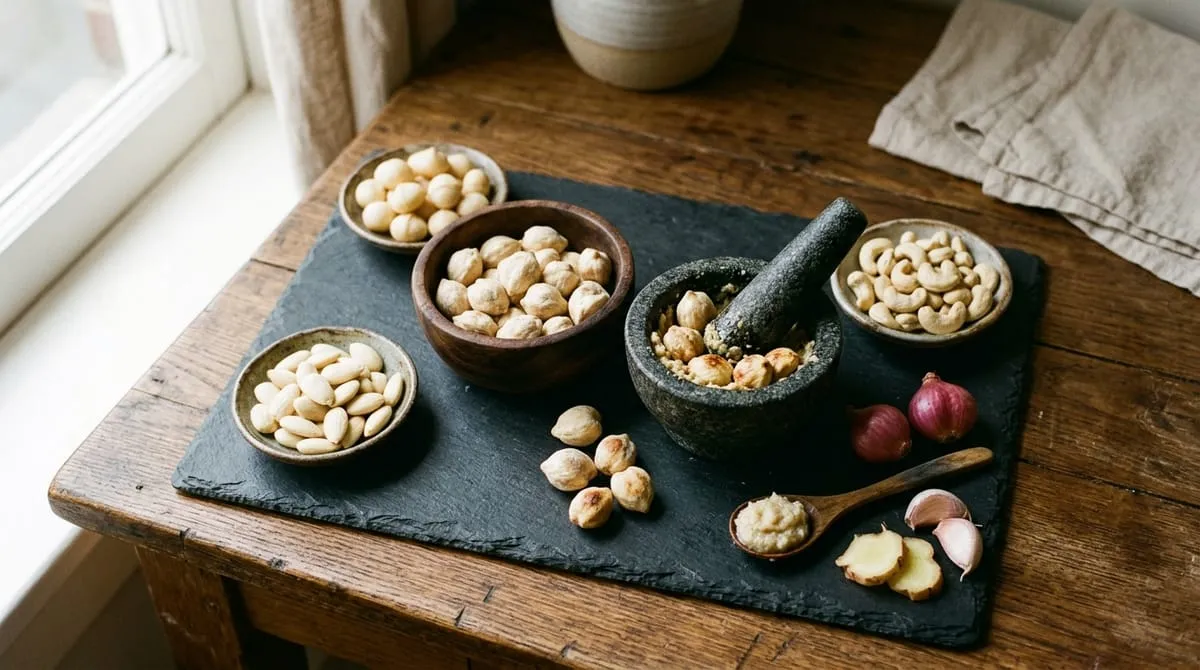
At a Glance: Where to Buy or Substitute
Netherlands Pantry GuideAvailability in the Netherlands
In bags (whole or halved) at every Asian supermarket or toko in the Netherlands (Amazing Oriental, Wah Nam Hong); as whole nuts or jarred kemiri paste in the Indonesian aisle of larger Albert Heijn and Jumbo stores.
Best Direct Substitute
1 unsalted macadamia nut (1:1) or 1 to 1.5 raw unsalted cashew nuts per candlenut (dry-toast briefly before grinding)
The first time you grind a traditional Indonesian spice paste (bumbu or boemboe) from scratch for Authentic Indonesian Beef Rendang, Soto Ayam, or Authentic Nasi Goreng, you will almost certainly run into kemiri—known in English as candlenuts and in Malaysia and Singapore as buah keras. They look like chalky white, slightly ridged macadamia nuts and are sold in clear bags at every Dutch toko.
Despite their appearance, candlenuts are not snacking nuts. In fact, anyone who absent-mindedly pops a raw candlenut into their mouth while prepping dinner quickly regrets it. Uncooked kemiri is mildly toxic to the stomach and tastes waxy and bitter until it has been toasted and fried.
What if you don’t have a bag of kemiri in your pantry tonight, or you are cooking an Indonesian dinner for someone with a tree-nut allergy? Because candlenuts perform a very specific technical job in Southeast Asian cooking—binding and emulsifying the spice paste—you can replace them seamlessly with ingredients from any Dutch supermarket. Here is what kemiri actually does in the pan, why you must always toast it first, and the 5 best substitutes ranked by culinary performance.
What Are Candlenuts (Kemiri) and What Do They Do in a Bumbu?
The candlenut is the seed of the Aleurites moluccanus tree. Its English name is completely literal: the nut contains roughly 60 percent oil, so high that people across Southeast Asia and Polynesia historically threaded the nuts onto palm ribs and lit them like candles.
Inside an Indonesian or Malaysian bumbu, that extraordinary oil content performs three essential kitchen tasks:
- Natural emulsifier and thickener: When you pound shallots, garlic, chilies, galangal (laos), and lemongrass (sereh) together with candlenuts, the released nut lipids form a stable emulsion with the water inside the aromatics. That emulsion thickens curries and broths naturally and helps prevent coconut milk from splitting during long simmers.
- Fat-soluble flavour carrier: Many of Southeast Asia’s signature aromatics—such as the citrusy essential oils in kaffir lime leaves (djeroek poeroet) and the savoury depth of shrimp paste (trassi)—are fat-soluble. The creamy candlenut oil locks those aromas into the sauce.
- Heat rounder: The buttery richness of toasted kemiri softens the sharp edges of raw shallots and fiery bird’s-eye chilies, especially in an Indonesian white spice paste (bumbu putih).
Important Food-Safety Note: Why You Never Eat Kemiri Raw (and Always Toast It First)
Kitchen safety note: Never snack on raw candlenuts out of hand. Uncooked kemiri contains natural saponins and phorbol esters that irritate the digestive tract and can cause stomach cramps or nausea if eaten raw.
Fortunately, heat neutralizes those bitter compounds and unlocks the nut’s warm, buttery aroma. Indonesian cooks follow a simple two-step rule whenever working with whole candlenuts:
- Dry-roast first (sangrai): Toss the whole or halved candlenuts into a dry skillet over medium-low heat for 3 to 4 minutes (or roast them in an Air Fryer at
180 °Cfor 3 minutes) until golden-brown blister spots appear and they smell warm and nutty. Toasting also makes the waxy nut brittle so it crumbles effortlessly under a pestle (ulekan). - Fry the paste thoroughly (tumis): Always sauté your ground bumbu in oil over medium heat for several minutes until glossy, fragrant, and darkened before pouring in broth or coconut milk.
(Note: If you use macadamia nuts, cashews, or almonds as a substitute, they are completely safe to eat raw—but dry-toasting them for 2 minutes in a warm skillet will still make your spice paste taste twice as aromatic!)
The 5 Best Candlenut (Kemiri) Substitutes (Ranked by Performance)
Because kemiri contributes very little distinct “nutty” flavour of its own and instead provides creamy lipid body and emulsion, the ideal substitute is high in mild oil and neutral in flavour.
1. Unsalted Macadamia Nuts (The Best 1:1 Culinary Twin)
- Ratio: 1 macadamia nut for 1 candlenut (
1:1). - Why it works best: Visually, texturally, and chemically, macadamia nuts are virtually indistinguishable from candlenuts. With roughly 75 percent fat and a delicate, buttery profile, macadamias thicken a bumbu identically without overpowering delicate herbs.
- Dutch supermarket tip: If your local Albert Heijn, Jumbo, or Lidl only stocks roasted and salted macadamia nuts, place the nuts you need in a small sieve, rinse under warm running water for 10 seconds to wash off the surface salt, pat dry with kitchen paper, and grind them straight into your paste.
2. Raw Unsalted Cashew Nuts (The Everyday Pantry Swap)
- Ratio: 1 to 1.5 cashew nuts for 1 candlenut.
- Why it works: Raw unsalted cashews (ongezouten cashewnoten) are a staple in almost every Dutch supermarket and blend into a velvet-smooth cream in a mortar or mini chopper. Because cashews contain slightly less fat than kemiri (around 44 percent fat alongside natural starch), they actually thicken stews and curries slightly faster.
- Pro tip: When using cashews in a delicate white spice paste (bumbu putih for Soto Ayam), add 2 drops of neutral sunflower oil while grinding to match the extra oiliness of true kemiri.
3. Blanched Almonds or Almond Flour (The Mild Baking-Aisle Option)
- Ratio: 2 blanched almonds (or 1 level teaspoon almond flour / amandelmeel) + ½ teaspoon neutral oil for 1 candlenut.
- Why it works: Blanched almonds have a clean, neutral taste that blends seamlessly into Indonesian and Malaysian curries.
- Crucial detail: Always use blanched white almonds (blanke amandelen) without the brown skin, or fine almond flour. The brown skins on whole raw almonds contain bitter tannins that turn your spice paste muddy grey. If you only have skin-on almonds, soak them in boiling water for 60 seconds and pop the skins off between your fingers.
4. Ready-Made Jarred Kemiri Paste (Kemiripasta)
- Ratio: ½ teaspoon kemiri paste for 1 whole candlenut.
- Why it works: In the Indonesian aisle of larger Dutch supermarkets and at Asian grocers (check our Dutch Toko & World Grocer Finder), you will find small glass jars of ground kemiri paste (often by Conimex). Because the nuts in the jar are already heat-treated and ground with oil and a pinch of salt, you can spoon the paste directly into the pan with your diced onions and garlic.
5. Unsalted Sunflower Seeds or Pumpkin Seeds (100% Tree-Nut-Free Swap)
- Ratio: 1 level tablespoon unsalted sunflower seeds for 2 candlenuts (or 1 tablespoon thick coconut cream in coconut-based curries).
- Why it works: Cooking an Indonesian rijsttafel for someone with a tree-nut allergy? Don’t simply omit the kemiri, or your spice paste will separate and taste thin. Unsalted sunflower seeds (zonnebloempitten) contain roughly 50 percent mild oil and grind into the exact same creamy white emulsion as candlenuts—with zero tree-nut allergens.
Quick Reference Table: Best Substitute by Dish
| Dish / Culinary Use | Best Substitute | Ratio per 1 candlenut |
Extra Cooking Tip |
|---|---|---|---|
| Authentic Beef Rendang | Macadamia or Cashew | 1 macadamia or 1.5 cashews |
Dry-toast briefly in the pan and grind with shallots, ginger, and galangal. |
| Authentic Nasi Goreng / Mie Goreng | Cashew or Kemiri Paste | 1.5 cashews or ½ tsp paste |
Helps the shrimp paste and ketjap manis coat every grain of rice. |
| Thai Massaman Curry / Soto Ayam | Macadamia or Blanched Almond | 1 macadamia or 2 blanched almonds |
Keeps the broth or coconut milk pale and prevents curdling. |
| Nut-Free Indonesian Bumbu | Unsalted Sunflower Seeds | ½ tbsp seeds per candlenut |
Toast the seeds in a dry skillet for 2 minutes until fragrant before grinding. |
Storage Tip: How to Keep Candlenuts from Going Rancid
Because candlenuts are 60 percent unsaturated oil, they have one enemy in a warm kitchen cupboard: oxygen. An opened bag of kemiri left in a dark spice cabinet for six months will oxidize and develop a sharp, paint-like smell.
- The fridge or freezer rule: Always transfer an opened bag of candlenuts to an airtight glass jar and store it in the fridge (fresh for up to 6 months) or the freezer (fresh for over a year). Just like kaffir lime leaves (djeroek poeroet) and lemongrass (sereh), frozen candlenuts do not need thawing: toss them straight from the freezer into a dry skillet and toast for an extra minute before grinding your bumbu.
- Quick freshness check: Slice one candlenut in half. If the centre is an even ivory-cream colour and smells mild and buttery, it is good to use. If the core looks translucent yellow-brown and smells sour or soapy, toss the bag and grab a few macadamias or cashews instead.
Frequently Asked Questions (FAQ)
1. Why should you never eat raw candlenuts (kemiri) out of hand? Raw candlenuts (Aleurites moluccanus) naturally contain mild saponins and phorbol esters. Eating an uncooked candlenut irritates the stomach lining and digestive tract, leading to nausea and abdominal cramps. Dry-roasting the nuts in a skillet for 3 to 4 minutes and frying them in your spice paste (bumbu) breaks down these compounds completely, leaving a safe, buttery thickener.
2. What is the best 1:1 supermarket substitute for candlenuts? The macadamia nut is the closest 1:1 culinary twin for kemiri. Both nuts look nearly identical, have a mild, creamy flavour, and contain 60 to 75 percent oil. If your local supermarket only carries roasted and salted macadamia nuts, simply rinse them under warm tap water for 10 seconds and pat dry before grinding them into your spice paste.
3. How can I replace candlenuts if cooking for someone with a tree-nut allergy? Because kemiri acts primarily as an oil-rich emulsifier rather than a strong nutty flavouring, you can replace 2 candlenuts with 1 level tablespoon of unsalted sunflower seeds or pumpkin seeds. Grind the seeds together with the shallots and garlic in your mortar or food processor for the exact same creamy binding power.
Recipes Using Candlenuts (Kemiri / Buah Keras)
Authentic Indonesian Beef Rendang (From Scratch)
Make West Sumatran beef rendang from scratch in a Dutch kitchen: using sukadelappen, a freshly pounded bumbu, full-fat coconut milk, and toasted coconut.
Authentic Nasi Goreng (No Packets)
Make fragrant Indonesian nasi goreng without spice packets: using chilled jasmine rice, a freshly pounded bumbu paste, and caramelized ketjap manis in a wok.
Authentic Thai Massaman Curry with Beef, Potatoes & Peanuts
Make velvety Thai Massaman curry from scratch: tender Dutch sukadelappen beef (or 35-min chicken thighs), waxy potatoes, roasted peanuts, and tamarind balance.
Video Guide & Culinary Context
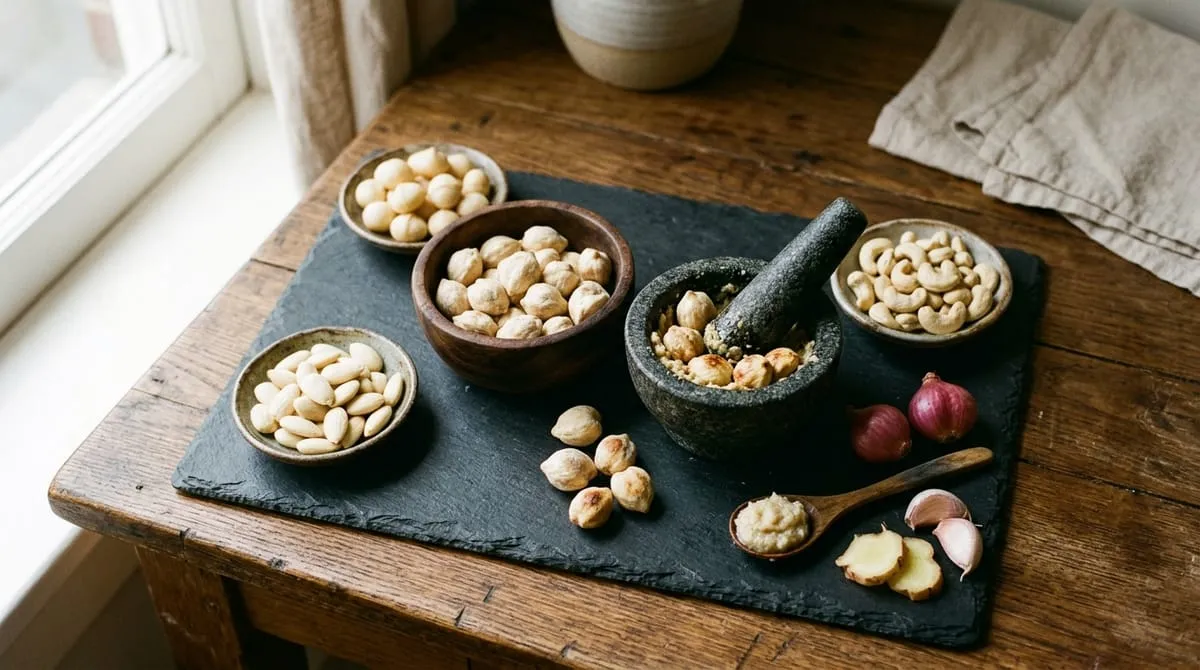
About this video: In this concise demonstration (3:11), Ferdian Lie shows how candlenuts (kemiri) are pounded or blended alongside shallots, garlic, coriander seed, and galangal to form the creamy backbone of a classic Indonesian white spice paste (bumbu putih) for Soto and Opor Ayam, and how frying the paste thoroughly in oil (tumis) cooks out raw bitterness and unlocks its velvety thickening power.
More Ingredient Guides
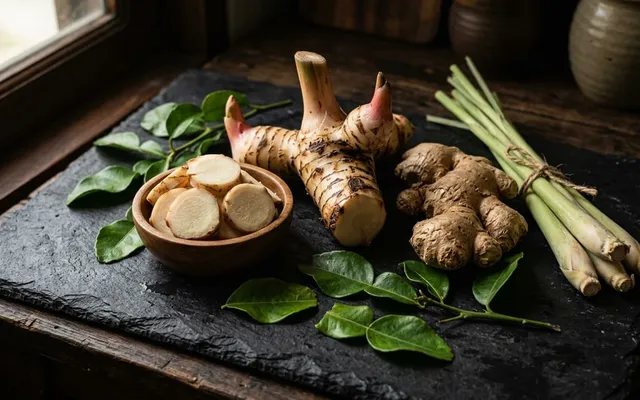
Galangal
Need a galangal substitute or looking for fresh laos vs. laos powder at Albert Heijn, Jumbo, or a Dutch toko? Exact conversion ratios for curry & Tom Kha.
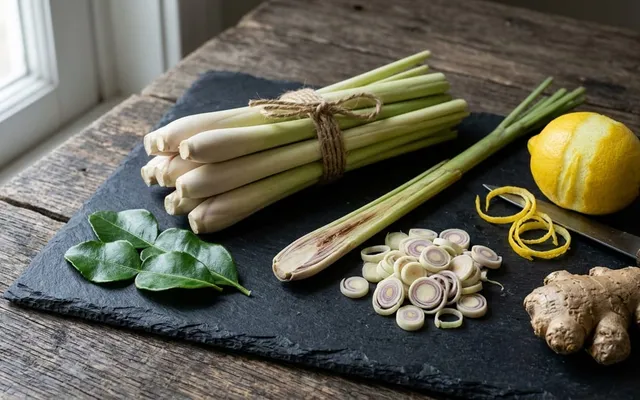
Lemongrass (Sereh)
Out of fresh lemongrass (sereh)? Use our exact substitute ratios for dried lemongrass powder, lime zest + ginger, and paste, plus Dutch buying and freezer tips.
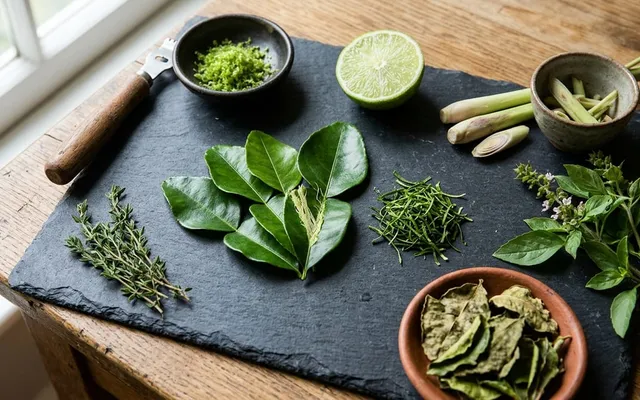
Makrut / Kaffir Lime Leaves (Djeroek Poeroet)
Out of makrut (kaffir) lime leaves or djeroek poeroet? Use our 5 best substitutes with exact ratios, plus how to slice them and where to buy them in NL.