
Shrimp Paste (Indonesian Trassi / Terasi / Malaysian Belacan)
Terasi Udang / Trassi Bakar · Fermented Southeast Asian Shrimp Paste
Out of trassi (shrimp paste) or cooking vegan? Discover the 5 best substitutes (including red miso & fish sauce), how Dutch trassi bakar works, and exact ratios.

At a Glance: Where to Buy or Substitute
Netherlands Pantry GuideAvailability in the Netherlands
Pre-toasted blocks and jars (Conimex Trassi Oedang, Koh-I-Noor Trassi Bakar) and vegetarian trassi (Faja Lobi Vega Trassie) at Albert Heijn and Jumbo; raw and toasted Indonesian terasi, Malaysian belacan, and Thai kapi at Amazing Oriental and local Asian supermarkets.
Best Direct Substitute
1 tsp dark/red miso paste (aka miso) + drop of sesame oil (best 100% vegan & shellfish-free substitute for ½ tsp trassi) OR 1 tsp fish sauce (best non-vegetarian 1-to-1 marine umami match)
You are getting ready to pound the spice paste (bumbu) for Authentic Indonesian Nasi Goreng, a fiery sambal terasi, or a Thai green curry, and the recipe calls for ½ teaspoon of trassi (fermented shrimp paste). Or perhaps you are cooking for a vegetarian friend or someone with a crustacean/shellfish allergy, making that small gold-foil block of Conimex Trassi Oedang in your Dutch spice drawer strictly off-limits.
Can you simply leave it out? If you omit trassi from an Indonesian bumbu or Southeast Asian curry paste without replacing its glutamic depth, the shallots, garlic, galangal (laos), and lemongrass (sereh) taste flat and disconnected.
Fortunately, once you understand what trassi does chemically in hot oil, you can replicate that roasted, savory umami baseline in seconds — either with a quick marine swap or with a 100% plant-based, shellfish-free substitute already sitting in your refrigerator.
What Is Trassi (Terasi / Belacan) and Why Is It So Pungent Raw?
Because of the Netherlands’ deep culinary ties with Indonesia, fermented shrimp paste is sold in virtually every Dutch supermarket under its Dutch-Indonesian name: trassi (spelled terasi in modern Indonesian, belacan in Malaysia and Singapore, and kapi in Thailand). It is made by mixing tiny planktonic krill or baby shrimp (rebon) with sea salt, sun-drying the mixture in thin layers, pounding it into a paste, and fermenting it for weeks before pressing it into dense purple-brown blocks.
During that fermentation, two remarkable culinary transformations take place:
- A concentrated surge of natural glutamate (umami): Enzymes break the shrimp proteins down into free amino acids — primarily glutamic acid, aspartic acid, and savory nucleotides (inosinate). Just half a teaspoon acts as a completely natural flavor amplifier across an entire wok or stew pot.
- Why raw trassi smellsfunky, but toasted trassi smells incredible (The Maillard Reaction): Uncooked trassi contains volatile nitrogen compounds (such as trimethylamine) that smell aggressively fishy in the wrapper. The moment you dry-toast trassi (bakar) or fry it in hot oil, however, those volatile compounds evaporate within 30 seconds. Simultaneously, the heat triggers a Maillard reaction between the free amino acids, generating nutty, roasted pyrazines — the exact same aroma molecules found in browned bread crusts, roasted sesame, and aged cheese. Properly cooked trassi never makes your dish taste fishy; it simply adds an unmistakable warm, savory bass note.
Raw Shrimp Paste vs. Pre-Toasted Trassi Bakar in Dutch Supermarkets
When shopping in the Netherlands, you will encounter two very different forms of shrimp paste. Knowing which one you have determines how you use it:
| Attribute | 1. Pre-Toasted Dutch Supermarket Trassi (Trassi Bakar / Powder) | 2. Raw Fermented Shrimp Paste (Terasi Udang / Belacan / Kapi) |
|---|---|---|
| How to spot it | Small, dry, hard blocks (typically 25 g or 40 g wrapped in gold foil) or shaker jars labeled “Geroosterde garnalenpasta” or “Trassi Bakar”. | Larger, slightly moister purple-brown blocks (e.g., 200 g Malaysian belacan) or tubs of soft Thai kapi at Asian supermarkets. |
| Brands in NL | Conimex Trassi Oedang (AH/Jumbo), Koh-I-Noor Trassi Bakar, Windmolen Trassi Poeder. | Double Shrimp Brand Belacan, Julek Terasi Udang, Pantai Shrimp Paste (Kapi) at Amazing Oriental and local tokos. |
| Do you need to toast it first? | No. It is already pre-toasted at the factory. Simply shave off ½ teaspoon, crumble it, and fry it directly in hot oil with your onions and garlic. | Yes, always! Slice off a piece, wrap it in a double layer of aluminum foil, and dry-toast it in a skillet for 2 to 3 minutes per side until crumbly and nutty. |
| Shelf life | Keeps for years at room temperature when sealed inside an airtight glass jar in a dark cupboard. | Keep wrapped and sealed inside a glass jar in the refrigerator (or at room temperature for up to a year once dry-toasted into powder). |
Important Allergen & Dietary Warning (Crustaceans & Fish): Traditional trassi (terasi udang / belacan) consists of 85–90% crustaceans (shrimp/krill) and salt. It is not vegetarian, not vegan, and unsafe for anyone with a crustacean/shellfish allergy. Also note that while fish sauce and anchovies contain no crustaceans, they contain fish and are not vegetarian. For a 100% plant-based and allergen-safe swap, always choose Substitute 1 (Red Miso), Substitute 3 (Taotjo), or Substitute 4 (Vega Trassi) below.
The 5 Best Substitutes for Trassi / Shrimp Paste (Ranked by Function & Diet)
1. Dark or Red Miso Paste (Aka Miso) + Drop of Sesame Oil (Best 100% Vegan & Shellfish-Free Substitute — 95% Match)
Ratio: Replace ½ teaspoon (3 g) trassi with 1 heaping teaspoon (6 g) dark or red miso paste (plus an optional pinch of finely crumbled nori seaweed or 2 drops of toasted sesame oil).
Why this is the single best plant-based substitute in your kitchen:
- Like trassi, aged red miso (aka miso) is a dense, salty fermented paste packed with free glutamic acid and roasted melanoidins.
- Because miso has the same thick paste consistency as crumbled trassi, you can fry it in hot oil for 30 to 45 seconds alongside your shallots, garlic, and chilies. The miso caramelizes against the bottom of the wok, replicating the exact toasted, nutty bumbu depth of trassi bakar with zero shrimp or fish.
- Best for: Vegetarian or vegan Nasi Goreng, sambal goreng, peanut sauce (gado-gado), and Thai curry pastes (or use leftover miso in our 25-Minute Miso Ramen). (Only have white miso from Albert Heijn? Use
1 tsp white miso + ½ tsp dark soy sauce).
2. Thai or Vietnamese Fish Sauce (Nam Pla) (Best Non-Vegetarian Marine Umami Match)
Ratio: Replace ½ teaspoon (3 g) trassi with 1 teaspoon (5 ml) fish sauce (and reduce added salt slightly).
If you are not cooking vegetarian and simply ran out of trassi, fish sauce is fermented through the exact same enzymatic process (salted anchovies instead of salted krill) and shares the same marine amino-acid profile.
- Crucial cooking adjustment: Because fish sauce is a liquid rather than a solid block, do not pour it into a mortar and pestle while pounding your spice paste (it will make the paste splatter). Instead, fry your shallots, garlic, and chilies in oil first, then splash the teaspoon of fish sauce directly into the sizzling pan so it caramelizes on contact with the hot oil.
3. Taotjo (Fermented Soybean Paste) or Fermented Black Beans (Douchi)
Ratio: Replace ½ teaspoon (3 g) trassi with 1 teaspoon (6 g) mashed taotjo (or finely minced Chinese fermented black beans).
Across Indonesia, Malaysia, and the Peranakan kitchen, cooks have used taotjo (salted fermented yellow or black soybeans, sold in small glass jars at every Dutch toko and large Albert Heijn stores) for centuries as the traditional plant-based counterpart to trassi. Its earthy, fermented bean depth shines in stir-fried greens, tahu telor, and rich braises like Indonesian Beef Rendang.
4. Ready-Made Vegetarian Trassi (Faja Lobi Vega Trassie)
Ratio: 1-to-1 (½ tsp vega trassi for ½ tsp regular trassi).
If you cook Indonesian or Surinamese-Javanese food regularly and want a dedicated plant-based jar in your cupboard, look for Faja Lobi Vega Trassie Trafasie in the world-food aisle at Albert Heijn, Jumbo, or your local toko. Made from fermented soybeans, plant proteins, and spices, it fries into oil 1-to-1 just like traditional trassi bakar.
5. Mashed Anchovy Fillet + Drop of Soy Sauce (Western Pantry Emergency Swap)
Ratio: Replace ½ teaspoon (3 g) trassi with 1 oil-packed anchovy fillet (mashed into a paste) + ¼ teaspoon soy sauce.
No Asian pastes or sauces in the house, but you have a tin of oil-packed anchovy fillets in the pantry? Cured anchovies undergo the same salt-fermentation as Southeast Asian shrimp paste. Mash one fillet flat with the side of your chef’s knife and let it melt into the hot oil with your onions and garlic for 60 seconds; it dissolves completely and leaves a remarkably authentic savory backbone in sambals and curries. (Contains fish; not vegetarian).
Dish Matrix: Which Trassi Substitute Works Best for Which Dish?
| Dish Category / Culinary Role | Best Non-Vegetarian Substitute | Best 100% Vegan & Shellfish-Free Substitute | How to Add It in the Pan |
|---|---|---|---|
| 1. Nasi Goreng, Bami Goreng & Stir-Fries (Authentic Nasi Goreng) | 1 tsp fish sauce OR 1 mashed anchovy fillet (per ½ tsp trassi) |
1 tsp red miso paste OR 1 tsp vega trassi |
Fry the miso or anchovy in hot oil for 30 sec with the shallots and garlic before tossing in the cold rice. |
| 2. Indonesian Bumbu Pastes & Braises (Beef Rendang, Sayur Lodeh, Soto) | 1 tsp fish sauce + ½ tsp ketjap manis |
1 tsp red miso paste OR 1 tsp mashed taotjo |
Blend directly into the wet spice paste and fry the paste in oil (tumis) until fragrant. |
| 3. Sambal Terasi, Peanut Sauce & Gado-Gado | 1 mashed anchovy fillet (sizzled in oil) |
1 tsp red miso + ¼ tsp toasted sesame oil (briefly fried) |
Sizzle the miso in a drop of oil for 30 seconds until darkened, then blend into the chilies or peanut sauce. |
| 4. Thai Curry Pastes (Kapi in Red/Green Curry) & Pad Thai | 1 tsp Thai fish sauce (nam pla) |
1 tsp red miso + tiny pinch of crumbled nori |
Fry together with the curry paste in the thick coconut cream at the start of cooking. |
Frequently Asked Questions About Substituting Trassi (FAQ)
1. Why do you have to toast (bakar) or fry trassi before eating it?
Raw shrimp paste contains volatile amine compounds that smell sharply pungent when cold. By dry-toasting a slice wrapped in foil (2 minutes per side in a dry pan) or frying it in hot oil for 30 seconds before adding liquids, those raw odors evaporate and the Maillard reaction transforms the free amino acids into nutty, roasted pyrazines. Properly toasted trassi never tastes fishy—it simply makes the rest of your ingredients taste deeper and more savory.
2. Is Conimex Trassi at Albert Heijn and Jumbo already toasted?
Yes! Both the small gold-foil block of Conimex Trassi Oedang and jars of Koh-I-Noor Trassi Bakar sold in Dutch supermarkets are pre-toasted (bakar). You do not need to wrap them in foil and dry-toast them first; simply shave off half a teaspoon, crumble it between your fingers, and fry it directly in the oil with your chopped onion, garlic, and chili.
3. What is the best vegetarian or vegan substitute for trassi?
Dark or red miso paste (aka miso) (available at Ekoplaza, Asian grocers, or detailed in our Miso Substitute Guide) is the best whole-food vegan substitute: use 1 heaping teaspoon of red miso for every ½ teaspoon of trassi and let it caramelize briefly in the hot oil. For a ready-made supermarket swap, Faja Lobi Vega Trassie (sold at Albert Heijn and Jumbo) replaces trassi 1-to-1.
4. How do you store opened trassi so your kitchen cupboard doesn’t smell?
Never leave an opened block of trassi sitting in its paper wrapper alone. Wrap the block tightly in clingfilm or parchment paper, then seal it inside a small glass jar with a metal screw lid (like an empty caper or spice jar). Glass completely blocks volatile aromas from escaping, and because pre-toasted trassi is preserved with salt, it will keep in a dark cupboard at room temperature for years.
Recipes Using Shrimp Paste (Indonesian Trassi / Terasi / Malaysian Belacan)
Authentic Thai Massaman Curry with Beef, Potatoes & Peanuts
Make velvety Thai Massaman curry from scratch: tender Dutch sukadelappen beef (or 35-min chicken thighs), waxy potatoes, roasted peanuts, and tamarind balance.
Authentic Nasi Goreng (No Packets)
How to make fragrant Indonesian nasi goreng without spice packets: using chilled jasmine rice, a freshly pounded bumbu paste, and caramelized ketjap manis in a hot wok.
Authentic Indonesian Beef Rendang (From Scratch)
Make West Sumatran beef rendang from scratch in a Dutch kitchen: using sukadelappen, a freshly pounded bumbu, full-fat coconut milk, and toasted coconut.
Vegetarian Pad Thai (No Fish Sauce)
The authentic taste of Bangkok, but 100% plant-based. Learn the secret of the irresistible tamarind sauce and perfectly chewy, non-sticky noodles.
Video Guide & Culinary Context
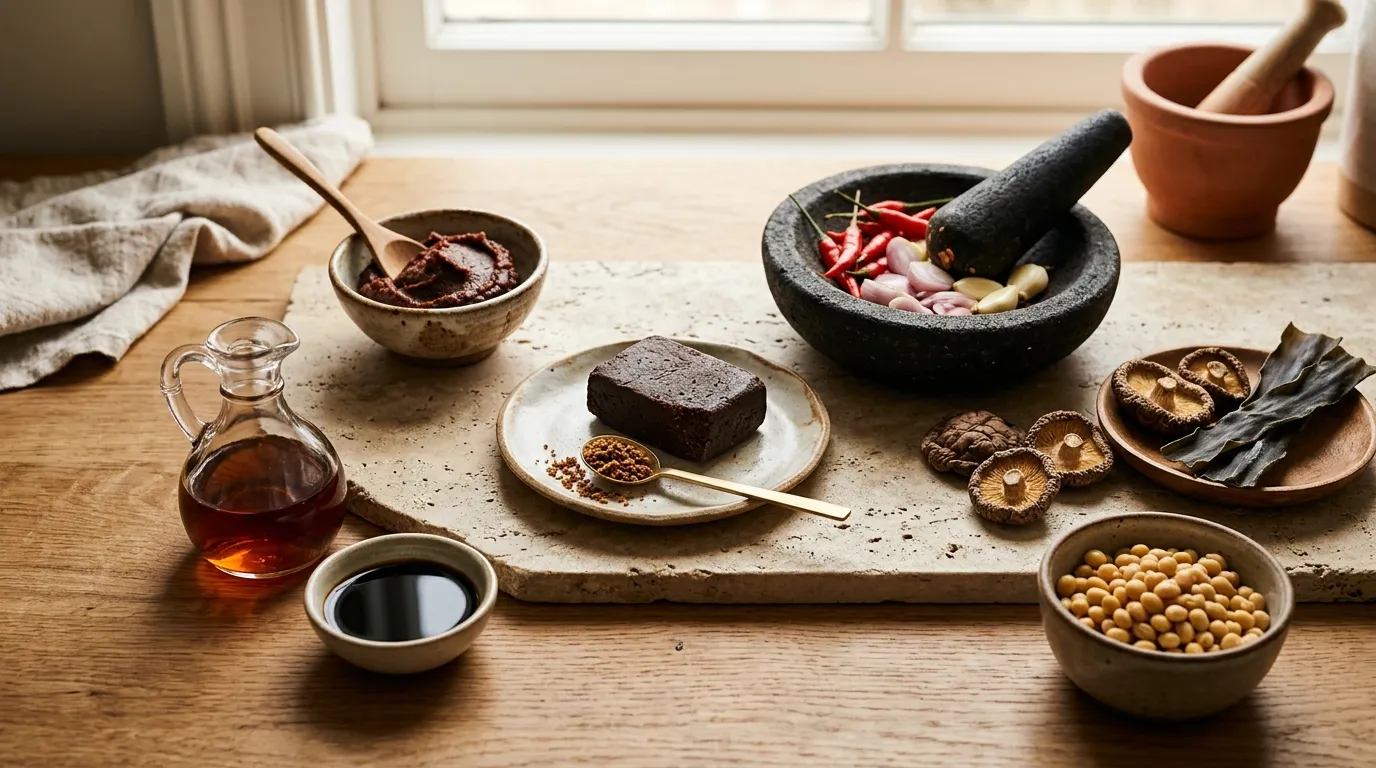
More Ingredient Guides

Fish Sauce
The complete guide: what fish sauce is, why it smells like that but tastes divine, and how to substitute it if you're cooking vegetarian or vegan.
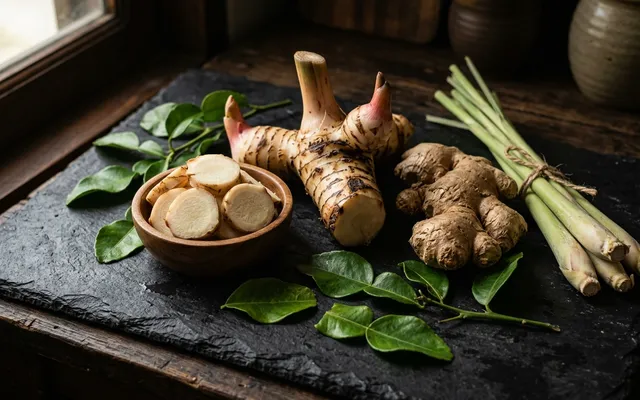
Galangal
The complete expat guide: why galangal is not just 'Thai ginger', where to find it in the Netherlands, and how to smartly substitute it.

Gochujang
The complete guide for expats: exactly what gochujang is, where to buy it in the Netherlands, and how to replace it when you're out.