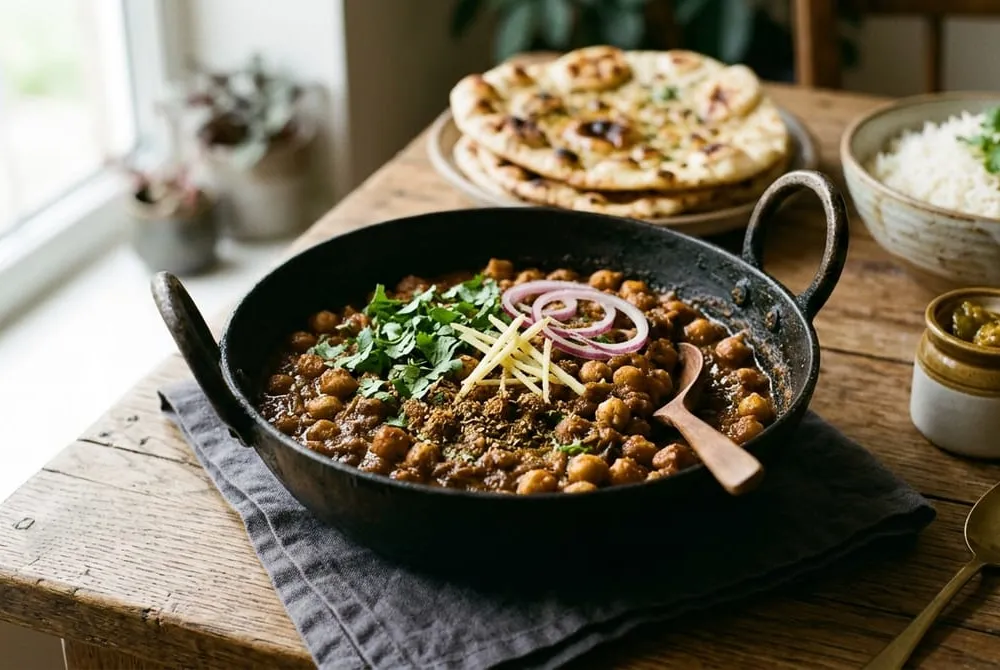
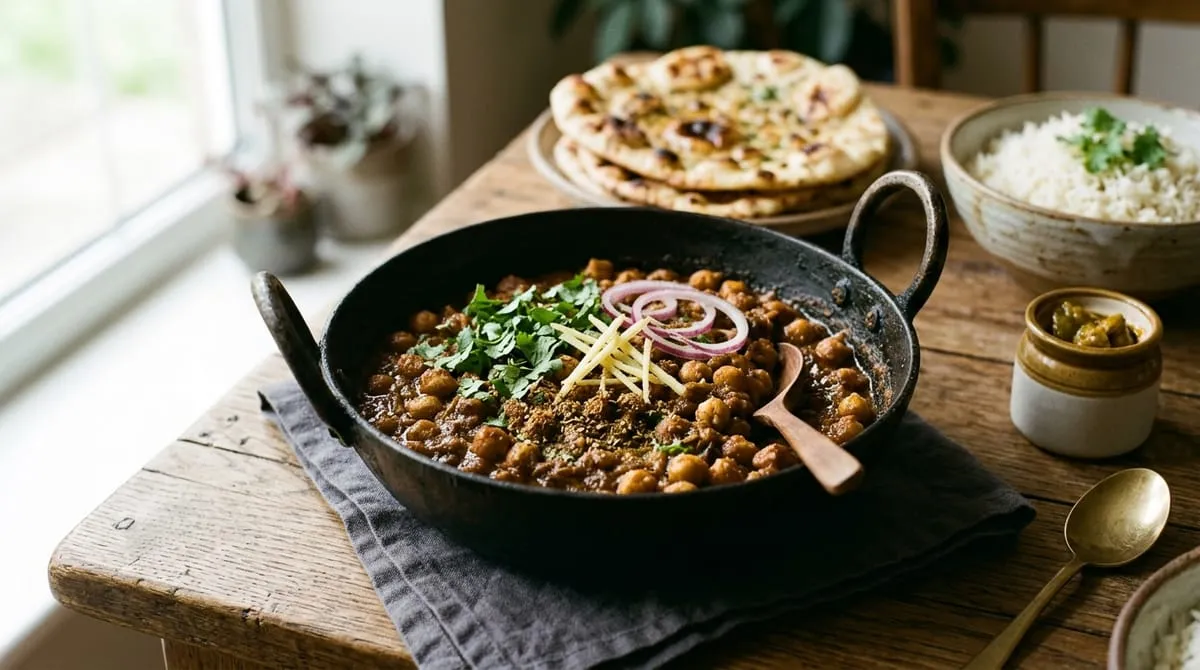
Anyone who has ordered a bowl of Chana Masala (also known across North India as Punjabi chole) at a proper Indian restaurant or roadside dhaba knows how deeply satisfying humble chickpeas can be. The chickpeas are so tender they practically melt against the roof of your mouth, coated in a dark, glossy gravy of caramelized onions, ginger, garlic, toasted cumin, and a bright, mouth-watering tang on the finish.
Yet weeknight homemade versions made with canned chickpeas often miss the mark. Too many quick recipes tell you to soften a chopped onion for three minutes, dump in a can of diced tomatoes and rinsed chickpeas, and simmer for ten minutes. What ends up in your bowl is a collection of firm, bouncy chickpeas floating in a watery tomato sauce that tastes closer to spiced marinara than Punjabi chole.
With three straightforward kitchen techniques from North Indian cooking—taking the time to caramelize the onion-tomato bhuna base, adding a quarter teaspoon of baking soda (zuiveringszout) to soften canned chickpea skins, and mashing a few spoonfuls of chickpeas with their own starchy aquafaba—you can put a thick, velvety one-pot Indian chickpea curry on the table in 30 minutes. No cream, no coconut milk, and built entirely around pantry staples from your local Dutch supermarket.
The Smaakkade Chickpea Trilogy: Cooking by Texture
Chickpeas behave completely differently depending on how you treat their starch, skins, and moisture. On Smaakkade, this Chana Masala completes our trio of distinct chickpea preparations:
- Buttery-Tender & Velvety Simmered (this recipe): Pre-cooked jarred or canned chickpeas simmered with a pinch of baking soda and their own starchy cooking liquid so they turn creamy inside and bind a rich curry gravy.
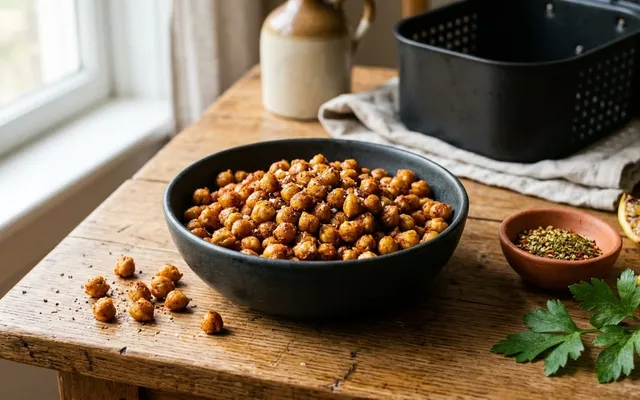
- Glass-Crisp & Dry-Roasted: Want zero moisture and maximum shatter-crisp crunch for snacking or topping bowls? Check out our Crispy Air Fryer Chickpeas, where a dry-roasting phase drives off steam before the spice oil ever touches the pan.
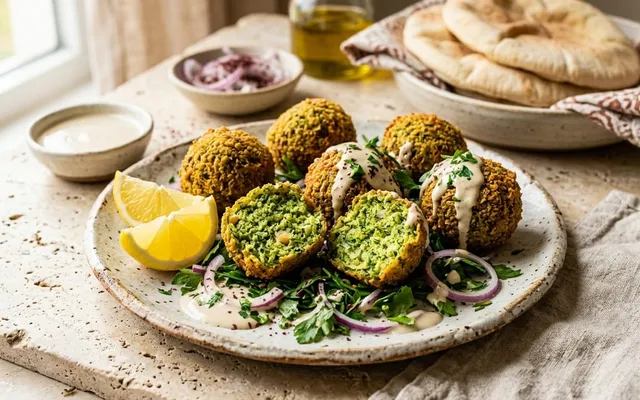
- Fluffy & Herb-Packed from Raw Soaked Chickpeas: For Crispy Air Fryer Falafel, you must never use canned chickpeas—only raw, overnight-soaked chickpeas hold their coarse, airy crumb when ground with fresh herbs.
The 3 Secrets to Restaurant-Style Punjabi Chana Masala
1. The Bhuna Technique: Why You Cannot Rush the Onions and Tomatoes
The backbone of almost every great North Indian curry (just like our Authentic Indian Butter Chicken and Quick Red Lentil Dahl) is bhuna: frying aromatics in oil until their moisture evaporates and their sugars caramelize. If you only sweat onions until translucent, they stay sweet and watery. By dicing the onions very finely and frying them for 8 to 10 minutes until deep golden-brown, you build savoury Maillard depth. When you then add tomato passata and cook it down for 5 to 6 minutes until the water evaporates and droplets of oil separate at the edges of the pan, the tinny acidity of canned tomatoes vanishes completely.
2. The Baking Soda + Aquafaba Trick for Canned or Jarred Chickpeas
In India, dried chickpeas are soaked overnight and simmered with a pinch of meetha soda (sodium bicarbonate). Chickpeas sold in Dutch supermarket cans or glass jars (such as Hak or Albert Heijn and Jumbo house brands) are processed in mildly acidic brine so they stay intact in the tin. That acidity keeps the pectin in their skins firm during a short 10-minute simmer. Adding just a quarter teaspoon of baking soda (zuiveringszout in the Dutch baking aisle) shifts the pH of the gravy slightly alkaline. Within 10 minutes, the pectin in the chickpea skins softens dramatically, letting the spiced gravy penetrate right to the centre of each chickpea. Combined with 3 tablespoons of reserved chickpea liquid (aquafaba) and 2 to 3 tablespoons of mashed chickpeas, the sauce thickens naturally into a glossy dhaba-style coating.
3. The Essential Tangy Finish: Amchur, Tamarind, or Lemon
Authentic Chana Masala should never taste flat or one-note spicy; its signature profile is chatpata—a lively balance of savoury spice, earthiness, and bright acidity. Traditionally, North Indian cooks use amchur: powder ground from dried, unripe green mangoes, which adds fruity sourness without thinning the gravy. If you don’t have a bag of amchur from an Indian grocer or toko (see our Dutch Toko & World Grocer Finder for stores near you), you can achieve that exact same fruity-tart complexity by stirring in 1 teaspoon of tamarind paste (the same jar of Kokki Djawa you might already keep in the fridge for Vegan Pad Thai) along with a generous squeeze of fresh lemon juice right off the heat.
Dutch Supermarket & Toko Shopping Guide
| Ingredient | Where to buy in the Netherlands | Smart Smaakkade Tip or Substitute |
|---|---|---|
| Chickpeas (kikkererwten) | Every supermarket (AH, Jumbo, Plus, Lidl) | Choose a large glass jar (glazen pot) when possible; jarred chickpeas in the Netherlands are noticeably plumper and creamier than small tins. |
| Whole cumin seeds (komijnzaad) | Every supermarket or Turkish/Indian grocer | Essential for blooming in hot oil at step 1; do not replace this part with ground cumin, which burns immediately in bare oil. |
| Amchur (dried mango powder) | Indian grocers, Amazing Oriental, or larger tokos | Out of stock? Use 1 tsp tamarind paste + 1 tbsp fresh lemon juice. |
| Kasuri methi (dried fenugreek leaves) | Asian/Indian grocers, Turkish shops, larger Albert Heijn | Delivers that unmistakable savoury ‘Indian restaurant aroma’. Rub between your palms over the pot at the end. |
| Kashmiri chili powder | Indian grocers or Asian supermarkets | Gives a vibrant brick-red colour with gentle warmth. Substitute 0.5 tsp sweet paprika + a pinch of cayenne. |
Step-by-Step Cooking Method (Ready in 30 Minutes)
Step 1: Drain the chickpeas and reserve the aquafaba (2 minutes)
Step 1: Drain the chickpeas through a sieve set over a bowl and reserve 4 tablespoons of the thick, starchy canning liquid (aquafaba). Briefly rinse the drained chickpeas under cold tap water.
Step 2: Bloom whole cumin and caramelize the onions — the Bhuna (10 minutes)
Step 2: Heat the sunflower oil or ghee in a wide heavy-bottomed skillet, sauté pan, or Dutch oven over medium-high heat. Add the whole cumin seeds and bay leaf (plus bruised cardamom pods if using) and let them sizzle for 30 seconds until fragrant and a shade darker. Add the finely diced onions with a pinch of salt and cook for 8 to 10 minutes over medium-high heat, stirring frequently, until deep golden-brown and caramelized. If the onions begin sticking to the bottom of the pan, splash in 1 tablespoon of water and scrape up the browned bits with a wooden spoon.
Step 3: Cook down garlic, ginger, spices, and tomatoes until oil separates (6 minutes)
Step 3: Lower the heat to medium-low and stir in the finely grated garlic, grated ginger, and chopped green chili. Sauté for 90 seconds until the raw aroma of garlic disappears. Add the ground coriander, ground cumin, turmeric, and chili powder, stirring continuously for 30 seconds so the spices bloom in the warm oil. Pour in the tomato passata (or crushed tomatoes) and salt. Simmer briskly over medium-high heat for 5 to 6 minutes, stirring often, until the excess water evaporates, the masala turns a dark brick-red paste, and glossy droplets of oil begin separating around the edges of the pan.
Step 4: Simmer with chickpeas, aquafaba, and baking soda & mash for body (10 minutes)
Step 4: Add the drained chickpeas, 3 tablespoons of reserved chickpea liquid (aquafaba), the warm water (250 ml), and the quarter teaspoon of baking soda (zuiveringszout). Using the back of your spoon or a potato masher, immediately mash 2 to 3 tablespoons of chickpeas (around 15 percent of the pan) against the side of the pot. Bring to a boil, reduce heat to low, partially cover with a lid, and simmer gently for 10 to 12 minutes until the chickpeas are buttery-tender inside and enveloped in a thick, glossy gravy.
Step 5: The tangy finish off the heat (2 minutes)
Step 5: Remove the pan from the heat and stir in the garam masala, amchur (or 1 teaspoon tamarind paste), crushed kasuri methi, and fresh lemon juice. Taste and adjust salt if needed. Scatter generously with chopped fresh cilantro and serve hot with warm naan, chapati, or basmati rice and red onion wedges.
Common Mistakes (and How to Avoid Them)
- Mistake 1: Chopping the onions too coarsely. Large chunks of onion never melt into the gravy, leaving you with a thin liquid full of floating onion pieces. Dice the onions as finely as possible with a sharp chef’s knife (or pulse 4 to 5 times in a food processor—just stop before turning them into watery onion juice!).
- Mistake 2: Using a heavy hand with baking soda. More is not better here. Stick strictly to
0.25 teaspoonfor two cans of chickpeas. If you dump in a full teaspoon, the chickpeas will disintegrate into mush within five minutes and leave a soapy metallic aftertaste. - Mistake 3: Pouring in coconut milk to thicken the sauce. If your sauce still looks slightly loose after 10 minutes, resist the urge to add coconut milk, which turns the dish into a South Indian or Southeast Asian curry. Simply mash another tablespoon of chickpeas against the side of the pan and simmer uncovered for 2 minutes.
Serving Suggestions & Storage Tips
In Punjab and Delhi, Chana Masala is famously served alongside puffed fried bread (chole bhature), griddled flatbreads (chapati, roti, or garlic naan), or fluffy basmati rice.
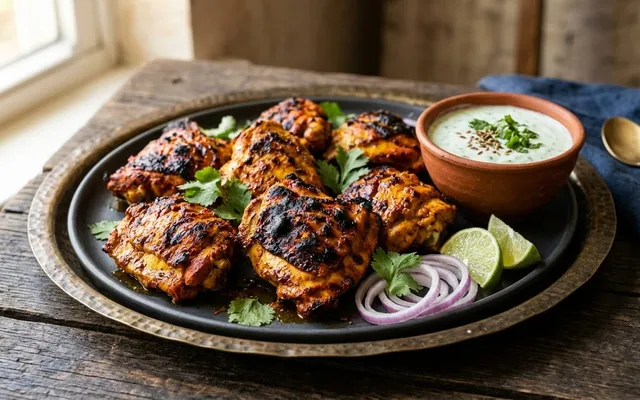
- Build an Indian feast at home: Serve the curry topped with chopped cilantro, wedges of raw red onion, and lemon alongside warm naan and cooling cucumber raita. Cooking for a crowd? Pair this vegan chickpea curry with our Juicy Air Fryer Tandoori Chicken, serve it next to a comforting pot of Quick Red Lentil Dahl, or see how we apply Indian garam masala and onion tadka tempering to Dutch winter greens in our Spiced Fusion Dutch Stamppot.
- Storage (even better the next day): Like any good stew, the spices penetrate deeper into the chickpeas overnight. Store in an airtight container in the fridge for up to 4 days or freeze for up to 3 months. Add a splash of water when reheating on the stovetop, as the chickpea starch thickens further as it cools.
Frequently Asked Questions (FAQ)
1. Why add baking soda to canned or jarred chickpeas? Canned and jarred chickpeas are cooked in slightly acidic brine so they stay intact during processing, which often leaves their skins firm and bouncy in a quick 15-minute curry. Adding just 0.25 teaspoon of baking soda (zuiveringszout in Dutch supermarkets) slightly raises the pH of the simmering liquid, breaking down the pectin in the chickpea skins within 10 minutes. It gives you the velvety, melt-in-the-mouth texture of slow-simmered Punjabi chole on a weeknight.
2. What is amchur and what can I substitute if I don’t have it? Amchur is dried unripe green mango powder and provides the signature fruity tang at the heart of North Indian Chana Masala without watering down the sauce. If you don’t have amchur from an Indian grocer or toko, substitute 1 teaspoon of amchur with 1 teaspoon of tamarind paste (such as Kokki Djawa, sold at every Albert Heijn and Jumbo) combined with 1 tablespoon of fresh lemon juice stirred in off the heat.
3. How do you get a thick, creamy Chana Masala gravy without coconut milk or cream? Authentic North Indian Chana Masala never uses coconut milk or heavy cream, which mute the bright spices and tangy finish. Instead, restaurant-style body comes from three steps: dicing the onions very finely and caramelizing them deep golden-brown, simmering the curry with 3 tablespoons of starchy chickpea aquafaba, and mashing 2 to 3 tablespoons of chickpeas against the side of the pan.
Sources & Culinary Provenance
This recipe was developed through our comparative research of North Indian Punjabi chole and chana masala methods:
- Swasthi’s Recipes (Swasthi Shreekanth) — Chana Masala Recipe (Authentic Punjabi Chole) (
https://www.indianhealthyrecipes.com/chana-masala/): Reference for the classic North Indian spice architecture using whole cumin, coriander, amchur (dried mango powder), and kasuri methi. - Serious Eats — The Best Chana Masala Recipe (
https://www.seriouseats.com/chana-masala-recipe-8645269): Culinary science reference for how sodium bicarbonate (baking soda) softens chickpea skin pectin and how starchy canning liquid (aquafaba) emulsifies the gravy. - Rainbow Plant Life (Nisha Vora) — Chickpea Curry, an (almost) perfect one-pot meal (
https://www.youtube.com/watch?v=5bsvxIDkm4g): Visual demonstration of building the concentrated onion-tomato bhuna base and mashing a portion of the chickpeas directly in the pot for natural body.
Watch the step-by-step video
External video demonstration supporting the cooking technique. Smaakkade selects relevant culinary demonstrations to complement our source research; follow the written quantities and steps above for this recipe.
Research-led international recipe adapted for kitchens in the Netherlands
Smaakkade is a research-led food publication. For this dish, we cross-referenced trustworthy culinary sources and step-by-step demonstrations, then adapted the method for kitchens in the Netherlands: with metric weights, clear heat cues, and practical guidance on Dutch supermarket substitutes versus specialty toko ingredients.
Bron / Source: https://smaakkade.nl/en/recipes/chana-masala-chickpea-curry