Quick Red Lentil Dahl (Masoor Dal)
Creamy, warming, and ready in 25 minutes. No packets, no heavy cream, but WITH the incredible Indian 'tadka' technique that changes everything.
Jump to Recipe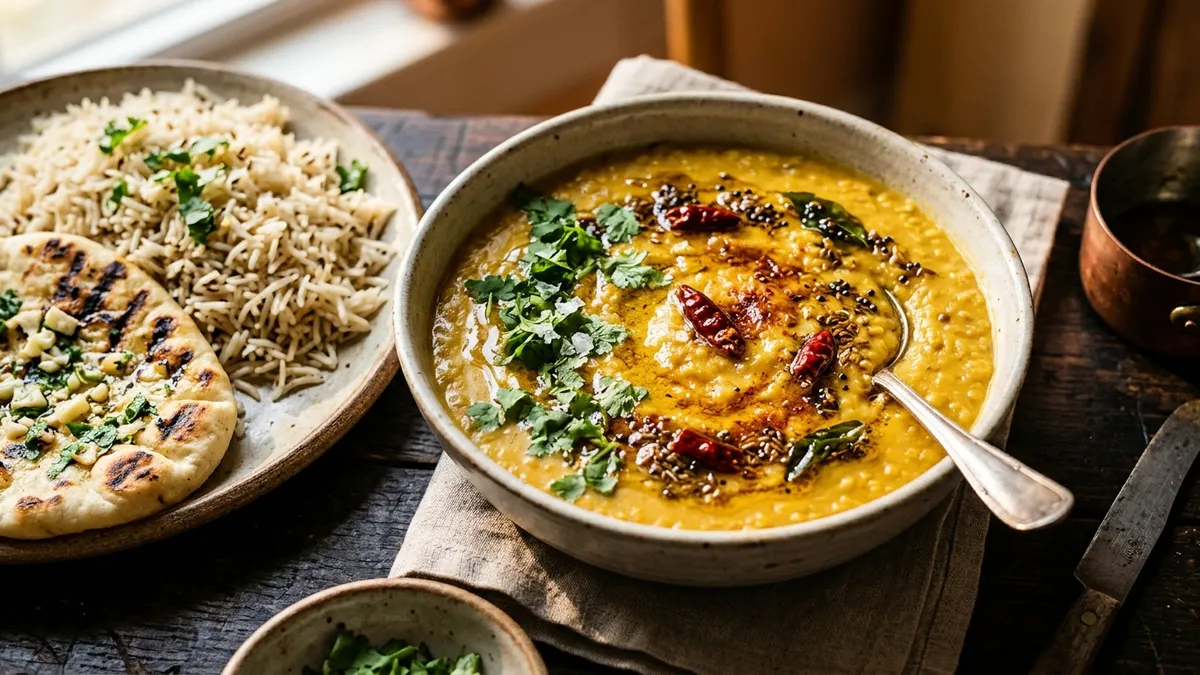
🧂Ingredientsfor 2-3 persons
- Red lentils (split)200g
- Water600ml
- Turmeric (ground)½ tsp
- Sea salt1 tsp
- Ghee or neutral oil2 tbsp
- Cumin seeds (whole)1 tsp
- Black mustard seeds½ tsp
- Garlic (sliced paper-thin)4 cloves
- Dried red chili peppers1-2 pieces
- Fresh curry leaves (optional)6-8 pieces
- Garam masalaPinch
- Lime or lemon (juiced)1 large
Let’s have a moment of honesty about how we usually make dahl in the West. You type ‘dahl recipe’ into Google, click on a popular food blog, and before you know it, you’re standing over a massive pot boiling lentils, diced onions, six different stale supermarket spice powders, and a massive can of coconut milk into a homogeneous, cloying mush. The result tastes fine—if you happen to be a fan of lukewarm baby food.
But we are entirely missing the essence of the dish. Authentic North Indian dahl (or dal, daal, dhal, depending on who you ask) is absolutely not made by dumping everything into one pot without a plan and hoping for a miracle. You don’t need a heavy can of coconut milk to make it creamy. What you do need is a fundamental cooking technique that nine out of ten western recipes completely ignore: the tadka.
In this recipe, we are making a fast, everyday Masoor Dal Tadka. Masoor dal refers to split red lentils. They cook down to a soft, velvety texture in no time, require zero soaking, and naturally transform into a comforting, creamy bowl of goodness. Armed with just a small handful of specific ingredients, you can put a mind-blowing meal on the table in 25 minutes.
Why Red Lentils Are the Undisputed Kings of Fast Food
We live in an era where exhaustion drives us to overpriced ready-meals or the delivery app the second we get home from work. But split red lentils might just be nature’s ultimate fast food. Because their outer skins have already been mechanically removed and they are split in half, they disintegrate incredibly fast when exposed to boiling water.
Where chickpeas, brown beans, or whole lentils stubborn hold their shape or take hours to tenderize, red lentils literally dissolve. Give them 15 to 20 minutes of gentle simmering, and you have a perfectly thickened, creamy base. You don’t need to blend them; leave your immersion blender in the drawer. The heat and the water do all the heavy lifting for you. Plus, they cost almost nothing, are packed with plant-based protein, and there’s probably a bag of them lurking in the dark corners of your pantry right now.
The Magic Water Ratio
An extremely common mistake is using too much or too little water, leaving you with either a concrete block of lentils or flavorless dishwater. The ratio of liquid to lentils dictates the entire character of your dahl. For red lentils, live by these golden rules:
- 3:1 (Liquid:Lentils): The absolute sweet spot for a weeknight dinner. You get a beautifully creamy dahl that sits perfectly on a bed of rice without turning it into soup. This is the ratio we use here (600ml water to 200g lentils).
- 2.5:1 (Liquid:Lentils): Use this for a much thicker, sturdier dahl. Ideal if you are eating traditionally with your hands and using a piece of naan or roti to scoop it up.
- 4:1 (Liquid:Lentils): Perfect when you want a thinner, soup-like consistency to just aggressively slurp from a mug on the couch when you’ve got a cold.
The Tadka Technique: The Great Secret
Let’s talk about tadka (also known as chaunk or chonk across various regions in India). This isn’t some rare, exotic ingredient—it’s a culinary technique. And it is the sole reason why restaurant dahl tastes incredibly vibrant and layered compared to the flat stew you throw together at home.
Many whole spices, like cumin and mustard seeds, contain complex essential oils that are primarily fat-soluble. If you simply boil these spices in a massive pot of water and lentils from the very beginning, you effectively murder their sharpness and depth. They’ll lend a little flavor to the water, sure, but the profile remains completely flat.
Indian cuisine solves this tragedy brilliantly. You cook the lentils in an utterly functional, simple way: just water, salt, and a dash of turmeric for that illuminating, golden neon color. Meanwhile, right before the lentils are tender and finished, you heat a generous knob of ghee or oil in a tiny skillet. In this screaming hot fat, you rapidly fry your whole spices, fresh garlic, and dried chilies. The blistering heat forcefully extracts every ounce of flavor and intoxicating aroma from the spices.
When this sizzling, aromatic fat is poured directly over the soft, cooked lentils, a culinary explosion happens. Pssshhhh! You slam the lid on the pot immediately to trap all that heavily perfumed steam. The infused fat folds into the mild lentils, giving literally every single spoonful an insane depth, a kick of heat, and a subtle crunch. That is tadka. It is pure food science in its most delicious form.
Ingredients: Accept No Compromises
For this no-nonsense recipe, we are keeping the ingredient list intentionally short. No endless list of 15 different stale powders, and absolutely no pre-made curry pastes.
- Red Lentils (Masoor dal): You’ll find these on the bottom shelf of any supermarket. Always rinse them aggressively in a fine-mesh sieve until the water runs clear to wash away excess starch and dust.
- Turmeric and Salt: The only two things going into the pot during the boiling phase.
- Ghee or Oil: Ghee (clarified butter) is traditional and provides an unmistakable, rich, nutty backbone. If you are strictly vegan, use a neutral oil with a high smoke point (like sunflower or peanut oil). For the love of everything, do NOT use olive oil; its flavor is far too aggressive and will violently clash with the Indian spices.
- Whole Cumin and Mustard Seeds: Pay attention: absolutely no powders here! You need the intact seeds to pop in the hot oil. Ground powder will burn instantaneously during the tadka phase.
- Garlic: Slice the garlic cloves paper-thin. Do not crush or press them! Pressed garlic burns immediately and hopelessly in hot oil, turning incredibly bitter. Thin slices, however, will slowly toast into beautiful, crispy, golden-brown chips.
- Fresh Curry Leaves: Optional, but mind-blowing if you can score them at an Asian or Indian grocer. They release a deep, citrusy, slightly roasted umami flavor the second they hit the hot oil.
- Garam Masala: This is a warm, savory roasted spice blend (note: this is NOT standard yellow curry powder!). Add this at the very end. If you throw garam masala into the hot oil or boil it for 30 minutes, it loses all its delicate, volatile floral notes. It is a finishing spice.
- Acid (Lime/Lemon): A dahl without a serious hit of acid is profoundly boring. A heavy squeeze of fresh lime or lemon juice right at the end lifts the entire heavy, earthy dish up. If you want a darker, more authentic tang instead of bright citrus, use tamarind paste. Check our tamarind substitute guide to see how to dose it like a pro.
Substitutes with Exact Ratios
Missing something? Use these exact ratios to keep the balance right.
1. Ghee Substitute (for vegans) Ratio: 2 tbsp Ghee = 2 tbsp neutral oil (sunflower, canola, peanut) + 1/4 tsp toasted sesame oil. The sesame oil adds back a hint of that missing nutty richness.
2. Fresh Curry Leaves Substitute There is no direct flavor replacement, but you can mimic the aromatic lift. Ratio: 6-8 fresh curry leaves = Zest of 1/2 a lime (added at the very end, off the heat) to provide that missing citrusy top-note. Do not use curry powder; they are unrelated!
3. Acid Substitute (Lemon/Lime to Tamarind) Ratio: Juice of 1 lime = 1.5 tbsp Tamarind paste (mixed with 1 tbsp warm water).
Substitute Comparison Table
| Original Ingredient | Best Substitute | Ratio | Flavor Difference |
|---|---|---|---|
| Ghee (2 tbsp) | Neutral oil + Sesame oil | 2 tbsp neutral + 1/4 tsp sesame | Lacks dairy richness, but mimics the nuttiness |
| Fresh Curry Leaves | Lime zest | Zest of 1/2 lime | Brighter, lacks the roasted herbal depth |
| Lime Juice (1 whole) | Tamarind paste | 1.5 tbsp paste + water | Tamarind gives a darker, deeper sourness |
Step-by-Step to the Perfect Masoor Dal
Phase 1: Boiling the Lentils
Rinse the split red lentils thoroughly under cold running water. Throw them into a heavy-bottomed pot alongside the measured water, the turmeric, and the salt. Bring it to a boil over medium-high heat.
In the first few minutes, some white foam will inevitably bubble up to the surface. Gently skim this off with a flat spoon and chuck it down the sink—it’s harmless proteins, but leaving it makes your dahl look cloudy and unappetizing. Once the foam is gone, drop the heat down low. Leave the lid slightly ajar so steam can escape, and let it simmer gently for 15 to 20 minutes. Stir the bottom occasionally so the lentils don’t stick and burn. Once they have completely broken down into a thick, creamy porridge, take the pot off the heat.
Phase 2: The Tadka (Timing is Everything)
Ensure every single tadka ingredient is measured out and sitting right next to your stove. This process is incredibly fast, and you absolutely do not have time to peel garlic when your oil is already smoking.
Heat the ghee or neutral oil in a tiny skillet over medium-high heat. When it’s hot (hover your hand over it to feel the heat radiating), dump in the whole cumin and mustard seeds all at once. Within seconds, the seeds should start cracking, popping, and jumping. That’s the undeniable signal that the oil is ready.
Immediately add the paper-thin garlic slices. Keep the pan moving. Wait until the garlic just barely starts turning golden-brown along the thin edges (this takes 30 to 60 seconds). Only then do you throw in the dried red chilies and fresh curry leaves. WARNING: The curry leaves contain water, and the hot oil will instantly aggressively spit and sizzle! Let it all fry wildly for about 10 more seconds.
Phase 3: The Convergence
This is the greatest moment in the recipe. Grab the small skillet and pour the screaming hot, sizzling oil—along with all the spices and garlic—directly and forcefully into the large pot of cooked lentils. Sssssss!
Immediately, without hesitation, slam the lid back onto the large pot and let it sit undisturbed for 2 to 3 minutes. This forces all those volatile aromatics and oils to infuse deeply into the lentils, rather than just perfuming your kitchen exhaust fan.
After a few minutes, pull off the lid, add a small pinch of high-quality garam masala, and squeeze the lime or lemon heavily over the top. Stir everything vigorously to combine. Now, taste it. Does it need more salt? It almost certainly does; don’t be a coward, add another pinch. Generous salt and generous acid are the keys to victory here.
Where People Screw This Up
1. Mercilessly burning the garlic This is the most common disaster during the tadka phase. If your garlic goes past golden brown and turns dark brown or black in the oil, stop immediately. Throw the contents of the pan in the trash, wash it, and start over. Burnt garlic will completely ruin the entire dish, making it inedibly bitter. If you struggle with this, slice your garlic a bit thicker, watch it like a hawk, and don’t be afraid to pull the pan off the heat if things are moving too fast.
2. Adding salt at the very end Salt needs time to penetrate the legumes during the boiling process. If you only salt your dahl when it’s on your plate, you’ll just taste salty water layered over incredibly bland lentils. Get the salt in the boiling water.
3. Being shy with the acid If your dahl tastes somewhat ‘dull’ or ‘muddy’, it doesn’t always need salt. Very often, it’s begging for acid. A heavy hit of fresh lime juice slices right through the heavy, earthy tones of the lentils and cumin, bringing everything into sharp focus. Don’t be stingy; use the whole lime if needed.
Serving Like a Boss
Serve this incredible dahl blistering hot, straight from the stove. Traditionally in North India, this pairs perfectly with a massive mountain of steamed, fluffy basmati rice (dal chawal). It is equally fantastic with fresh, warm flatbreads—use a soft roti, a flaky paratha, or a thick piece of naan to aggressively scoop up the dahl.
Because the texture of dahl is inherently soft, hot, and rich, you always want something crunchy, cold, and sharp on the side. Think of a simple red onion, sliced into paper-thin rings, briefly marinated in lime juice and salt. Or whip up a rapid kachumber: a super simple Indian salad of tiny, cold tomato and cucumber cubes, heavily dressed with fresh cilantro and lime.
Frequently Asked Questions (FAQ)
Can I really not add a splash of coconut milk? You are the boss of your own kitchen, but we strongly advise against it for this specific dish. Coconut milk belongs more in the rich cuisines of South India and Sri Lanka. In this North Indian Masoor dal, it makes the whole thing unnecessarily heavy, cloying, and sweet, completely drowning out the delicate tadka spices. Trust the process; boiled red lentils become incredibly creamy entirely on their own.
Do I need to soak the red lentils beforehand? No, that is exactly the brilliance of split red lentils. Where massive beans or chickpeas need to bathe in water overnight, red lentils can be washed straight from the plastic bag and boiled immediately. (Though washing them under the tap is absolutely mandatory to remove invisible dust and excess starch!).
Can I meal-prep and freeze this? Absolutely. Dahl is arguably the greatest meal-prep food on earth. In fact, it often tastes significantly better and more complex on day two or three, as the spiced tadka oils penetrate even deeper in the fridge. It will survive happily for 4 to 5 days in an airtight container in the fridge, or freeze perfectly for 3 solid months. Note: as it cools in the fridge, it will solidify into a brick. When reheating on the stove or microwave, just add a splash of hot water and stir it aggressively with a fork to bring back the creamy texture.
I hate spicy food, can I just leave the chilies out? Yes. The whole dried red chilies in the tadka primarily impart a wonderful, smoky flavor and a very gentle, slow-building warmth. It’s not aggressive, especially if you leave the chilies whole and don’t break them open. You don’t actually eat them (you fish them out before eating, or leave them on the side of your plate). But if your stomach revolts at any heat, or you’re cooking for toddlers, you can omit them without entirely destroying the flavor profile.
What is the difference between these and the other yellow lentils at the Asian store? If you walk into a good Asian supermarket, you will likely be overwhelmed. You’ll see bags of chana dal, moong dal, and toor dal (which all look relatively yellow and similar). However, every lentil has its own unique cooking time and final texture. Split yellow moong dal cooks quite fast and is a decent substitute here, but the texture is different. Chana dal (split chickpeas) and toor dal take significantly longer to cook and will absolutely not break down into that smooth, velvety texture in 20 minutes. Stick to the red ones!