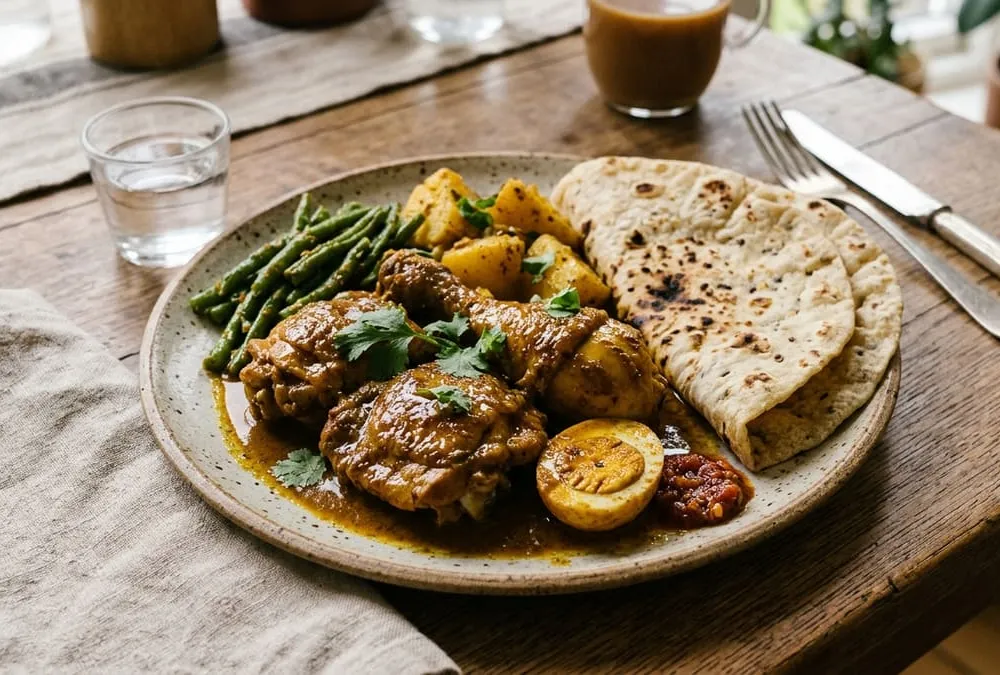
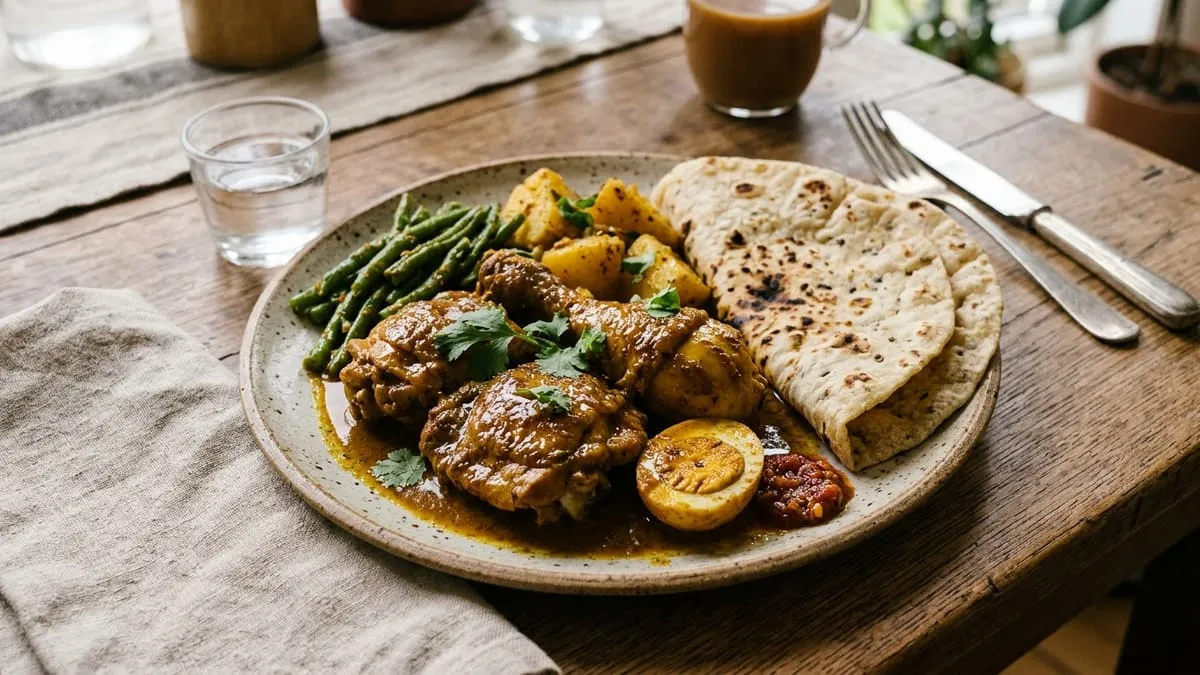
If you have lived in the Netherlands for more than a week, you have seen two completely different versions of Surinamese Roti. The first is the infamous cardboard Wereldgerecht Roti meal-kit box stacked in the supermarket aisle: a sachet of yellow powder mostly made of salt, modified potato starch, skim milk powder, and sugar, paired with stiff, dry flour tortillas that crack the moment you fold them. The second is the real thing—a fragrant, deeply savory Indo-Surinamese feast from a family-run roti-shop in Rotterdam’s West-Kruiskade, The Hague, or Amsterdam-Zuidoost, where tender masala-braised chicken, velvety potato chunks, crisp yardlong beans (kousenband), and golden-fried spiced eggs swim in a rich, toasted cumin-coriander gravy alongside warm dhal-stuffed flatbreads.
Here is the best part: making authentic Surinamese chicken roti from scratch takes 45 minutes in a single Dutch oven or deep braising pan—the exact same time as cooking from a boxed supermarket kit. You do not need cornstarch, flour, or artificial thickeners. When you bloom real Surinamese Hindustani masala in hot oil with onion, garlic, and tomato paste, and let floury Dutch potatoes simmer right alongside the chicken thighs, the outer edges of the potatoes naturally thicken the broth into a glossy, clingy masala gravy.
Why Homemade Surinamese Roti Beats the Supermarket Meal Kit Every Time
In Surinamese culinary culture—shaped by 19th-century Indian indentured laborers who brought Bhojpuri and North Indian cooking techniques to Suriname and adapted them to Caribbean ingredients—the word roti technically refers to the griddle-baked flatbread itself, while the complete plate is known as roti kip (chicken roti) or roti doks (muscovy duck roti).
When you ditch the cardboard meal kit and cook Surinamese chicken roti from scratch, four culinary upgrades happen immediately:
- Toasted Hindustani Masala Instead of Sweet Yellow Curry Water: Boxed mixes rely on sugar, maltodextrin, and raw turmeric. Authentic Surinamese masala is built on darkly roasted coriander and cumin seeds ground with turmeric, fenugreek (methi), mustard seed, nigella (kalonji), and black pepper.
- Natural Potato-Starch Emulsion (Zero Flour Needed): By cutting floury potatoes into generous 4 cm chunks and simmering them directly in the masala chicken broth, the outer 2 millimeters of each potato piece gently dissolve into the liquid, turning thin stock into a velvety, spoon-coating gravy.
- The Blistered Masala-Ei (Spiced Hard-Boiled Egg): Instead of dropping a plain boiled egg onto the plate at the end, peeled hard-boiled eggs are rolled in hot masala oil for two minutes until their whites develop a golden, lightly blistered skin that drinks up the curry gravy.
- Crisp-Tender Kousenband (Yardlong Beans): Rather than boiling green beans into grey submission for twenty minutes, the yardlong beans are braised briefly until crisp-tender so they bring fresh green snap to every bite.
The Secret of Surinamese Hindustani Masala (And How to Mix It Yourself)
The soul of this dish is Surinamese Hindustani Masala (sold in yellow tubs or jars under brands like Nandan, Chan’s, or Faja Lobi at every toko and in the international aisle of larger Albert Heijn and Jumbo stores). Many home cooks wonder whether they can swap in standard British/Dutch yellow curry powder (kerriepoeder) or Indian garam masala. While they share a family tree, they behave very differently in the pot:
- Standard Dutch/British Curry Powder (Kerriepoeder): Heavy on raw turmeric, ginger powder, cinnamon, and sweet mace. It turns Surinamese roti overly sweet and floral.
- Indian Garam Masala: Contains almost no turmeric and leans heavily on warming cloves, cinnamon, and cardamom. As we explain in our Quick Red Lentil Dahl and Authentic Indian Chana Masala, garam masala is a late-stage finishing spice rather than a primary braising base.
- Surinamese Hindustani Masala: Earthy, savory, and deeply toasted, with roasted coriander seed (ketoembar) and cumin (djinten) leading the profile, supported by turmeric, fenugreek, and black pepper.
Homemade Surinamese Masala Substitute Chart (Yields 3 Tablespoons)
If you do not have a tub of Nandan or Chan’s masala in your cupboard tonight, you can blend a spot-on homemade Surinamese masala in two minutes using everyday Dutch supermarket spices. For the deepest flavor, toast the ground coriander and cumin in a dry skillet over medium heat for 45 seconds until fragrant before mixing with the remaining spices:
| Pantry Spice | Exact Measure | Culinary Role in the Roti Gravy |
|---|---|---|
| Ground Coriander Seed (Ketoembar) | 1.5 tablespoons | Builds the nutty, citrus-woody body and thickens the spice base |
| Ground Cumin (Djinten) | 1 tablespoon | Delivers the signature warm, earthy Indo-Surinamese depth |
| Ground Turmeric (Koenjit) | 1 tablespoon | Provides the vibrant golden color and gentle earthy bitterness |
| Ground Fenugreek (Methi) or Dry Mustard Powder | ½ teaspoon | The unmistakable savory aroma that separates roti masala from standard curry |
| Freshly Ground Black Pepper | ½ teaspoon | Sharp, clean background warmth |
| Garlic Powder + Onion Powder | ½ teaspoon each | Reinforces the savory umami backbone of the braising liquid |
| Ground Allspice (Piment) or Nutmeg | ⅛ teaspoon (small pinch) | Subtle Caribbean-Surinamese warmth in the background |
Boneless Chicken Thighs vs. Bone-In Drumsticks & The Potato Trick
Traditionally, Surinamese roti is eaten with your hands: you tear off a piece of warm, split-pea-stuffed roti flatbread and use it to scoop up pieces of chicken, potato, and yardlong beans drenched in masala gravy.
In Surinamese home kitchens, roti is classic with bone-in chicken (drumsticks, bone-in thighs, or chopped leg quarters) because the bone marrow and connective tissue enrich the simmering gravy. At the same time, many weeknight cooks prefer boneless skinless chicken thighs (kippendijfilet) because they are effortless to scoop up with pieces of roti flatbread without navigating bones on the plate. Both work seamlessly here:
- Boneless skinless chicken thighs (600g, cut into 4 cm chunks): Simmers tender in 20–25 minutes and stays juicy throughout. Just as in our Crispy Korean Fried Chicken from the Air Fryer and Air Fryer Tandoori Chicken, avoid lean chicken breast, which dries out in a hot braise.
- Bone-in chicken drumsticks or thighs (800g): Slash the thickest part of each drumstick twice down to the bone so the masala penetrates the meat, and add 5–10 minutes to the covered simmer.
Choosing the Right Dutch Potato for Natural Gravy Thickening
Potatoes in Surinamese roti are not filler—they are your natural thickening agent. Pick a floury or medium-floury Dutch potato (kruimig or vrij vastkokend, such as Bildtstar or Eigenheimer at Albert Heijn or Jumbo). Cut them into substantial 4 cm chunks. As they braise with the chicken, their starchy exterior sloughs off into the broth. Mashing just one or two potato chunks against the side of the pot with your wooden spoon at the end of cooking immediately transforms the broth into a glossy, velvety gravy.
Kousenband (Yardlong Beans) vs. Green Beans & How to Warm Roti Flatbreads
- Yardlong Beans (Kousenband): Sold in fresh bundles at every Surinamese or Asian toko and increasingly in 200–250g bags in the produce aisle of larger Albert Heijn and Jumbo stores (or pre-cut in the toko freezer). Kousenband has a denser, meatier crunch and nuttier flavor than regular green beans. If your local supermarket is out, standard Dutch green beans (sperziebonen) cut into 4 cm pieces substitute 1:1.
- Dhal-Roti vs. Aloo-Roti Flatbreads: Look for real Surinamese roti plates stuffed with spiced ground yellow split peas (dhal-roti) or mashed spiced potato (aloo-roti). You can buy them freshly griddled or frozen in packs of 3–5 at any Surinamese toko, or chilled in the international section of Albert Heijn and Jumbo.
- How to Warm Roti Plates Without Cracking: Never bake a roti plate uncovered in a dry oven, or it will turn into a brittle cracker. Either warm each unfolded roti for 20–30 seconds per side in a dry skillet over medium heat, or sprinkle the folded flatbread with a few drops of water, wrap it in a damp paper towel, and steam-warm it in the microwave for 45 seconds until pillowy and pliable.
Step-by-Step Instructions (Ready in 45 Minutes)
Step 1: Boil, Peel, and Blister the Spiced Masala Eggs
Bring a small saucepan of water to a boil and cook the 4 eggs for 8 minutes until hard-boiled. Plunge them immediately into cold water, peel cleanly, and pat them completely dry with paper towels (wet eggs will splatter in hot oil). Prick each peeled egg lightly three or four times with the tines of a fork. Heat the 3 tablespoons of neutral sunflower oil in a wide, heavy Dutch oven or deep braising pan over medium-high heat. Sprinkle ½ teaspoon of the Surinamese masala into the hot oil, add the peeled hard-boiled eggs, and roll them around for 2 minutes until their outsides turn golden-yellow and lightly blistered. Lift the spiced eggs out with a slotted spoon and set aside on a plate.
Step 2: Bloom the Onion, Garlic, Tomato Paste & Masala (Bhoone)
Lower the heat under the same pot of fragrant yellow oil to medium-low. Add the 2 finely diced onions with a pinch of salt and sauté for 5 to 6 minutes until soft and translucent. Add the 4 minced garlic cloves, the 1.5 tablespoons of concentrated tomato paste, and the remaining Surinamese masala (reserve 1 teaspoon if you plan to sauté the yardlong beans in a separate skillet). Stir and fry this paste continuously for 90 seconds over medium-low heat. In Indo-Surinamese cooking, this stage is called bhoone: caramelizing the tomato paste and blooming the fat-soluble spices in oil without scorching them. If the paste starts sticking to the bottom of the pot, immediately splash in 2 tablespoons of warm water to deglaze.
Step 3: Sear the Chicken in the Masala Base
Cut the 600g of boneless chicken thighs into generous 4 cm pieces (or score your bone-in drumsticks) and season lightly with salt and freshly ground black pepper. Add the chicken to the pot, raise the heat to medium-high, and stir-fry for 4 to 5 minutes until every piece is coated in the deep golden masala paste and seared on the outside.
Step 4: Braise the Potatoes and Chicken Until the Gravy Thickens
Add the 600g of peeled 4 cm potato chunks to the pot and toss for 1 minute so they pick up the spice paste. Pour in the 400ml of warm chicken stock and bring to a gentle boil. The liquid should come about three-quarters of the way up the chicken and potatoes—add a small splash of water if needed, but keep the liquid concentrated. Reduce the heat to low, cover with a tight-fitting lid, and simmer gently for 18 to 20 minutes until the potatoes are fork-tender and their starch has naturally thickened the broth into a glossy gravy.
Step 5: Cook the Kousenband Crisp-Tender and Return the Eggs
While the curry simmers, trim the ends off the 350g of yardlong beans (kousenband or Dutch sperziebonen) and slice them on the bias into 4 cm lengths. Heat 1 tablespoon of oil in a separate skillet or wok over medium-high heat, bloom the reserved 1 teaspoon of masala (and an optional ½ clove of minced garlic) for 30 seconds, toss in the beans with 4 tablespoons of water and a pinch of salt, cover, and steam-braise for 6 to 8 minutes until crisp-tender and bright green. (Prefer a true one-pot cleanup? Simply scatter the cut beans directly on top of the simmering potatoes and chicken during the final 8 minutes of Step 4 and keep the lid closed.) During the final 4 minutes of simmering, nestle the blistered masala eggs back into the gravy so they heat through and soak up the sauce.
Step 6: Adjust the Gravy Consistency, Steam the Roti & Serve
Taste the masala gravy in the pot. If you prefer a thicker, restaurant-style sauce, press two soft potato chunks against the inside wall of the pot with the back of a fork and stir them into the liquid—the gravy will thicken within seconds. Season with additional salt to taste. Warm the 4 Surinamese roti flatbreads in a dry skillet or under a damp paper towel. Divide the masala chicken, velvety potatoes, crisp-tender yardlong beans, and a halved spiced egg across four wide bowls, spoon plenty of golden gravy over the top, and serve immediately with warm roti plates and a small dab of fiery Madam Jeanette sambal or sambal oelek on the side.
Storage, Meal-Prep & Vegetarian Variations
- Even Better on Day Two: Like our slow-simmered Indonesian Beef Rendang and Thai Massaman Curry, Surinamese chicken roti tastes even deeper the next day once the roasted coriander, cumin, and fenugreek have infused into the core of the potatoes and eggs. Store the curry components in an airtight container in the fridge for up to 3 days (keep the roti flatbreads separate) and loosen with a splash of water when reheating.
- Vegetarian or Vegan Surinamese Roti: Swap the chicken 1:1 for golden pan-seared tempeh, crispy air-fryer tofu (tahoe), or a drained can of chickpeas, and use vegetable stock. For a 100% vegan version, omit the boiled eggs and add cubed butternut squash alongside the potatoes.
- Quick Surinamese Pickled Cucumber (Zuurgoed): Thinly slice half a cucumber and half a red onion and toss with 3 tablespoons of white vinegar or rice vinegar, 2 tablespoons of warm water, 1 tablespoon of sugar, and a pinch of salt. Let sit for 15 minutes while the curry simmers; the cold, crunchy pickle cuts cleanly through the rich masala gravy.
Frequently Asked Questions (FAQ)
Can I make Surinamese chicken roti with boneless chicken thighs?
Yes, if you prefer not to eat around bones at the table, though you will lose the natural bone collagen that gives traditional roti gravy its glossy body. Swap 800 g of bone-in chicken for 650 g of boneless chicken thigh fillets (cut into large 4 cm chunks), shorten the initial covered braise in Step 2 to 10 minutes, and mash 2 or 3 cooked potato wedges against the side of the pot at the end to thicken the sauce.
Why did my potatoes fall apart or stay hard in the masala sauce?
This comes down to Dutch potato categories. Always pick waxy potatoes (vastkokende aardappelen, such as Nicola or Annabelle) so the quarters hold their shape during the 25-minute simmer while soaking up the turmeric-gold masala gravy. If you want extra-thick gravy, intentionally crush just one or two potato wedges with a fork during the final 2 minutes.
What is the difference between Surinamese-Hindustani masala and standard curry powder?
Surinamese-Hindustani roasted masala (brands like Nandan or Chan’s) is milled from spices that are toasted dark before grinding, led by roasted coriander seed, cumin, turmeric, black mustard seed, and fenugreek. Standard yellow supermarket curry powder uses raw ground spices and lacks that deep, earthy, nutty backbone.
How do I warm store-bought roti flatbreads without cracking them?
Stuffed Surinamese dahl-roti sheets dry out and crack quickly if baked in a dry oven. Warm each folded sheet for 20 to 30 seconds per side in a dry, hot skillet over medium heat, or microwave for 30 seconds tucked between two slightly damp paper towels, then keep wrapped in a clean kitchen towel until serving.
Can I freeze Surinamese chicken roti for meal prep?
The braised masala chicken, gravy, and long beans freeze very well for up to 3 months in an airtight container. However, try to eat the boiled potatoes fresh rather than freezing them — whole boiled potato chunks turn grainy and watery once thawed and reheated.
Watch the step-by-step video
External video demonstration supporting the cooking technique. Smaakkade selects relevant culinary demonstrations to complement our source research; follow the written quantities and steps above for this recipe.
Research-led international recipe adapted for kitchens in the Netherlands
Smaakkade is a research-led food publication. For this dish, we cross-referenced trustworthy culinary sources and step-by-step demonstrations, then adapted the method for kitchens in the Netherlands: with metric weights, clear heat cues, and practical guidance on Dutch supermarket substitutes versus specialty toko ingredients.
Bron / Source: https://smaakkade.nl/en/recipes/surinamese-chicken-roti