
Gochugaru (Korean Chili Flakes)
Gochugaru · Korean sun-dried red chili pepper flakes & powder (고춧가루)
Need a gochugaru substitute or looking for it at Albert Heijn, Jumbo, or a Dutch toko? Learn why Italian chili flakes burn too hot and the 3 best swaps.
At a Glance: Where to Buy or Substitute
Netherlands Pantry GuideAvailability in the Netherlands
Bags of coarse flakes (taekyong, for kimchi/banchan) and fine powder (for gochujang/stews) at every Asian toko and Korean market in the Netherlands (Wang, Sempio, Nongshim); occasionally stocked in small jars at select Albert Heijn XL stores.
Best Direct Substitute
¾ tbsp sweet or mild smoked paprika + ¼ tbsp cayenne pepper or finely crushed red pepper flakes (per 1 tbsp gochugaru)
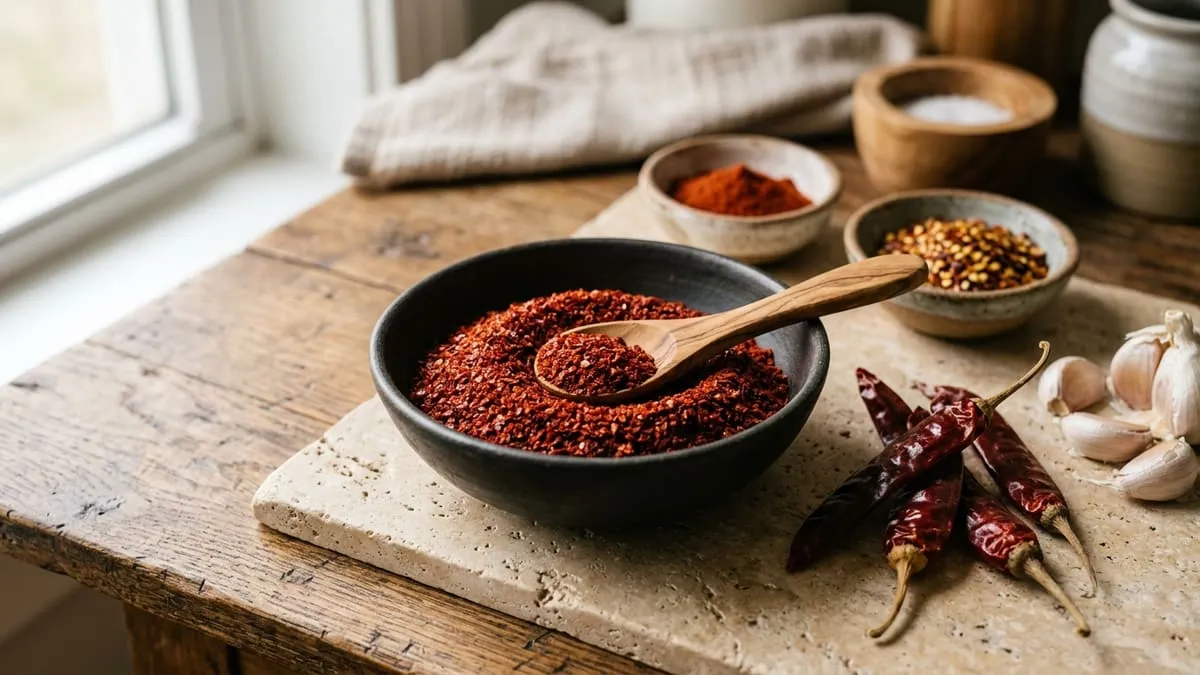
Open almost any Korean recipe — whether you are fermenting a batch of crisp napa cabbage kimchi, tossing a five-minute cucumber side dish (oi muchim), simmering a bubbling pot of sundubu jjigae (soft tofu stew), or glazing our Crispy Korean Fried Chicken in the Air Fryer — and you will immediately see gochugaru (고추가루) near the top of the ingredient list. In photos, it looks like a mound of vivid, velvety crimson flakes that turns broths and marinades bright red without making the dish unbearably hot.
When you check your spice rack in a typical Dutch kitchen, however, what you usually have on hand is a small supermarket shaker of chilivlokken (crushed red pepper flakes) or a jar of ground cayenne pepper. Swapping those in 1-to-1 is one of the fastest ways to ruin a Korean dish. Replacing three tablespoons of gochugaru with three tablespoons of standard pizza-style chili flakes or cayenne will make your dinner five times hotter than intended, fill the sauce with hard yellow seeds, and strip away the fruity, sun-dried sweetness that holds Korean flavors together.
Fortunately, you do not need to cancel dinner if you haven’t made a recent trip to the Asian supermarket. With a smart combination from your local Dutch supermarket — or a single jar from the Turkish grocer down the street — you can closely replicate both the gentle, smoky-sweet heat and the ruby color of real Korean chili flakes. Below, we break down what makes gochugaru unique, why the grind size (coarse vs. fine) matters, and which 5 substitutes work best in every type of recipe.
What Is Gochugaru (and Why Isn’t It Just Crushed Red Pepper)?
The Korean word gochugaru combines gochu (chili pepper) and garu (powder or flakes). Rather than being ground from random hot chilies, authentic gochugaru is made from specific Korean red peppers (taeyangcho) whose thick flesh is traditionally dried in the autumn sun or in temperature-controlled drying tunnels.
Before milling, producers take a step that separates gochugaru from the standard crushed red pepper sold in European supermarkets: the inner ribs and nearly all of the white seeds are removed. The dried red pepper pods are then roller-milled into irregular, soft-edged granules that sit somewhere between coarse sea salt and slightly moist paprika — neither papery flat flakes nor dusty powder.
That production method gives gochugaru three culinary properties that define Korean cooking:
- Fruity, sun-dried sweetness with a gentle smokiness: Because you are tasting almost pure sun-dried red pepper flesh rather than bitter, woody seeds, gochugaru delivers notes of dried red bell pepper, raisins, and sun-ripened tomato with a subtle earthy warmth.
- Mild-to-medium, building heat (approx. 1,500 – 8,000 Scoville): While cayenne pepper (30,000 to 50,000 Scoville) and standard supermarket chili flakes sting the back of the throat immediately, gochugaru builds a rounded, lingering warmth. That mildness is why Korean recipes measure it by the tablespoon or cup rather than by the pinch.
- Natural thickening and crimson coloring: Because the seedless granules are soft and porous, they absorb broth, vinegar, and aromatics in marinades, stews, and kimchi paste. Instead of floating on top like tough plastic skins, they melt into the sauce and give it a glossy, deep-red body.
Coarse Gochugaru (Guseun) vs. Fine Gochugaru (Goeun)
When you browse the Korean aisle at one of the Asian supermarkets listed in our Netherlands Toko Finder, you will usually see 500 g or 1 kg foil bags sold in two distinct grinds:
- Coarse Gochugaru (Guseun gochugaru / 굵은 고춧가루 — often labeled Coarse or For Kimchi): This is the kitchen workhorse called for in roughly 90 percent of Korean recipes. The visible crimson granules cling evenly to salted cabbage or cucumber slices, bloom gently in warm garlic or sesame oil without scorching immediately, and give stews (jjigae) and stir-fries their signature texture. If you only buy one bag, always choose coarse: you can easily blitz coarse flakes into a fine powder in a clean spice grinder or mortar, whereas you cannot turn fine powder back into flakes.
- Fine Gochugaru (Goeun gochugaru / 고운 고춧가루 — often labeled Fine or For Gochujang / Sauce): Milled to a smooth powder similar to paprika or cayenne. In Korean kitchens, fine gochugaru is used primarily to ferment homemade gochujang (Korean chili paste), whisk silky-smooth tteokbokki (spicy rice cake) sauces, or dust dishes where visible flakes are unwanted.
The 5 Best Substitutes for Gochugaru (Ranked by Flavor & Texture)
Because gochugaru simultaneously provides ruby color, fruity depth, moderate warmth, and light body, the right substitute depends on what you are cooking tonight — whether that is a fresh vegetable side dish (banchan), a bubbling tofu stew, or a sticky glaze to serve alongside Korean Bibimbap.
1. Turkish Pul Biber / Aleppo Pepper Flakes (Best 1-to-1 Substitute)
- Ratio: 1 tablespoon pul biber (or Aleppo pepper) for 1 tablespoon gochugaru (
1:1). - Why it works best: If there is one chili flake in the world that behaves almost identically to Korean gochugaru, it is pul biber (also sold as Syrian-Turkish Aleppo pepper). Like gochugaru, these peppers are sun-dried, deseeded, and crushed into soft, semi-coarse crimson granules without sharp skins. During curing, Turkish producers rub the flakes with a trace of sunflower or olive oil and a pinch of salt. The result shares gochugaru’s raisin-like fruitiness, deep red color, and mild-to-medium heat level (around 4,000 to 10,000 Scoville).
- Where to find it in the Netherlands: Even if you live far from an Asian toko, almost every Turkish, Moroccan, or Middle Eastern neighborhood grocer in the Netherlands stocks large tubs or bags of pul biber (aci pul biber for medium heat, tatli toz/pul biber for mild), and mainstream Albert Heijn and Jumbo stores increasingly carry small jars of pul biber in the spice aisle.
- Kitchen tip: Because pul biber contains a tiny amount of salt and oil, it is seamless in marinades, stews (jjigae), chili oil, and quick cucumber salads. If you are using it for long-fermented cabbage kimchi, check the label and pick a brand with minimal added oil.
2. Sweet Paprika + Cayenne Pepper (Fastest Dutch Supermarket Mix)
- Ratio: ¾ tablespoon (3 parts) sweet paprika + ¼ tablespoon (1 part) ground cayenne pepper for 1 tablespoon gochugaru. For extra sun-dried depth, swap a tiny pinch of the sweet paprika for smoked paprika (pimentón).
- Why it works: This is the pantry rescue combination that almost every home cook already owns. Sweet paprika (mild paprikapoeder) supplies the bulk of sweet, seedless red pepper flesh and the rich carotenoid pigment that turns broths and sauces red. The quarter-share of cayenne brings the capsaicin heat right into gochugaru’s Scoville range.
- Texture adjustment: Both paprika and cayenne are milled to a fine powder (matching fine gochugaru rather than coarse flakes). Because fine powder has more surface area, it dissolves quickly into liquids and scorches faster in hot fat. When blooming this blend in oil with garlic and ginger, keep the burner on low heat and add your liquid within a few seconds.
3. Gochujang — Fermented Korean Chili Paste (Best for Sauces, Stews & Glazes)
- Ratio: 1 tablespoon gochujang replaces 1 tablespoon gochugaru, minus ½ teaspoon each of soy sauce/salt and sugar/honey elsewhere in the recipe.
- Why it works: Many neighborhood Dutch supermarkets that do not stock bags of gochugaru flakes do carry red tubs of gochujang in the international aisle. And the primary chili ingredient inside gochujang is finely milled gochugaru itself — meaning you get the exact Korean pepper flavor profile.
- What to watch out for: Gochujang is not pure chili; it is a dense fermented paste containing glutinous rice, fermented soybeans, malt, and salt. In wet recipes — such as the sticky glaze on Korean Fried Chicken, a bibimbap sauce, spicy pork bulgogi (jeyuk bokkeum), or a hearty stew broth — gochujang works brilliantly as long as you dial back the recipe’s added sweetener and salt slightly. Do not use gochujang as a 1-to-1 substitute in traditional cabbage kimchi (the extra sugars and starches cause overly rapid, syrupy fermentation) or for pouring hot oil over to make chili oil (the sugars in the paste will burn immediately).
4. Deseeded Crushed Red Pepper + Sweet Paprika (The Mortar & Pestle Fix)
- Ratio: ½ tablespoon standard crushed red pepper flakes + ½ tablespoon sweet paprika for 1 tablespoon gochugaru — after sifting out the loose seeds and pulsing or pounding briefly.
- Why raw supermarket chili flakes need a quick tweak: Standard European or Italian chilivlokken are nearly 40 percent hard yellow seeds mixed with tough, papery flakes of hot chilies (often 30,000+ Scoville). Dumping them straight into a Korean dish leaves gritty seeds between your teeth and delivers a harsh, one-dimensional burn without coloring the sauce.
- The 60-second kitchen fix: Tip your crushed red pepper flakes into a medium-mesh sieve over the sink and shake briskly so most of the loose yellow seeds fall through. Transfer the remaining red flakes to a mortar and pestle (or spice grinder) with an equal amount of sweet paprika and a single drop of neutral oil, then pound or pulse for 15 to 20 seconds. This breaks the tough skins into softer granules and marries them with the sweet red pigment of the paprika.
5. Ground Dried Guajillo or Ancho Chilies (Authentic Flavor Match for Kimchi & Stews)
- Ratio: 1 tablespoon coarsely ground dried guajillo chili (or ¾ part ancho + ¼ part hot chili flakes) for 1 tablespoon gochugaru.
- Why it works: If you cook Mexican or North African dishes at home (or keep dried chilies on hand alongside dishes like our Shakshuka with Harissa and Crispy Air Fryer Tofu) and have dried guajillo or ancho chilies in your cupboard, you already have a near-perfect botanical cousin. Guajillo chilies belong to the same Capsicum annuum species, share a mild 2,500 to 5,000 Scoville warmth, and boast thick, ruby-red walls packed with berry, plum, and dried-fruit notes.
- Preparation: Snip off the stems, shake out all seeds, tear away the inner veins, toast the leathery pods in a dry skillet for 15 seconds per side until fragrant, let them cool until crisp, and pulse them in a spice grinder or blender into coarse flakes. Even in homemade kimchi, ground guajillo performs remarkably close to Korean gochugaru.
Quick Comparison Table: Which Substitute for Which Dish?
| Substitute | Ratio (per 1 tbsp gochugaru) | Best Culinary Use | Flavor & Texture Difference vs. Original |
|---|---|---|---|
| 1. Turkish Pul Biber / Aleppo Pepper | 1 : 1 (1 tbsp) |
Kimchi, cucumber salad (banchan), stews, chili oil | Nearly identical semi-coarse flake and fruity warmth; contains a trace of salt and sunflower oil |
| 2. Sweet Paprika + Cayenne Pepper | 3 : 1 (¾ tbsp paprika + ¼ tbsp cayenne) |
Soups (jjigae), stir-fries, marinades, dipping sauces | Spot-on ruby color and heat balance; powder-fine texture rather than coarse granules |
| 3. Gochujang (Korean chili paste) | 1 : 1 (1 tbsp, minus ½ tsp salt & sugar) |
Korean Fried Chicken glaze, bibimbap sauce, wet marinades | Adds thicker fermented umami body and sweetness; unsuitable for dry rubs or hot-poured chili oil |
| 4. Deseeded Chili Flakes + Paprika | 1 : 1 (½ tbsp flakes + ½ tbsp paprika, pounded) |
Quick noodles, stir-fries, spicy braised tofu | Good granular texture once pounded; slightly sharper and less sun-dried sweet than real gochugaru |
| 5. Coarsely Ground Guajillo Chili | 1 : 1 (1 tbsp coarse grind) |
Traditional kimchi, chili oil, slow-simmered stews | Excellent dried-berry fruitiness and matching mild Scoville warmth |
Why You Must Never Fry Gochugaru (or Its Substitutes) in Smoking-Hot Oil
One of the most common mistakes when cooking with Korean chili flakes — and even more so when substituting a fine powder blend of paprika and cayenne — is scorching the natural pepper sugars.
Because gochugaru is milled from ripe, sun-dried red pepper flesh, it is rich in natural fruit sugars and carotenoid pigments. If you toss a spoonful of gochugaru into a dry, smoking-hot wok or pour 210 °C oil straight onto dry flakes, those sugars char within three seconds. The vibrant red color turns muddy brown or black, and the dish takes on an acrid, bitter aftertaste.
Use these two classic Korean techniques to protect both the color and sweetness:
- The low-heat fat bloom (for stews like sundubu jjigae and ramen broths): Sauté your scallions, garlic, and any pork or aromatics over medium-low heat in sesame or neutral oil. Turn the burner down to its lowest setting (or slide the pot off the heat for 10 seconds), stir the gochugaru (or paprika-cayenne blend) into the warm fat so the fat-soluble red pigment blooms, and pour in your broth or water within 15 seconds.
- The moisture buffer (for Korean chili oil): When making quick Korean chili oil like the one demonstrated by Aaron and Claire in the video above, mix the gochugaru in a heatproof bowl with minced garlic, a pinch of salt, and half a teaspoon of water or soy sauce first so the flakes are slightly damp. Heat your neutral oil to around
175 °C(when a wooden chopstick dipped in the oil sends up steady bubbles without smoking) and pour the oil over the dampened flakes in two stages.
Where to Buy Gochugaru in the Netherlands (and How to Store It)
If you regularly cook East Asian dishes at home — from Crispy Rice Bibimbap and Crispy Air Fryer Gyoza (served with a dipping sauce of soy sauce, rice vinegar, and gochugaru) to Quick Miso Ramen — picking up a bag of real gochugaru on your next toko run is well worth it:
- At Asian Supermarkets (Tokos) and Korean Grocers: Nationwide chains like Amazing Oriental and Wah Nam Hong, as well as dedicated Korean and Japanese stores like Shilla and Kokoro in the Amsterdam/Amstelveen area (see our Netherlands Toko Finder), stock 250 g, 500 g, and 1 kg pouches from benchmark Korean producers like Tae-kyung and Sempio. Check the English label for Coarse / For Kimchi.
- At Albert Heijn and Jumbo: Larger supermarket branches occasionally carry small spice jars of Korean chili flakes in the international aisle or specialty spice rack (such as Euroma / Jonnie Boer). Keep in mind that clear glass jars exposed to supermarket lighting can oxidize faster than the opaque foil pouches sold at the toko.
- The Freezer Storage Rule: Never leave an opened bag of gochugaru in a warm cupboard above the stove. Because authentic gochugaru retains a touch of natural moisture and pepper oil, room-temperature air and light cause it to oxidize: within a few months it fades from bright crimson to dull rust-brown and loses its fruity aroma. Seal the bag tightly (or decant a working portion into an airtight jar) and store your main supply in the freezer or refrigerator. Gochugaru never freezes into a solid block — you can scoop it straight from the freezer with a measuring spoon, and it will stay bright red and aromatic for up to two years.
Frequently Asked Questions About Substituting Gochugaru (FAQ)
1. Is gochugaru the same thing as gochujang?
No, although their similar names cause frequent confusion. Gochugaru is dry, sun-dried red chili flakes with no added ingredients. Gochujang is a thick, savory-sweet fermented red paste sold in a tub, made from fine gochugaru powder, glutinous rice, fermented soybeans, malt, and salt. You can swap them in wet sauces and stews (as long as you adjust the salt and sugar), but dry rubs, chili oils, and fresh salads require flakes. See our full guide on choosing a gochujang substitute.
2. Can I use sambal oelek instead of gochugaru?
Only in cooked sauces, stir-fries, or noodle soups when you have no dry chili options in the house. Because sambal oelek is made from raw crushed hot chilies preserved with salt and acetic acid, it is sharper, wetter, and more acidic than sun-dried gochugaru. To replace 1 tablespoon of gochugaru in a sauce, use ½ tablespoon sambal oelek + ½ tablespoon sweet paprika + ½ teaspoon sugar or honey.
3. How spicy is gochugaru compared to cayenne pepper?
Standard Korean gochugaru measures between 1,500 and 8,000 Scoville Heat Units (SHU), similar to a mild jalapeño or Turkish Aleppo pepper. Ground cayenne pepper sits between 30,000 and 50,000 SHU — roughly five to ten times hotter. Never substitute pure cayenne 1-to-1 for gochugaru; always cut it with at least three parts sweet paprika.
4. Which substitute works best if I want to make kimchi today?
For homemade napa cabbage kimchi (baechu kimchi) or radish kimchi (kkakdugi), the physical flake texture is essential so the seasoned rice-flour paste clings to the vegetables during fermentation. Use Turkish pul biber / Aleppo pepper flakes (1:1) with minimal added oil, or pulse dried guajillo chilies into coarse flakes. If you only have regular supermarket spices, use the pounded blend of deseeded crushed red pepper + sweet paprika (1:1).
5. Is gochugaru gluten-free and vegan?
Yes. Pure gochugaru consists of 100 percent dried red chili peppers and is naturally vegan and gluten-free. Note that this is an important distinction from gochujang paste, which traditionally contains barley malt or wheat and is often not gluten-free unless certified on the tub.
Recipes Using Gochugaru (Korean Chili Flakes)
Korean Fried Chicken from the Air Fryer (Yangnyeom Chicken)
Shatteringly crisp and glistening with a sweet and spicy gochujang glaze. The authentic Korean method, but completely avoiding the deep fryer.
Korean Bibimbap (Smart 1-Pan Method & Crispy Skillet Rice Crust)
Make authentic Korean bibimbap at home without 5 pans of dishes: featuring our 1-pan namul sequence, crispy rice crust (nurungji), and gochujang sauce.
Quick 25-Minute Miso Ramen From Scratch (Sapporo Style)
Make creamy restaurant-style Japanese miso ramen in 25 minutes: built with a velvet miso-tahini tare, 6.5-minute jammy eggs, and Dutch supermarket staples.
Crispy Air Fryer Gyoza & Dumplings (No Hard Edges + Dipping Sauce)
Cook frozen or fresh gyoza and dumplings in the air fryer in 9 minutes without dry pleats: using the 2-step water-and-sesame-oil coat and dipping sauce.
Crispy Air Fryer Tofu
Golden brown, shatteringly crisp on the outside, and silky inside: make crispy air fryer tofu in 20 minutes using the cornstarch-and-soy coating trick.
Video Guide & Culinary Context
About this video: In this Korean pantry breakdown (12:47), chef Aaron (Aaron and Claire) demonstrates how gochugaru (Korean red pepper flakes) behaves in hot oil and broths, why its seedless crimson grind gives Korean dishes vibrant color without blinding heat, and how it pairs with soy sauce, garlic, and toasted sesame oil.
More Ingredient Guides
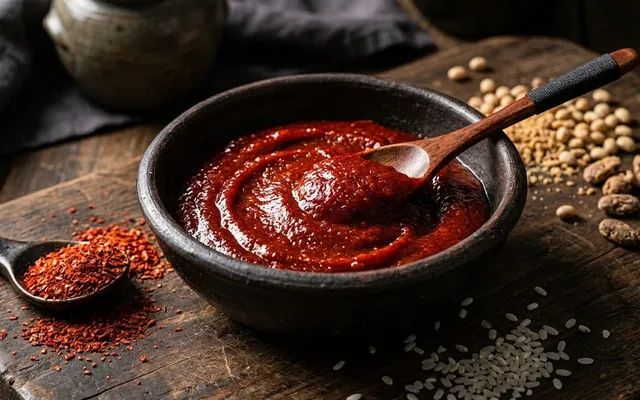
Gochujang
Out of gochujang or looking for it at Albert Heijn, Jumbo, or a Dutch toko? Use our exact 1:1 substitute with miso, sriracha, or gochugaru and honey.
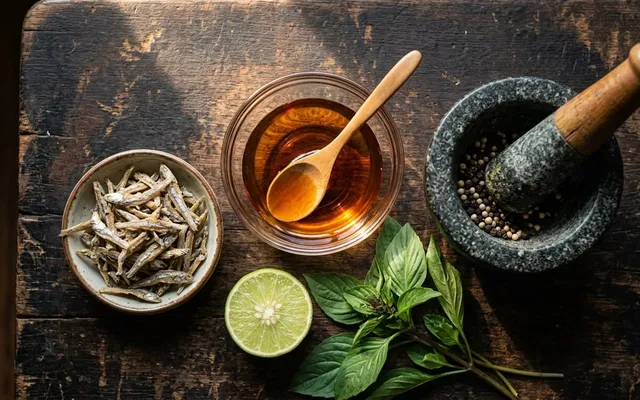
Fish Sauce
Need a fish sauce substitute for Thai curry, Pad Thai, or dipping sauce? Use our 5 exact 1:1 swaps (including vegan soy sauce, miso & lime options).
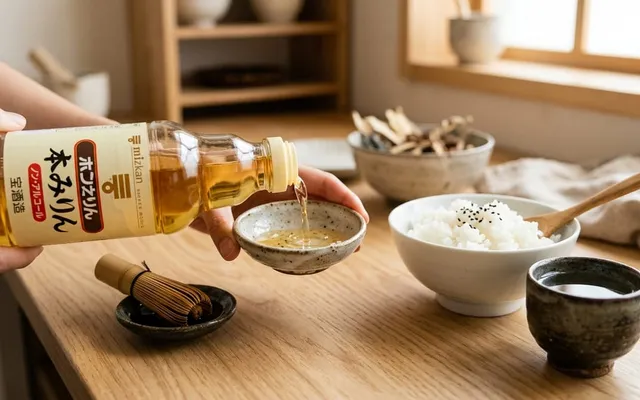
Mirin
Need a mirin substitute for teriyaki, ramen, or stir-fries? Compare Hon Mirin vs. AH mirin-fu and use our 4 exact 1:1 swaps with rice vinegar, sake, or honey.