
Pomegranate Molasses (Dibs el-Ruman)
Pomegranate Molasses · Reduced tangy pomegranate syrup (دبس الرمان / Nar Ekşisi)
Out of pomegranate molasses or looking for it at Albert Heijn, Jumbo, or a Turkish grocer? Use our 4 tested ratio swaps with balsamic, lemon, or tamarind.
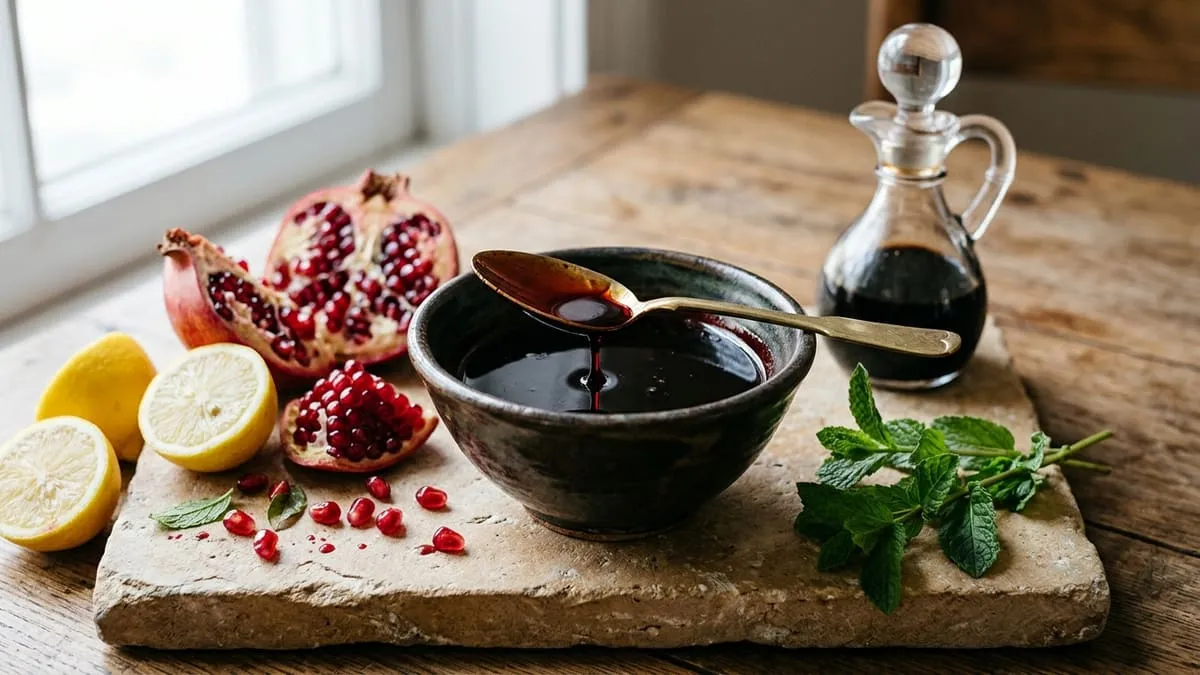
At a Glance: Where to Buy or Substitute
Netherlands Pantry GuideAvailability in the Netherlands
Bottles by Souq and Al'Fez in the Middle Eastern aisle at larger Albert Heijn and Jumbo stores; larger, tangier Lebanese and Turkish bottles (Cortas, Chtoura Garden, Kemal Kükrer) at every Turkish, Moroccan, and Middle Eastern supermarket in the Netherlands.
Best Direct Substitute
1 tbsp dark balsamic vinegar (or balsamic glaze) + 1 tsp fresh lemon juice + ½ tsp honey or maple syrup (per 1 tbsp pomegranate molasses)
Cook regularly from the kitchens of Lebanon, Syria, Turkey, or Iran — or open almost any cookbook by Yotam Ottolenghi, Sami Tamimi, or Sabrina Ghayour — and one dark glass bottle appears again and again: pomegranate molasses (known in Arabic as dibs rumman, in Turkish as nar ekşisi, and in Persian as rob-e anar). You drizzle it over roasted cauliflower or charred eggplant, whisk it into a crisp fattoush salad dressing, brush it over our Crispy Air Fryer Halloumi, or pulse it into smoky roasted red pepper and walnut dip (muhammara).
For many home cooks, however, the word molasses (or the Dutch translation granaatappelstroop) is misleading. If you picture sugarcane molasses, Dutch schenkstroop, or pancake syrup, you expect a cloyingly sweet sugar glaze. Real pomegranate molasses is the exact opposite: it is an intensely tart, tangy, darkly fruity condiment that plays the same structural role in Middle Eastern cooking as aged balsamic vinegar in Italy or tamarind paste in Southeast Asia.
If you are halfway through prepping dinner tonight and realize your cupboard doesn’t have a bottle of pomegranate molasses, never swap in cocktail grenadine or plain honey 1-to-1. Using two or three everyday staples already sitting in your kitchen, you can mix a dead-ringer substitute in under sixty seconds that captures both the syrupy ruby gloss and the sharp, fruity acidity of the real thing. Below, we cover how pomegranate molasses works, the 5 best substitutes ranked by dish, and how to avoid the glucose-heavy imitation bottles sold in many shops.
What Is Pomegranate Molasses (and What Does It Taste Like)?
Authentic pomegranate molasses has nothing to do with sugarcane or sugar beets. Traditionally, it is made by pressing the juice of tart or sour-sweet pomegranate varieties and simmering that juice gently for hours until it reduces to roughly one-fifth of its original volume.
During that slow reduction, three transformations create its signature flavor profile:
- Concentrated fruit acids (citric and malic acid): As the water evaporates, the natural acids inside the pomegranate juice concentrate dramatically. The very first note that hits your palate is a bright, puckering tang — reminiscent of lemon juice crossed with sour cherries, cranberries, and red currants.
- Caramelized natural fruit sugars: Simmering the juice gently caramelizes the fruit’s natural fructose and glucose. That builds a deep, velvety baseline of dried figs, blackberries, and dark caramel that rounds out the sharp acid without making the sauce taste sugary.
- Subtle tannins and syrupy viscosity: Like red wine, pomegranate juice contains natural polyphenols and tannins. Those tannins add a savory, mouth-watering grip, while the reduced pectin gives the liquid a glossy, spoon-coating body that clings beautifully to grilled lamb (kofte), roasted vegetables, halloumi cheese, or toasted pita chips.
Why You Must Never Confuse It with Grenadine
One of the most frequent kitchen mix-ups is confusing pomegranate molasses with grenadine (bar syrup). Although the word grenadine comes from the French grenade (pomegranate), modern supermarket grenadine is a sweet cocktail mixer made almost entirely from sugar syrup, water, citric acid, red food coloring, and berry flavoring.
Pouring cocktail grenadine into a savory fattoush vinaigrette, muhammara, or Persian stew will make your dish taste like candy and strip away its acidic backbone. If an artisanal, real-pomegranate grenadine is genuinely the only bottle in your house, use no more than ½ teaspoon and combine it with 1 full tablespoon of fresh lemon juice or red wine vinegar to restore the tart balance.
The 5 Best Substitutes for Pomegranate Molasses (Ranked by Flavor & Texture)
Because pomegranate molasses delivers three things at once — sharp acidity, dark fruit depth, and syrupy thickness — the best substitutes pair a bright acid with a concentrated dark fruit or sweetener.
1. Dark Balsamic Vinegar + Fresh Lemon Juice + Honey or Maple Syrup (Best 60-Second Pantry Mix)
- Ratio: ½ tablespoon dark balsamic vinegar + ½ tablespoon fresh lemon juice + ½ teaspoon honey (or pure maple syrup) replaces 1 tablespoon pomegranate molasses. (If you have 5 minutes to spare, simmer 2 tablespoons of balsamic vinegar with 1 teaspoon of honey in a small pan until syrupy, then stir in the fresh lemon juice off the heat).
- Why it works best: Dark balsamic vinegar from any Dutch supermarket immediately supplies the mahogany-red color, cooked-grape depth, and gentle caramel sweetness. On its own, however, standard supermarket balsamic is far less tart than authentic Lebanese or Turkish pomegranate molasses (which is packed with citric acid). By splitting the balsamic 50/50 with fresh lemon juice and adding a touch of honey for syrupy cling, you create a balanced replacement that is almost indistinguishable from real pomegranate molasses in salad dressings (fattoush), over roasted eggplant, or drizzled onto Crispy Air Fryer Halloumi.
2. Reduced 100% Pure Pomegranate Juice (100% Authentic 1-Ingredient Method)
- Ratio: Simmer 100 ml of 100% pure unsweetened pomegranate juice with 1 teaspoon lemon juice until reduced to 1.5 to 2 tablespoons, then use
1:1. - Why it works: As Obi from Middle Eats demonstrates in the video above, reduced pure pomegranate juice isn’t just a substitute — it is homemade pomegranate molasses. Even if your neighborhood supermarket doesn’t carry a jar of Middle Eastern molasses, almost every Albert Heijn, Jumbo, Ekoplaza, and Lidl in the Netherlands stocks cartons or glass bottles of 100% pure pomegranate juice (100% puur granaatappelsap) in the chilled juice case or organic aisle.
- How to reduce it without scorching: Pour 250 ml to 500 ml of pure pomegranate juice into a wide skillet or saucepan (a wide pan evaporates water twice as fast). Bring to a boil, then lower the heat to a gentle simmer for 25 to 40 minutes until the liquid turns dark ruby-red and forms large, slow, glossy bubbles. Crucial stopping cue: Take the pan off the heat as soon as the syrup coats the back of a spoon like warm maple syrup. Because the syrup thickens considerably as it cools, reducing it until it looks thick in the hot pan will cause it to set into hard toffee on the counter!
3. Tamarind Paste + Honey or Date Syrup (Best Match for Stews, Glazes & Muhammara)
- Ratio: ¾ tablespoon tamarind paste + ¼ tablespoon honey, date syrup (silan), or dark brown caster sugar for 1 tablespoon pomegranate molasses.
- Why it works: If you already keep a jar of tamarind concentrate in your fridge for Southeast Asian dishes like our Vegan Pad Thai or Thai Massaman Curry, you have a near-perfect structural twin. Tamarind pulp shares the same high tartaric/citric acidity, jammy thickness, and dried-plum, raisin-like complexity as reduced pomegranate.
- Best culinary use: Because tamarind is brownish rather than ruby-red and has a rich, savory body, this blend is unbeatable in slow-simmered Persian walnut and chicken stew (fesenjan), meatball and lamb glazes (kofte), and roasted red pepper dips (muhammara) where the red peppers already provide the color.
4. Ground Sumac + Fresh Lemon Juice + Honey (Authentic Levantine Match for Salads & Dips)
- Ratio: ½ tablespoon fresh lemon juice + ½ tablespoon runny honey + 1 full teaspoon ground sumac for 1 tablespoon pomegranate molasses.
- Why it works: Across Levantine kitchens (Lebanon, Palestine, Syria), pomegranate molasses and sumac (the coarsely ground, crimson berries of the wild sumac shrub) are flavor cousins. Sumac delivers that exact tangy, tannic red-berry acidity and ruby hue without introducing the wine-like aroma of balsamic vinegar.
- Best culinary use: When whisking a vinaigrette for fattoush, tabbouleh, warm lentil salads, or drizzling over Crispy Air Fryer Chickpeas with yogurt and tahini, combining sumac, lemon juice, and honey keeps the flavor profile 100 percent Middle Eastern.
5. Red Wine Vinegar (or Unsweetened Cranberry Juice) + Dutch Apple Syrup (Appelstroop)
- Ratio: ½ tablespoon red wine vinegar + ½ tablespoon Dutch apple syrup (appelstroop) or dark brown sugar for 1 tablespoon pomegranate molasses. (Alternatively, reduce 50 ml of unsweetened cranberry juice down to 1 tablespoon of tart red syrup).
- Why it works: Caught in a Dutch kitchen with no balsamic, tamarind, or sumac? Pair the bright acidity and tannins of red wine vinegar with a spoonful of concentrated Dutch appelstroop (reduced apple and beet syrup) or dark brown caster sugar. Warm the two together for 15 seconds in a small pan or microwave-safe bowl so the syrup dissolves smoothly into the vinegar.
Quick Comparison Table: Which Substitute for Which Dish?
| Substitute | Ratio (per 1 tbsp pomegranate molasses) | Best Culinary Use | Flavor & Texture Difference vs. Original |
|---|---|---|---|
| 1. Dark Balsamic + Lemon Juice + Honey | ½ tbsp balsamic + ½ tbsp lemon + ½ tsp honey | Salad dressings (fattoush), halloumi, roasted vegetables | Closest all-purpose match in gloss, color, and sweet-tart punch using standard supermarket staples |
| 2. Reduced 100% Pomegranate Juice | Reduce 100 ml pure juice to 1.5 – 2 tbsp | All dishes (100% authentic) | Zero difference: this is pure homemade pomegranate molasses (requires 25–35 min simmering) |
| 3. Tamarind Paste + Honey / Date Syrup | ¾ tbsp tamarind + ¼ tbsp honey | Stews (fesenjan), muhammara, lamb & meatball glazes | Matches the tart-fruity acidity and thick body; browner in color than ruby pomegranate |
| 4. Lemon Juice + Honey + Ground Sumac | ½ tbsp lemon + ½ tbsp honey + 1 tsp sumac | Levantine salads, yogurt & tahini drizzles | Spot-on Middle Eastern red-berry tang; slightly textured from the ground sumac berries |
| 5. Red Wine Vinegar + Appelstroop | ½ tbsp red wine vinegar + ½ tbsp apple syrup | Emergency weeknight glaze or warm lentil salad | Good syrupy cling and acidity; leans toward cooked apple/grape rather than berry |
Dutch Buying Guide: Pure Pomegranate Molasses vs. “Pomegranate Sauce” (Nar Ekşili Sos)
When you visit a Turkish, Moroccan, or Middle Eastern supermarket in the Netherlands (see our Netherlands Toko Finder), look closely at the labels on the shelf. Two very different products sit side by side in nearly identical dark bottles:
- 100% Pure Pomegranate Molasses (%100 Nar Ekşisi or Lebanese Dibs Rumman such as Cortas): Turn the bottle around and read the ingredient list. A genuine bottle lists only one ingredient: 100% concentrated pomegranate juice (occasionally with a trace of salt). It is intensely tangy, complex, and free of refined sugars.
- Sweetened “Pomegranate Flavored Sauce” (Nar Ekşili Sos / Granaatappelsaus): Many inexpensive plastic squeeze bottles on the same shelf are labeled Nar Ekşili Sos (sauce with pomegranate flavoring). Check the back label and you will see 70 to 80 percent glucose syrup, water, citric acid, caramel coloring (E150d), and only 5 to 15 percent pomegranate concentrate. While locals use nar ekşili sos as a quick sweet-and-sour table drizzle over bulgur salad (kısır), it lacks real fruit depth in cooking and its high glucose content burns rapidly in a hot oven or Air Fryer.
What to buy in the Netherlands: At Middle Eastern grocers, reach for a glass bottle of Lebanese Dibs Rumman (brands like Cortas, Alwadi, or Mymouné) or a Turkish glass bottle explicitly marked %100 Nar Ekşisi. If you pick up a small bottle at Albert Heijn or Jumbo (such as Souq or Nadia & Merijn), check the back label to see whether sugar has been added so you know whether to add an extra squeeze of lemon juice to your dish.
How to Use and Store Pomegranate Molasses
Once you have a bottle of real pomegranate molasses (or a jar of your own reduced juice) in the pantry, you will find yourself reaching for it constantly to cut through rich, salty, or earthy ingredients:
- Over salty cheese, falafel, and roasted vegetables: Drizzle half a tablespoon over hot Crispy Air Fryer Halloumi, spoon it into a warm pita stuffed with Real Air Fryer Falafel, or swirl it over roasted eggplant wedges layered with Greek yogurt, harissa, and tahini.
- To brighten tomato and pepper dishes: Stir a teaspoon into a bubbling skillet of Shakshuka with Harissa or swirl it into our Roasted Tomato & Basil Soup right before serving to sharpen the sweet roasted tomatoes.
- Shelf life and storage: Thanks to its high natural acidity and low water activity, commercial 100% pomegranate molasses keeps in a cool, dark cupboard for 1 to 2 years after opening (storing it in the refrigerator is fine too, though the cold makes the syrup very thick and slow to pour). If you make your own 1-ingredient reduction from pomegranate juice, store it in a clean glass jar in the refrigerator, where it will keep for at least 6 months.
Frequently Asked Questions About Pomegranate Molasses Substitutes (FAQ)
1. Can I use balsamic glaze (crema di balsamico) 1-to-1 instead of pomegranate molasses?
Not 1-to-1 without adding acid. While squeeze-bottle balsamic glaze (crema di balsamico) has the exact syrupy thickness of pomegranate molasses, it is sweetened with grape must and sugars and lacks pomegranate’s sharp citric punch. To use balsamic glaze, whisk 2 parts balsamic glaze with 1 part fresh lemon juice. That preserves the glossy drizzle while restoring the tart Middle Eastern balance.
2. How many fresh pomegranates does it take to make homemade molasses?
Two large fresh pomegranates yield roughly 100 ml of juice. Because pomegranate juice reduces to about one-fifth of its volume, making a single small jar of 120 ml (8 tablespoons) of pomegranate molasses requires roughly 600 ml of pure juice — or 10 to 12 whole pomegranates. That is why even Middle Eastern home cooks almost always use a 1-liter carton of 100% pure unsweetened pomegranate juice rather than seeding a dozen fresh fruits by hand.
3. Why did my homemade pomegranate molasses turn rock-hard after cooling?
If your homemade reduction sets like hard candy once it cools to room temperature, it simply simmered a few minutes too long. Don’t throw it out: place the jar or pan over very low heat with 1 to 2 tablespoons of warm water and stir gently until the crystallized sugars dissolve back into a pourable syrup.
4. What is the best pomegranate molasses substitute specifically for muhammara?
In traditional Syrian muhammara (roasted red pepper and walnut dip), pomegranate molasses provides both the syrupy binder for the ground walnuts and breadcrumbs and the tart counterpoint to the sweet red peppers and olive oil. The two best substitutes in muhammara are ¾ tablespoon tamarind paste + ¼ tablespoon honey or ½ tablespoon dark balsamic vinegar + ½ tablespoon fresh lemon juice + ½ teaspoon honey.
5. Is pomegranate molasses vegan and gluten-free?
Yes. Authentic 100% pomegranate molasses contains nothing but reduced pomegranate juice and is naturally vegan, gluten-free, and nut-free. When mixing our top pantry substitute (balsamic vinegar + lemon juice) for vegan guests, simply use pure maple syrup, agave syrup, or date syrup (silan) in place of honey.
Recipes Using Pomegranate Molasses (Dibs el-Ruman)
Crispy Air Fryer Halloumi (With Honey-Harissa Glaze & Za'atar)
Golden, glass-crisp air fryer halloumi in 12 minutes without rubbery squeak: featuring our 5-minute warm-water soak, cornstarch crust, and honey-harissa glaze.
Crispy Air Fryer Chickpeas (The 2-Step No-Burn Dry-Roast Method)
Make glass-crisp roasted chickpeas in the air fryer in 20 minutes without burnt spices: using the towel-dry trick, post-roast spice toss, and 3 spice blends.
Real Air Fryer Falafel
Golden brown and crispy on the outside, bright green and airy on the inside. Made from raw chickpeas exactly as it should be — never from a can.
Shakshuka with Harissa, Poached Eggs & Feta (From Scratch)
Make thick, authentic harissa shakshuka without watery sauce or overcooked eggs: using whole peeled plum tomatoes, oil-bloomed harissa, feta, and runny yolks.
Roasted Tomato & Basil Soup with Harissa
A deep, complex soup where we caramelize the sugars of the tomatoes in the oven and bloom the harissa in olive oil for maximum flavor extraction.
Video Guide & Culinary Context
About this video: In this Middle Eastern pantry guide (7:58), Obi (Middle Eats) demonstrates how real pomegranate molasses (dibs el-ruman) is reduced from pure pomegranate juice and lemon, how to spot fake glucose-syrup 'pomegranate sauces' on store labels, and why its sharp fruit acidity is the backbone of Levantine dressings, muhammara, and glazes.
More Ingredient Guides
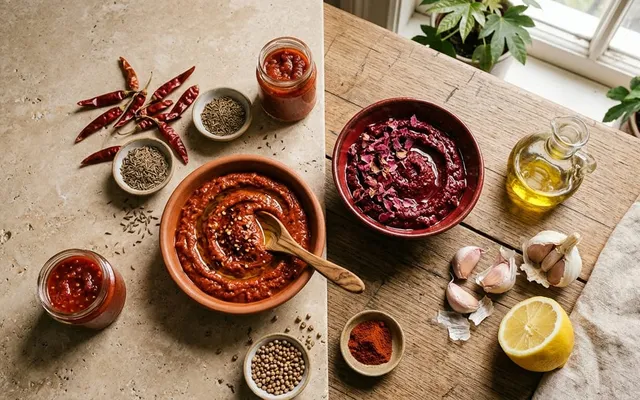
Harissa (North African Chili Paste)
Out of harissa or rose harissa? Use our 30-second swap with sambal, tomato paste, and cumin, plus the difference between tube and jar harissa in NL.
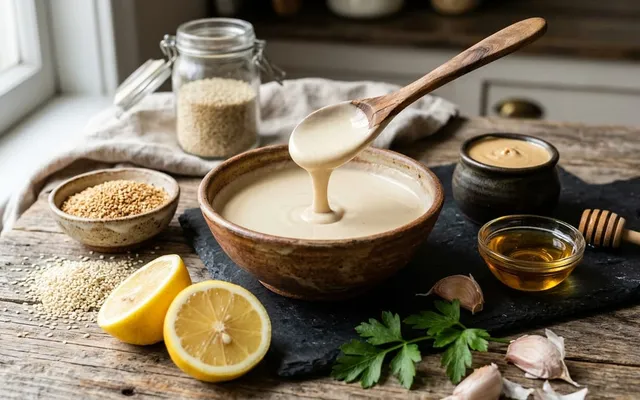
Tahini (Sesame Paste)
Out of tahini for hummus, baba ganoush, or falafel sauce? Use our 5 ranked tahini substitutes with exact ratios, plus white vs. dark tahin in the Netherlands.
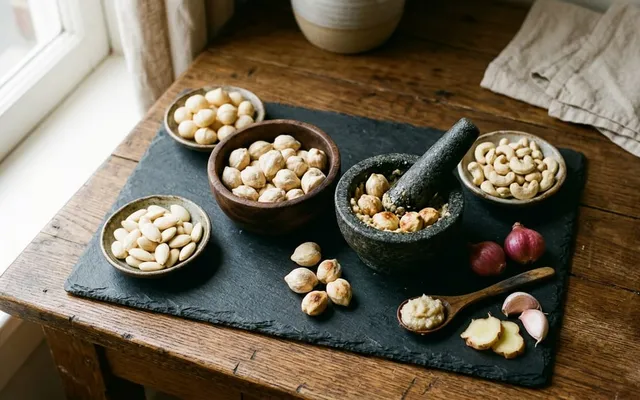
Candlenuts (Kemiri / Buah Keras)
Out of candlenuts (kemiri) for your Indonesian bumbu or rendang? Use our 5 best substitutes (macadamia, cashew, and nut-free) and learn why to toast them.